Brazil’s Sugar Boom: Record Exports Mask Climate Risks for 2025
Brazil’s sugar industry, according to official data and sector analyses, drove global markets in 2024 by exporting a record 38.23 million tons of sugar and earning $18.6 billion.
This performance followed a year of severe drought and wildfires that damaged cane fields, especially in the Center-South, which produces most of the country’s sugarcane.
Despite these setbacks, Brazil’s mills responded to strong global demand—especially after India, a major competitor, restricted its own exports.
Brazil’s output in 2023/24 reached a historic 705 million tons of sugarcane, but forecasts for 2024/25 expect a sharp drop to around 645 million tons. The main reason is persistent dry weather, which has limited sprouting and growth in key producing areas.
Some producers report that cane fields, even those not touched by fire, failed to regenerate as expected. The Southeast, Brazil’s main sugarcane region, saw a marked decline in productivity despite expanding the planted area.
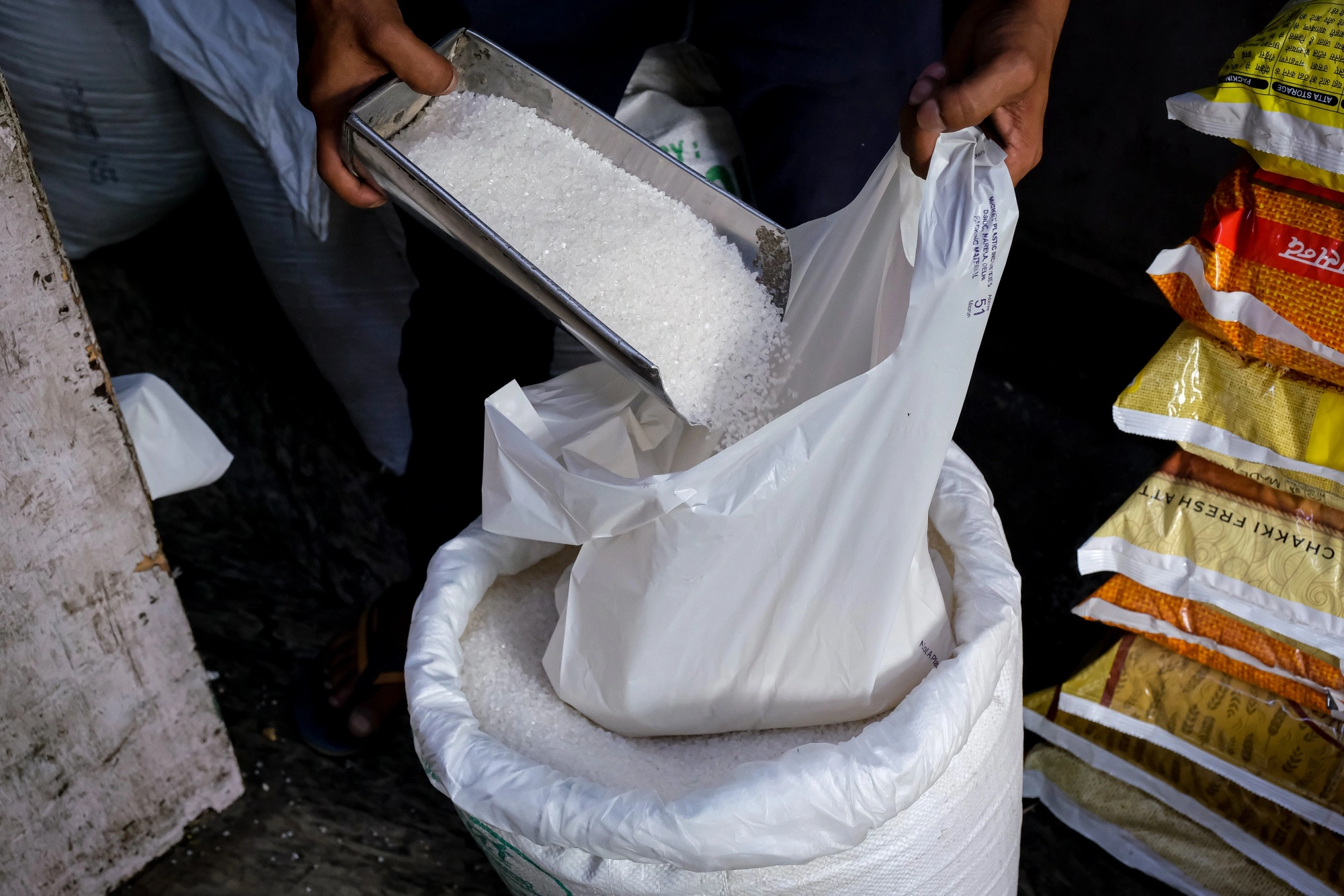
Mills shifted more cane to sugar production, capitalizing on high international prices and a global supply gap. About 46% of cane’s sugars went to sugar, with the rest to ethanol.
Ethanol output stayed robust, helped by a surge in corn-based ethanol, which now supplies nearly a quarter of total ethanol production. Brazil’s export success relied on efficient logistics, including increased use of containers for refined sugar, particularly to African markets.
However, the sector faces uncertainty in 2025. Lower cane yields, possible return of Indian exports, and domestic ethanol demand could reduce Brazil’s export volumes to 35–36 million tons.
Brazil’s sugar sector remains competitive due to advanced farming, flexible mills, and strong logistics, but weather volatility and shifting global trade will test its resilience in the coming year.
More: Brazil news in English, every day from The Rio Times.
Live Market IntelligenceBrazil — Live Market Board
Rio Times · Live Market Intelligence
Brazil — Live Market Board
+0.49%
205,333.25
+0.49%
67,663.29
+1.31%
10,974.12
+0.02%
2,859,051
+0.00%
2,580.50
-0.07%
59,543.73
+1.12%
| Instrument | Last | Change | YoY | Prev. | High | Low | Volume |
|---|---|---|---|---|---|---|---|
| IBOV | 205,333.25 | +0.49% | +21.85% | 204,324.26 | 168,310 | 167,142 | — |
| USD/BRL | 5.16 | +0.01% | -5.13% | 5.16 | 5.18 | 5.14 | — |
| SELIC | 14.00% | — | — | — | — | — | |
| PETR4 | 41.64 | -0.05% | +35.19% | 41.66 | 41.97 | 41.15 | 41,499,400 |
| VALE3 | 72.97 | +0.83% | +30.75% | 72.37 | 73.54 | 72.66 | 17,658,000 |
| ITUB4 | 38.60 | -1.03% | +4.57% | 39.00 | 39.34 | 38.39 | 29,487,800 |
| BBDC4 | 16.85 | +0.36% | +3.50% | 16.79 | 16.90 | 16.67 | 19,416,900 |
| BBAS3 | 19.37 | +0.47% | +0.73% | 19.28 | 19.44 | 19.16 | 11,069,200 |
| B3SA3 | 14.26 | -0.21% | +12.73% | 14.29 | 14.47 | 14.11 | 33,037,800 |
| ABEV3 | 14.89 | -0.80% | +21.91% | 15.01 | 15.07 | 14.81 | 16,453,100 |
| WEGE3 | 47.59 | +0.49% | +29.99% | 47.36 | 48.08 | 47.36 | 3,364,600 |
| PRIO3 | 59.14 | -0.19% | +50.67% | 59.25 | 59.81 | 58.74 | 3,325,600 |
| SUZB3 | 41.33 | +2.35% | -23.55% | 40.38 | 41.48 | 40.35 | 3,914,900 |
| RENT3 | 34.68 | -0.09% | +0.84% | 34.71 | 34.96 | 34.35 | 7,979,100 |
| AZZA3 | 15.89 | -2.63% | -53.76% | 16.32 | 16.42 | 15.82 | 1,330,300 |
| CSNA3 | 4.30 | +0.47% | -42.65% | 4.28 | 4.41 | 4.26 | 10,076,100 |
| GGBR4 | 24.69 | +2.19% | +51.38% | 24.16 | 24.85 | 24.18 | 7,047,600 |
| ENEV3 | 24.21 | -1.38% | +70.49% | 24.55 | 24.64 | 23.99 | 9,297,000 |
This article was drafted with automated assistance and reviewed before publication. How we use AI · Report an error · Editorial responsibility: Matthias Camenzind, Editor-in-Chief