
Rio Times Markets · Brazil
Key Facts
—Who. Brazil’s central bank, the Banco Central do Brasil, publishes the IBC-Br, a monthly index that gives an early read on GDP (the value of everything the economy produces).
—What. The index rose 0.3% in August from July (0.34% before rounding), at or above forecasts, after a fall of about 0.3% in July. Data of 16 October 2026.
—Detail. Industry grew 0.9% and services 0.2% in August, while farming fell 1.8%. Compared with August 2025, activity was 1.2% higher.
—Why it matters. The Selic, Brazil’s benchmark interest rate, stands at 13.75% after the cut of 16 September. The next decision is due on 4 November 2026.
—Prediction markets. Polymarket traders price a 25-basis-point (0.25 percentage point) cut at the November decision at 86.5% (thinly traded, US$64,301) and Kalshi, regulated in the US by the CFTC, at 86% (10:22 a.m. ET on 16 October 2026).
Runoff · Sunday, 25 October
Brazil Runoff 2026: Lula vs Flávio
Date, polls, debates, odds and how the runoff works, updated every day.
Brazil runoff polls · Polymarket and Kalshi odds · When results come
Prediction markets · who wins the runoff
Implied chance of winning Brazil’s presidency on 25 October, from traders’ prices.
Polymarket
Flávio Bolsonaro 76.4% · Lula 23.5% (US$185 million traded)
Kalshi (regulated in the US by the CFTC)
Flávio Bolsonaro 78% · Lula 23%
As of 16 October, 10:20 am ET (15:20 Lisbon), updated every 20 minutes. Prices are bets, not polls, and can move fast.
Why we show this: prediction markets turn real-money bets into a live probability that moves within minutes of the news, which is why investors, campaigns and newsrooms in the United States now follow them closely. We show them next to polls and official results, never instead of them.
Brazil’s economy grew 0.3% in August, at or above forecasts, but the July fall and a weak farm month leave the third quarter below the second so far.
Brazil’s economy grew 0.3% in August compared with July, the central bank data showed on Friday 16 October 2026. The result was at or above forecasts and followed a fall of about 0.3% in July.
The figure comes from the IBC-Br, the central bank’s monthly index of economic activity and a preview of official GDP. It matters to investors in the United States because it shapes how fast rates can fall, and rates affect the real and the Brazilian stocks they hold.
What the Central Bank Reported
The index, adjusted for normal seasonal patterns, stood at 110.4 points in August, up from 110.0 in July. That is a rise of 0.34% before rounding, which Brazilian media report as 0.3%.
July’s reading was revised. The first print showed a fall of 0.2%, and the central bank’s latest series now shows a fall of about 0.3%.
Forecasts varied. The median in a survey by the Estadão Broadcast service was 0.12%, and a Reuters poll cited by InfoMoney showed 0.3%.
Compared with August 2025, activity was 1.2% higher without seasonal adjustment. Over the 12 months to August, it was 1.6% higher than in the previous 12 months.
Together, the declines in June and July took about 1.1% off the index before August’s rebound. The index is still 0.8% below its May level of 111.3 points, the highest of 2026 so far.
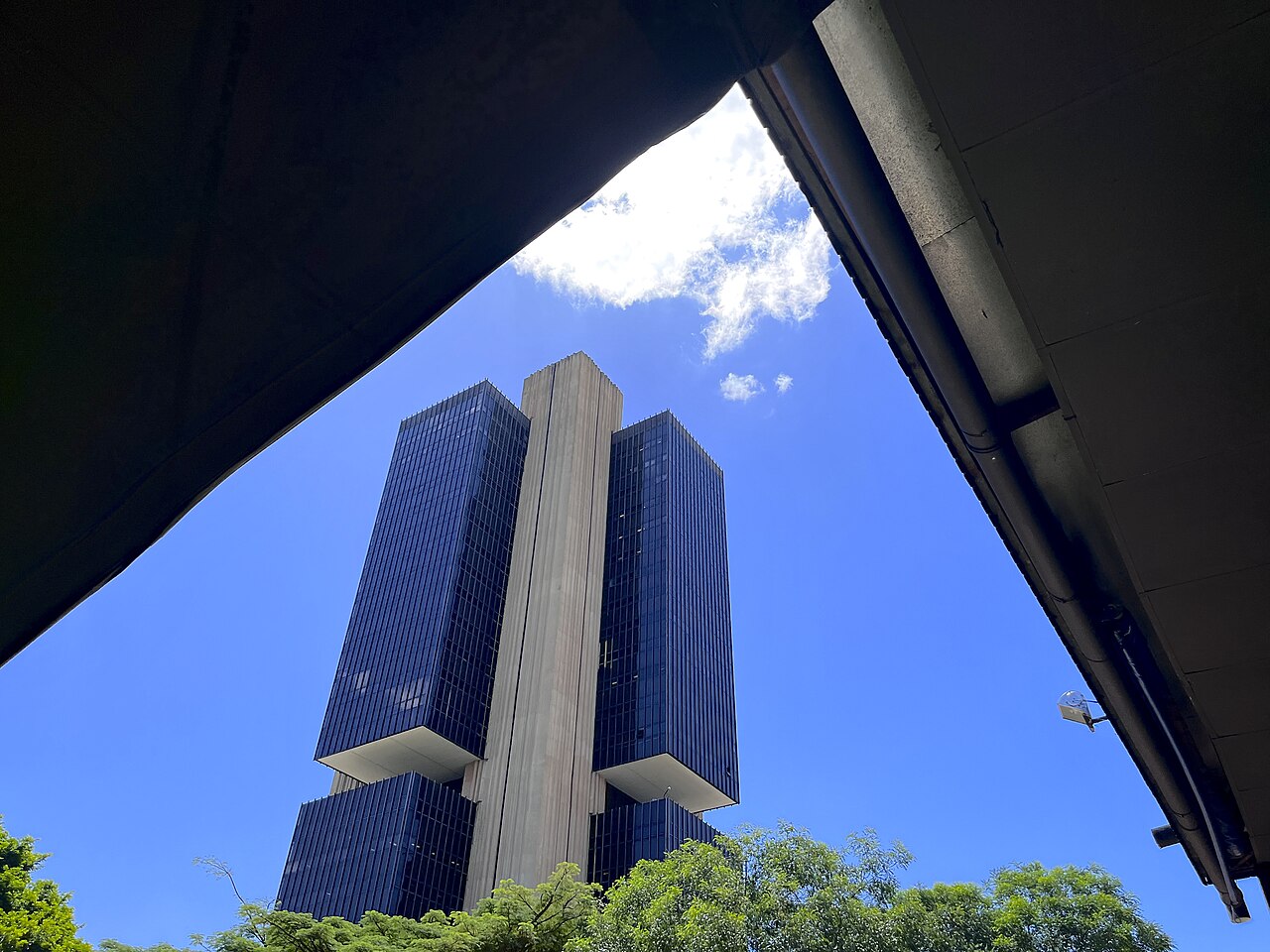
Industry Carried the Month, Farming Held It Back
According to the central bank’s sector breakdown, as reported by Poder360 and InfoMoney, industry grew 0.9% in August. Services rose 0.2% and taxes added 0.1%.
Agriculture fell 1.8%, the only sector to shrink. The release does not explain the drop.
Farm output tends to swing with harvest timing, so one weak month says little about the year. In the second quarter, agriculture was the strongest part of official GDP, growing 2.8% according to the statistics agency IBGE.
Why a GDP Preview Matters
IBGE publishes official GDP only once a quarter. The IBC-Br gives the central bank and investors a monthly estimate in between.
In September, IBGE reported that GDP grew 0.5% in the second quarter from the first, and 2.0% from a year earlier. The two measures can differ: the IBC-Br average for the second quarter rose about 0.3%, against 0.5% for GDP.
The Third-Quarter Arithmetic
The average of July and August is 0.6% below the second-quarter average of the index. If September were flat at August’s level, the third quarter would end roughly 0.55% below the second.
For the quarter to match the second, September would need to rise about 1.65% from August. This is RT’s own calculation from the central bank’s data, not a forecast.
Two things limit the reading. The IBC-Br is revised often, and official GDP is measured differently, as the second-quarter gap shows.
What holds the economy up: rate cuts have begun, the central bank calls the labour market heated, and growth over 12 months is still 1.6%. What could push it lower: borrowing costs remain high at 13.75%, and two of the last three months were declines.
What It Means for Interest Rates
The central bank cut the Selic from 14.00% to 13.75% on 16 September, in a unanimous decision of its rate committee, Copom. Its statement said activity is moderating gradually but remains resilient, and that the labour market is heated.
The August reading came at or above forecasts, but the third quarter still trails the second ahead of the next meeting on 3 and 4 November. The committee said the full size of the cutting cycle will be defined in light of new information.
Inflation has moved since that meeting, with the IPCA, the official consumer price index, rising 0.82% in September. The 12-month rate reached 4.58%, above the 4.5% upper limit of the tolerance range around the 3% target.
The next inflation reading is the mid-month IPCA-15 for October, due on Friday 23 October, after 0.70% in September and 4.47% over 12 months. The central bank’s weekly Focus survey of economists follows on Monday 19 October, and Brazil’s presidential runoff takes place on Sunday 25 October.
What Prediction Markets Say
Polymarket is a platform where users trade contracts on real events, and its market on the Banco Central do Brasil’s November decision is thinly traded at US$64,301. As of 10:22 a.m. ET on 16 October 2026, traders price a 25-basis-point (0.25 percentage point) cut at 86.5%, no change at 12.0% and a cut of 50 basis points or more at 2.1%.
Kalshi, regulated in the US by the Commodity Futures Trading Commission (CFTC), shows a cut of 1 to 25 basis points at 86% and no change at 12%. The prices add up to slightly more than 100% because each outcome is quoted separately and small chances of a rate rise are also listed.
For the December meeting, the same platform prices a 25-basis-point cut at 54.0%, a larger cut at 21.5% and no change at 20.5% (US$24,797 traded). These prices are bets, not polls and not forecasts by the central bank.
Why we show this: prediction markets turn real-money bets into a live probability that moves within minutes of the news, which is why investors, campaigns and newsrooms in the United States now follow them closely. We show them next to polls and official results, never instead of them.
What It Means for You
If you hold Brazilian stocks or bonds from the United States, this print changes little: growth is slow but positive, and the rate-cut path that traders price is intact. The next tests are the inflation data on 23 October and the central bank’s decision on 4 November.
For people living in Brazil, a Selic of 13.75% still keeps loans, credit cards and mortgages expensive. Each cut lowers those costs, but slowly.
What Is Not Yet Known
The release does not say why farming fell in August, and the sector detail comes from press reports of the central bank’s data. This article does not cover the market reaction to the release.
The next reading, for September, will show whether the third quarter recovers. Slow growth with interest rates coming down in small steps is the picture for now.
Frequently Asked Questions
What is the IBC-Br?
The IBC-Br is the Banco Central do Brasil’s monthly index of economic activity. It combines industry, services, farming and taxes, so it works as an early guide to official GDP.
How much did Brazil’s economy grow in August 2026?
The IBC-Br rose 0.3% from July on a seasonally adjusted basis, or 0.34% before rounding. That was at or above two forecasts (0.12% and 0.3%) and followed a fall of about 0.3% in July.
Is Brazil in a recession?
Not on the data so far. Official GDP grew 0.5% in the second quarter, but the July and August average of the IBC-Br is 0.6% below the second-quarter average, with September still to come.
What does the data mean for Brazil’s interest rate?
The Selic stands at 13.75% after a 0.25 percentage point cut on 16 September. The next decision is due on 4 November, and inflation has since risen above the central bank’s tolerance range.
What do prediction markets say about the next rate move?
On Polymarket, traders price a 25-basis-point cut in November at 86.5% and no change at 12.0%, while Kalshi shows 86% and 12%. These prices are bets, not polls, and they were read at 10:22 a.m. ET on 16 October 2026.
Sources
Banco Central do Brasil, IBC-Br series · Banco Central do Brasil, Selic target series · IBGE, second-quarter GDP · IBGE, IPCA · IBGE, IPCA-15 · Poder360 · InfoMoney · Polymarket · Kalshi. Central bank statement of 16 September 2026, Estadão Broadcast and the RT economic calendar. This is news, not investment advice.
Connected Coverage
Brazil rises to eighth largest economy in the 2027 forecasts
This article was produced by The Rio Times’ automated newsroom system. How we use AI · Report an error · Editorial responsibility: Matthias Camenzind, Editor-in-Chief
LatAm Markets: Live Signals → — real-time movers, turnover leaders and FX across Latin America.