Brazil and South Africa Talk Trade as US Tariffs Push Them Together
SOUTH AFRICA · GEOPOLITICS
Key Facts
A US$2bn relationship: Bilateral trade between the two countries reached about US$2bn in 2025. Brazil is now South Africa’s largest trading partner in Latin America and its second-largest in the Americas, according to Business Day.
Tariffs did the pushing: South Africa faced a 30% United States tariff on many exports from August 2025, the highest rate on the continent, before a partial reversal this year. Brazil was hit with 25% on most imports from July 2026.
What they agreed to work on: The eighth South Africa-Brazil Joint Commission named trade, critical minerals, manufacturing and technology as the ground for deeper co-operation. It met in Pretoria, co-chaired by ministers Ronald Lamola and Mauro Vieira.
The quarrels stayed outside: South Africa accuses Brazil of dumping frozen poultry, and its cane growers list Brazil among the subsidised-sugar exporters undercutting them. Officials told Business Day those disputes were not on the table.
The deficit is wide: South Africa exported R5.2bn to Brazil in 2025 and imported R27.3bn, on figures published by Business Leadership South Africa. Trade currently runs under the SACU-Mercosur preferential agreement.
A missing piece of homework: No serious modelling of the bilateral supply response has been published, BLSA chief executive Busi Mavuso wrote on 31 August. She also noted the talks were led by the foreign ministry rather than the trade department.
Minerals are the prize: Lamola said demand for the minerals needed for the energy transition was likely to increase fourfold by 2040. Both governments say they want more processing done at home.
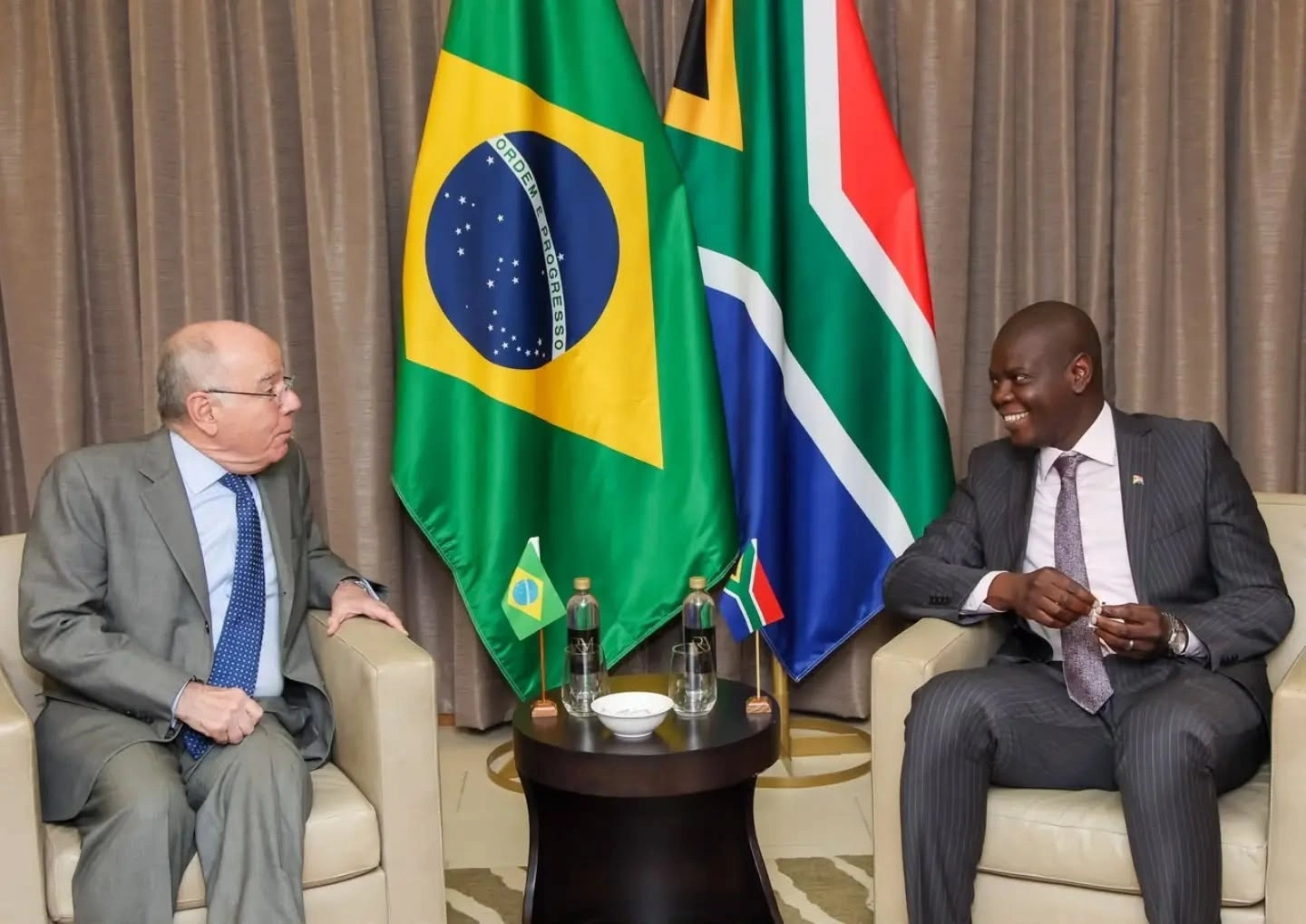
A closer Brazil South Africa trade relationship is being negotiated around a shared problem: American tariffs on both economies. Meeting in Pretoria, the two governments named trade, critical minerals, manufacturing and technology as the ground for deeper work, and quietly left their poultry and sugar disputes for another day.
What the Brazil South Africa trade talks actually cover
The eighth session of the South Africa-Brazil Joint Commission met in Pretoria in late August, co-chaired by international relations minister Ronald Lamola and Brazilian foreign minister Mauro Vieira. Business Day reported on 27 August that the two sides set out trade, critical minerals, manufacturing and technology as the areas where the relationship should grow.
The meeting reviewed the existing stack of bilateral agreements and memorandums rather than signing a new one. Brazil also sent a multisectoral trade mission to South Africa to look for openings.
Both governments framed the exercise as moving beyond a commodity relationship. The stated aim is to raise the value of what they exchange, not only the volume.
Why now: two tariff shocks, one response
South Africa spent much of the past year under a 30% United States tariff on many of its exports, the steepest rate applied to any country on the continent, before a partial reversal earlier this year. Brazil was hit in July 2026 with a 25% tariff on most imports.
The measures against Brazil were tied to Washington’s objections to the domestic prosecution of former president Jair Bolsonaro, which Brasília rejects as political. Vieira described the tariffs on both countries as political in nature.
That shared exposure is the engine of the current warmth. Both governments have been hunting for markets that do not depend on American goodwill.
South Africa has been busy elsewhere too. In August, India agreed to ease long-standing plant-health barriers on South African citrus after nearly a decade of talks, opening a market of roughly 1.5 billion people.
The numbers that complicate the romance
The trade balance leans heavily towards Brazil. South Africa exported R5.2bn worth of goods to Brazil in 2025 and imported R27.3bn, according to figures published by Business Leadership South Africa on 31 August.
The two economies also overlap more than they complement each other. Both have sizeable automotive, mining, agro-processing, renewable energy, chemicals and pharmaceutical industries.
That overlap is why the poultry and sugar disputes matter. Brazil is a far larger producer of both, and South African growers have argued for years that cheap imports are undercutting them.
Trade between the two currently runs under the preferential agreement between the Southern African Customs Union and Mercosur, which has been in force since 2016. Many goods still fall outside its preference rules.
A domestic critic asks for the arithmetic first
Writing on 31 August, BLSA chief executive Busi Mavuso welcomed the diplomacy but questioned the sequence. She noted that the process was led by the Department of International Relations and Cooperation rather than the trade department, which she read as a sign that the conversation was political before it was economic.
Her central objection is evidential. No serious modelling of the bilateral supply response has been published, she wrote, and that analysis should be commissioned and made public before any deeper agreement is advanced.
She contrasted the Brazil relationship with South Africa’s economic partnership agreement with the United Kingdom. On her figures, South Africa imported R117.8bn from the UK in the reference year and exported R179.1bn, a surplus of R61.3bn, under an arrangement that does not require immediate reciprocity.
The wider point is that South Africa has signed no new free-trade agreement since the British one. Negotiations with India have run for years without a result.
Minerals, medicines and the South-South pitch
Lamola put critical minerals at the centre of the opportunity, arguing that demand for the metals needed for the energy transition is likely to increase fourfold by 2040. His warning was that both regions risk repeating the old pattern in which the Global South ships raw material and the value is captured elsewhere.
Vieira pointed to science, technology and innovation, naming space science, ocean research and healthcare. Brazil said it was ready to deepen co-operation on vaccine production and local health manufacturing, a priority for both governments since the pandemic.
Agriculture and food security are expected to form part of the expanded relationship as well. Both ministers also framed the partnership as a lever in multilateral forums, where they want a larger role for developing economies.
What to watch from here
The practical test is whether anything moves from the communique into a signed instrument. A Mercosur-SACU upgrade, or a bilateral arrangement on minerals processing, would be the first real evidence.
The second test is domestic. If Pretoria advances a broader deal without publishing the supply-response analysis its own business lobby is asking for, the poultry and sugar arguments will return with force.
For readers in Latin America, the interesting part is directional. Brazil is being treated in Pretoria not as a distant commodity supplier but as an industrial partner, and that reframing is what would make the relationship durable.
Background: Brazil Poll: Flávio Bolsonaro Closes on Lula and Edges Ahead in Run-Off.
Background: Brazil Tax Reform Timeline: Tech Sector Faces 2026 Invoice Shock.
Background: Fintechs and Digital Banks in Brazil 2026: Market Guide.
Background: Brazil Inflation Rate 2026: IPCA, Selic and What’s Next.
More: South Africa news in English, every day from The Rio Times.
Frequently Asked Questions
How big is trade between Brazil and South Africa?
Bilateral trade reached about US$2bn in 2025, according to Business Day. Brazil is now South Africa’s largest trading partner in Latin America and its second-largest in the Americas.
Why are Brazil and South Africa growing closer now?
Both were hit by United States tariffs: 30% on many South African exports from August 2025, and 25% on most Brazilian imports from July 2026. The shared exposure pushed both governments to diversify.
Does South Africa run a trade deficit with Brazil?
Yes. South Africa exported R5.2bn to Brazil in 2025 and imported R27.3bn, on figures published by Business Leadership South Africa.
What agreement governs the trade today?
Trade runs under the preferential trade agreement between the Southern African Customs Union and Mercosur, in force since 2016. Many goods still fall outside its preference rules.
What are the unresolved disputes?
South Africa accuses Brazil of dumping frozen poultry, and its cane growers list Brazil among subsidised-sugar exporters. Officials told Business Day those issues were not discussed at the joint commission.
Connected Coverage
This story sits inside our running coverage of Southern Africa, and belongs to the wider Africa: The New Scramble. For the tariff bridge that Mercosur already gives Latin American exporters into the region, see how Africa’s single market opened a trade door for Latin America, and for the currency backdrop across the continent read our report on Africa’s best-performing currencies.
This article was produced by The Rio Times’ automated newsroom system. How we use AI · Report an error · Editorial responsibility: Matthias Camenzind, Editor-in-Chief