
Brazil · 2026 ELECTION
Full coverage: Brazil election results 2026 — live count on October 4, runoff scenarios and what the polls say now.
Key Facts
- —What happened A new poll put challenger Flávio Bolsonaro numerically ahead of President Lula for the first time.
- —How big PoderData/Aya’s newest national poll has Flávio at 45% against Lula’s 44% in a runoff scenario.
- —What it means That one-point gap sits inside the poll’s margin of error, making the race a statistical tie.
- —The catch State polls disagree sharply: Flávio leads São Paulo and Mato Grosso; Lula still dominates Bahia and Pernambuco.
- —Who it affects In São Paulo’s governor race, a separate Atlas poll gives Tarcísio de Freitas a projected outright first-round win.
- —What comes next Pollster Datafolha was also expected to publish new numbers Thursday; none had appeared by early afternoon.
Runoff · Sunday, 25 October
Brazil Runoff 2026: Lula vs Flávio
Date, polls, debates, odds and how the runoff works, updated every day.
Brazil election 2026 · Brazil election polls · Brazil election odds · Brazil runoff date and results start · Brazil election results · All election stories
Prediction markets · who wins the runoff
Implied chance of winning Brazil’s presidency on 25 October, from traders’ prices.
Polymarket
Flávio Bolsonaro 76.8% · Lula 23.5% (US$188 million traded)
Kalshi (regulated in the US by the CFTC)
Flávio Bolsonaro 79% · Lula 21%
As of 19 October, 10:20 am ET (15:20 Lisbon), updated every 20 minutes. Prices are bets, not polls, and can move fast.
Why we show this: prediction markets turn real-money bets into a live probability that moves within minutes of the news, which is why investors, campaigns and newsrooms in the United States now follow them closely. We show them next to polls and official results, never instead of them.
A new national poll narrowly puts Flávio Bolsonaro ahead of President Lula. State-by-state numbers show Brazil’s race is still deeply split, a month before the vote.
Brazil’s presidential race got its first real jolt this week, a month before voters head to the polls.
A new poll shows challenger Flávio Bolsonaro narrowly ahead of President Luiz Inácio Lula da Silva.
Pollster PoderData and market-research firm Aya put Flávio at 45% in a hypothetical runoff matchup.
Lula was just behind at 44%, a gap that sits inside the poll’s margin of error.
A Symbolic First, Still a Statistical Tie
It is the first time this pollster has shown Flávio ahead of Lula in a head-to-head runoff.
The same firm had Lula ahead by that identical one-point margin just a week earlier.
PoderData surveyed 3,000 voters across all 27 states between August 30 and September 2.
Its reported margin of error is 1.8 percentage points in either direction.
That means the flip sits entirely inside normal polling noise, not a confirmed lead.
Analysts still called the moment symbolic, since Flávio had trailed in every earlier PoderData survey this year.
A one-point edge is not a real advantage on its own.
It still changed the tone of Brazil’s campaign coverage almost overnight this week.
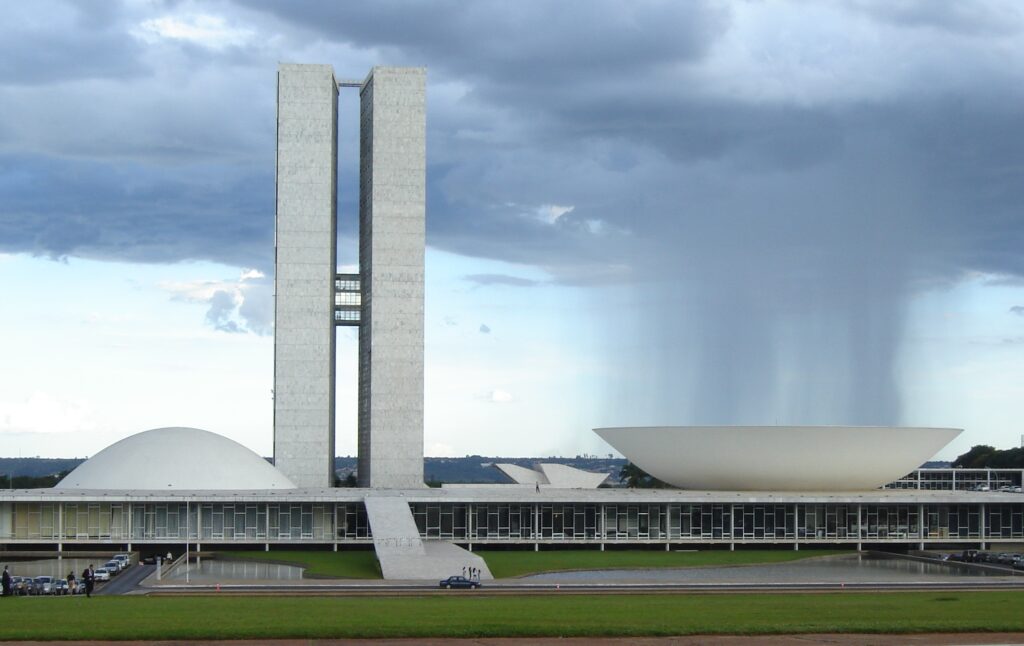
Brazil Splits Sharply by State
National numbers hide a much messier picture down at the state level.
Separate state-level polls released this week show voters splitting hard along regional lines.
Flávio leads comfortably in São Paulo, Mato Grosso and Espírito Santo.
Those three states together hold tens of millions of Brazil’s registered voters.
A São Paulo poll from AtlasIntel gave him 46.8% against Lula’s 43.3% in a runoff.
In Mato Grosso, pollster Real Time Big Data had Flávio ahead by a wider 52% to 37%.
Espírito Santo showed a similar pattern, with Flávio at 48% to Lula’s 42% there.
That Espírito Santo poll is about a week old, slightly older than the others.
Lula still dominates Brazil’s northeast, where his support has barely moved all year.
In Bahia, AtlasIntel gave him 58.1% against Flávio’s 29% in its own runoff scenario.
Pernambuco showed an even wider gap, with Lula ahead there by 59% to 35%.
That Pernambuco poll came from Real Time Big Data and was also released Thursday.
Two firms, AtlasIntel and Real Time Big Data, ran most of this week’s state polls.
Even so, direct comparisons between states remain tricky given each poll’s different fieldwork window.
São Paulo’s Governor Race Tilts Further
São Paulo state is separately holding its own election for governor this year.
An Atlas poll for the newspaper Estadão gave Governor Tarcísio de Freitas 51.1% of the vote.
Former São Paulo mayor Fernando Haddad trailed well behind, at just 39.9%.
That gap is large enough for Tarcísio to win outright in the first round.
Brazil’s election rules allow a first-round win for any candidate above 50%.
The Atlas survey questioned 1,810 voters and carried a margin of error of one point.
Datafolha’s Numbers Still Missing
One major pollster had not weighed in by early Thursday afternoon.
Datafolha is among Brazil’s oldest and most closely watched polling firms.
It was expected to publish fresh presidential numbers sometime on Thursday.
No new results had appeared by early Thursday afternoon.
No release time had been announced in advance, either.
Its last published reading came on August 21, nearly two weeks before this week’s flurry of polls.
It then had Lula ahead of Flávio by 47% to 43% in a runoff.
Analysts expect Datafolha’s numbers to shape the debate over Brazil’s real trend.
Its polls carry particular weight because of its long, closely tracked history in Brazilian elections.
Why the Race Keeps Shifting
Flávio Bolsonaro is a Rio de Janeiro senator running with his father’s backing.
Former president Jair Bolsonaro cannot run himself after last year’s coup-plot conviction.
Brazil’s Supreme Court sentenced him to more than 27 years in prison in September 2025.
He endorsed his son as the Bolsonaro family’s presidential candidate soon afterward.
Since then, Flávio has built real strength in richer southern and southeastern states.
Lula’s support remains strongest in poorer northeastern states that back his welfare record.
Third-place candidate Augusto Cury has also climbed to 10% in two recent national polls.
His rise could pull votes away from both front-runners before the first round.
Brazil holds its first-round presidential vote on October 4 this year.
A runoff would follow on October 25 if nobody clears 50% outright.
Pollsters disagree sharply on where the race stands right now.
Readers should treat any single poll as one data point, not a settled forecast.
More: Brazil news in English, every day from The Rio Times.
Frequently Asked Questions
Is Flávio Bolsonaro really ahead of Lula in the polls?
Barely, and only in one poll. PoderData/Aya gave Flávio 45% to Lula’s 44%, a gap inside the margin of error.
Why do state polls tell a different story?
Brazil is deeply split by region right now. Flávio leads comfortably in São Paulo, Mato Grosso and Espírito Santo; Lula still dominates Bahia and Pernambuco.
Has Datafolha published its own poll yet?
Not yet, as of early Thursday afternoon. Its new survey was expected the same day; no results or release time had appeared.
What is happening in São Paulo’s governor’s race?
A separate Atlas poll there gives Governor Tarcísio de Freitas 51.1% against Fernando Haddad’s 39.9%. That lead is large enough for Tarcísio to win outright in the first round.
When does Brazil vote for president?
The first round is set for October 4, 2026. A runoff would follow on October 25 if no candidate clears 50% outright.
Sources: PoderData/Aya, Poder360, CNN Brasil, AtlasIntel, Jornal Estadão (Atlas/Estadão poll), Real Time Big Data, Gazeta do Povo, Datafolha, CNN, Al Jazeera.
This article was drafted with automated assistance and reviewed before publication. How we use AI · Report an error · Editorial responsibility: Matthias Camenzind, Editor-in-Chief