Paraguay: Members of Brazil’s most dangerous criminal gang tried to escape from prison through a tunnel
RIO DE JANEIRO, BRAZIL – The Paraguayan police found a tunnel dug in one of the wings of the Ciudad del Este prison where members of the Brazilian criminal group First Capital Command (PCC) were being held.
They had been trying to escape, and the officers managed to prevent them from carrying out their escape plan.
This Thursday, the prison authorities detected the well after a search, following reports from the Security, Information and Intelligence Unit of the Ministry of Justice, which had found evidence and immediately warned about the event.

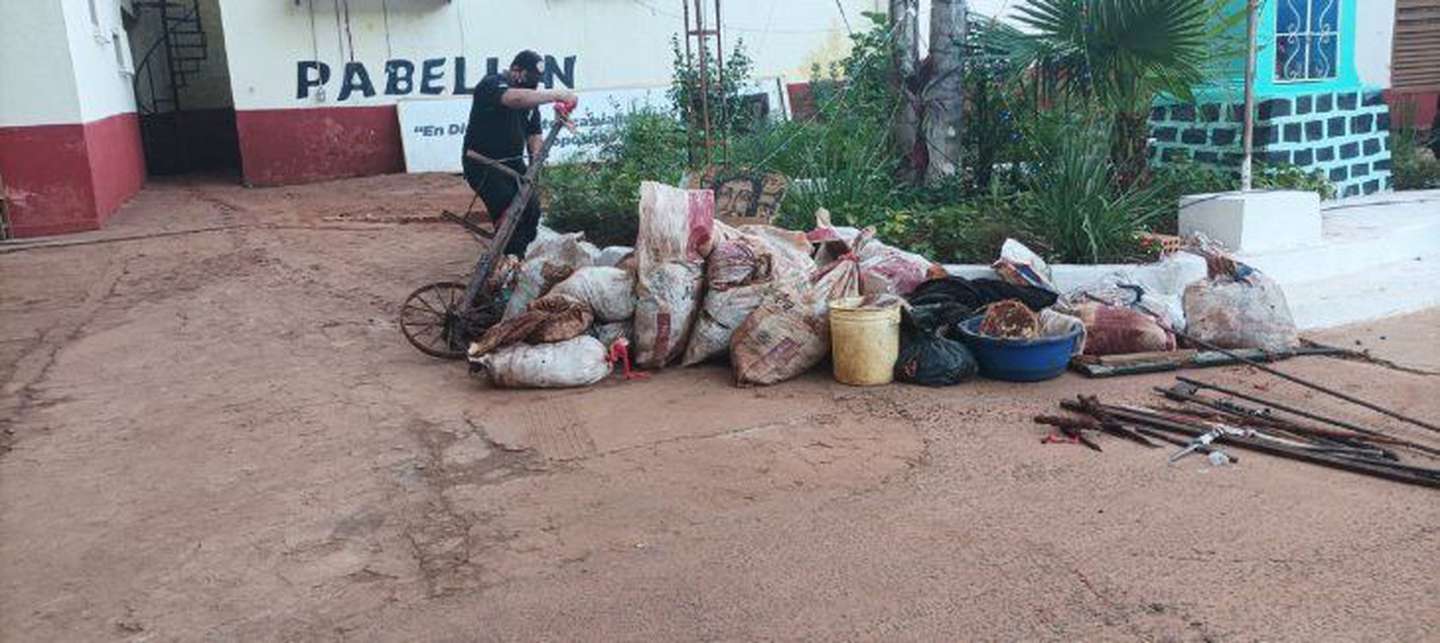
According to preliminary data, the well had been under construction for a week, and the outlet was planned to be in the backyard of the prison, in a construction area. It was also stated that it has a diameter of one and a half meters and is about five meters deep.
In an interview with the Paraguayan media Monumental 1080 AM, Commissioner Humberto Benítez, Director of the Alto Paraná Police, explained that “an escape plan was aborted in the Ciudad del Este prison, after the discovery of a tunnel in one of the wards”.
He explained that the tunnel was under construction and was located in cell six of the “Blanco” ward.
Twenty minutes after the search began, the police discovered that the entrance was under one of the beds of the building where the PCC members were imprisoned.
The police chief said: “They were storing the earth in several bags. Today, this escape attempt was aborted, thanks to the intelligence work”. He also indicated that the criminal organization members had hired other convicts from the cellblock to dig the well and that, fortunately, those responsible were all identified.
The operation was carried out by three groups of penitentiary agents, led by the prison director, Domingo Amarilla.
What is the First Capital Command, and why are they known as the most dangerous gang in Brazil?
The First Capital Command is a gang inspired by the Red Command (Comando Vermelho), a 1970s criminal organization. Both were formed by prisoners who organized themselves into groups to defend themselves within Brazil’s prison system.
The PPC emerged after the October 1992 massacre at the Carandiru prison in São Paulo, where Brazilian security forces killed more than 100 prisoners during a riot.
A year later, a group of eight inmates transferred to the Taubaté prison was trying to demand justice for the massacre and better prison conditions.
They acted as a “syndicate” of prisoners dictating rules inside the prisons with riots and violent attacks. Still, later the group expanded its influence and criminal business outside the jails.
The PCC has a drug market in almost every Brazilian state, and authorities believe they use bank robberies to finance themselves.
Key Facts
— Deep Dive
— For the complete picture, read our in-depth guide: Paraguay: Washington's Most Valued Ally in Latin America
More: Brazil news in English, every day from The Rio Times.
This article was produced by The Rio Times’ automated newsroom system. How we use AI · Report an error · Editorial responsibility: Matthias Camenzind, Editor-in-Chief