Botswana Lawmakers Want Results, Not Excuses
Two years after a change of government, Botswana’s lawmakers are asking for results rather than explanations. The debate shows which promises voters are still waiting on.

Politics: Botswana
Members of Botswana’s National Assembly used the debate on the President’s State of the Nation Address to press the government on medicine shortages, water, land titles and the funding of its De Beers stake. The debate took place in Gaborone on Tuesday 17 November 2026, and Botswana’s government news service reported it the next day.
The questions matter abroad because Botswana is a leading diamond producer and one of Africa’s steadier multiparty democracies. They show what voters in a country that changed its government two years ago still expect to see delivered.
Key Facts
- Who. MPs Arafat Khan and Kagiso Mmusi spoke in the debate on the President’s address.
- What. They raised medicines, water, land titles and the funding of the De Beers stake.
- Where. National Assembly, Gaborone, Botswana, Tuesday 17 November 2026.
- As of. 27 November 2026, 12:00 GMT.
Two years after a change of government, Botswana’s lawmakers are asking for results rather than explanations. The debate shows which promises voters are still waiting on.
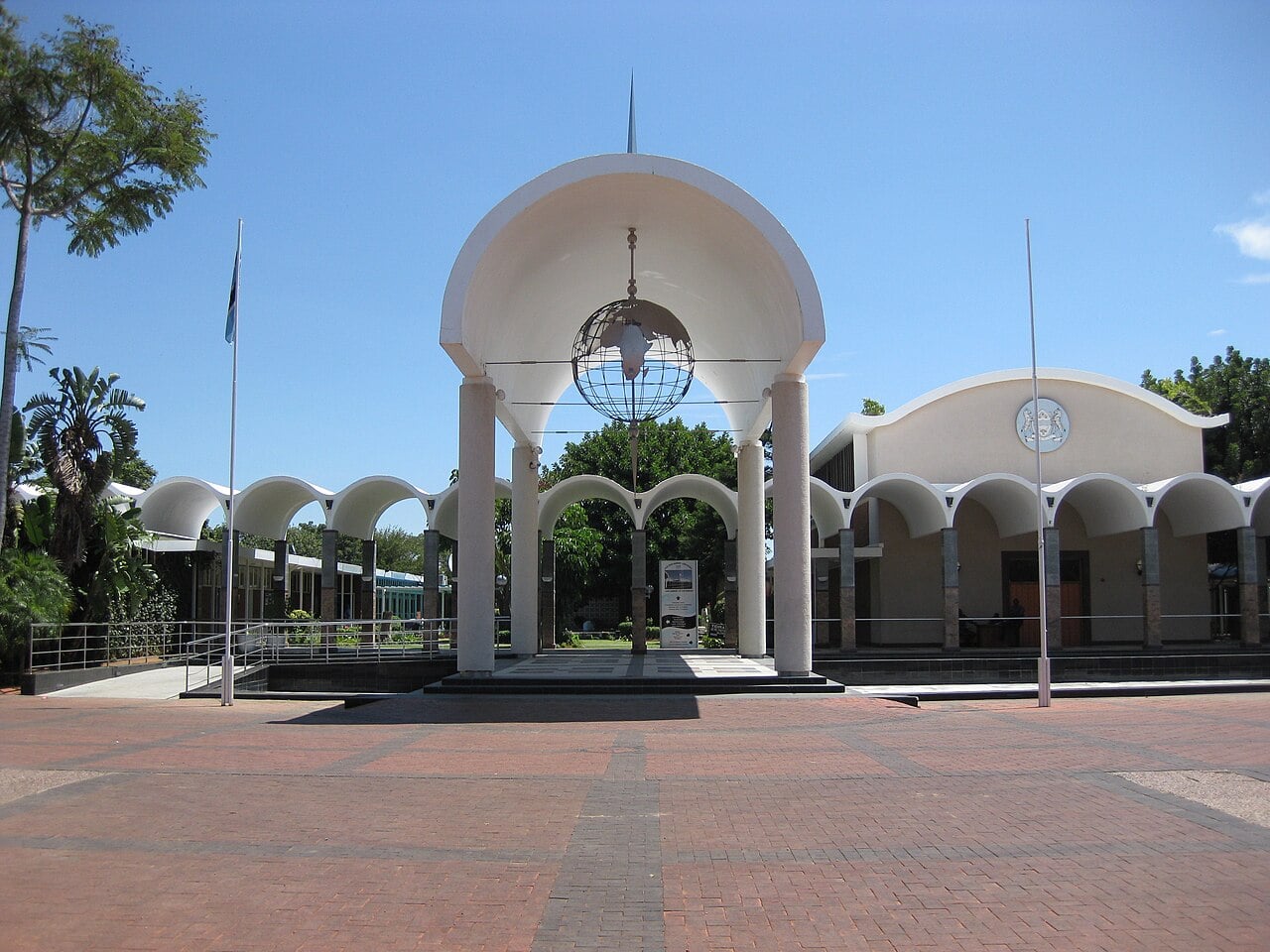
Arafat Khan, who represents the Molepolole North constituency, said Batswana, the people of Botswana, expect tangible results rather than political explanations. He told the debate that citizens still move from one health facility to another looking for medicines, and that the government cannot keep blaming its predecessor.
Khan asked the government to be open about what the national state of public health emergency has achieved. He said he took comfort in President Duma Boko’s assurance that the situation would return to normal.
On water, Khan said Molepolole has been short for more than a decade, although the government has floated a P3.66 billion project (about US$265 million at 13.83 pula per US dollar, the market rate on 27 November) to fix it. He said the project is also expected to create more than 1,000 jobs.
He raised delays in issuing secure land titles at the Mogoditshane Sub-Land Board, a local land authority, as well as overcrowded schools and slow identity cards and driving licences. Such delays are often blamed on system failures, he said, and he asked why those faults seem to hit only the public service.
Kagiso Mmusi, who represents the Gabane/Mmankgodi constituency, offered a counter-view on the economy. He said it would be inaccurate to say the economy had collapsed when the Umbrella for Democratic Change (UDC), the coalition that won the October 2024 election, took power.
Mmusi said the new administration inherited a stable economy short of cash because diamond demand had fallen, a problem worsened by COVID-19 lockdowns. He added that the diamond market was showing signs of improvement and that the economy was beginning to recover.
Mmusi also questioned how the government paid for raising its stake in De Beers, the diamond group, from 15% to 30%. He commended the move but said Parliament had not been told where the money came from.
He said villagers in Mmankgodi also lack water and medicines. He asked for an update on the A10 dual carriageway, a major road project, with no word yet on its contractor or start date, and noted that gender-based violence, which he called a national crisis, did not feature in the address.
President Boko used the address on Monday 9 November 2026 to name Professor Lekoko Kenosi the new head of the Directorate of Intelligence and Security, the state intelligence agency, the government news service reported that day. Kenosi took up the post on 8 November, after the contract of his predecessor, Brigadier Peter Magosi, ended on 13 October.
Boko also said the head of the Directorate on Corruption and Economic Crime, the anti-corruption agency, had left at the end of her contract, and that Batlhalefi Moeletsi took over on 1 November. The President said the government was committed to transforming state institutions to restore credibility, integrity and public trust.
Frequently Asked Questions
What did Botswana’s lawmakers ask the government?
They asked for results on medicine supplies, water, land titles and the funding of the De Beers stake. Roads and gender-based violence also came up.
Who runs Botswana’s intelligence agency now?
Professor Lekoko Kenosi, named by President Duma Boko in his annual address. He replaced Brigadier Peter Magosi, whose contract had ended.
More: Botswana news
Sources
Botswana government news service (BOPA, the state-run press agency), reports of 9 and 18 November 2026; RT market data for the pula rate, 27 November 2026.
This article was produced by The Rio Times’ automated AI newsroom. Editorial responsibility: Matthias Camenzind, Publisher and Editor-in-Chief. The Rio Times also runs Ask Rio Times, which answers from 100,000+ of our own articles, the daily Latin America Power Map, and prediction-market odds on elections and markets.. How we use AI · Report an error