
LATIN AMERICA · AFRICA · COFFEE
Key Facts
- —The country Brazil grows the most coffee; Panama’s Geisha sets auction records.
- —The record A 98-point Panama Geisha sold for US$30,204 a kilo in 2025.
- —What happened Top 2026 Best of Panama lot fetched US$18,004 a kilo in September.
- —Geisha at retail About US$90 to US$267 a pound at US roasters, October 2026.
- —What it means for you Yirgacheffe, Kenya AA and Colombian Supremo sell for US$22–37 a pound online.
- —Still open Brazil’s 2026 Cup of Excellence auction is set for 10 December.
Which origins win on cup quality, what award beans cost in the United States, and which regions and roasts to buy.
There is no single best coffee in the world, but juries and auction buyers keep choosing the same few origins. Panama, Ethiopia, Colombia, Kenya and Brazil lead, and most cost a US home brewer under US$40 a pound.
This guide ranks them on dated competition scores and auction prices from 2023 to 2026. It then lists what award beans cost at US roasters in October 2026, and which regions and roasts suit a home kitchen.
How Experts Decide the Best Coffee in the World
Coffee quality is judged by cupping, a standard tasting in which trained judges score brewed samples on a 100-point scale. Scores above 90 are rare, and lots that reach them can sell for many times the market price.
The Cup of Excellence, run by the Alliance for Coffee Excellence (ACE), is a national competition held in ten countries in 2026. Its winning coffees must score above 87 points and are cupped at least five times by an international jury.
Panama runs its own contest, the Best of Panama, organised by the Specialty Coffee Association of Panama (SCAP), a growers’ group. It held its 30th edition in 2026, and both programmes sell their winners at online auctions that publish every price.
The Specialty Coffee Association (SCA), the industry body based in Irvine, California, defines specialty coffee by its distinctive attributes. Those must earn it significant extra value; the SCA’s Coffee Value Assessment also weighs origin, producer and processing.
Ordinary markets reward quality too. The International Coffee Organization (ICO), the intergovernmental body of producing and importing countries, tracks prices by coffee type.
In August 2026, ICO prices for Colombian Milds averaged 387.46 US cents a pound, versus 322.24 cents for Brazilian Naturals. Robustas, the cheaper of the two main coffee species, averaged 180.63 cents.
The Ranking at a Glance
The order below weighs recent competition scores, auction prices and consistency across large harvests. It is a guide, not a verdict, because taste is personal.
- 1. Panama: record auction prices; a washed Geisha scored 96.25 at the Best of Panama in 2026.
- 2. Ethiopia: the homeland of Arabica; a Sidama natural sold for US$445 a pound at the 2024 Cup of Excellence.
- 3. Colombia: steady quality at scale; a Tolima Geisha won the 2023 Cup of Excellence with 90.61 points.
- 4. Kenya: small volumes of bright, juicy coffee from the SL28 and SL34 varieties selected in Kenya.
- 5. Brazil: the largest producer; a Geisha topped its 2025 Cup of Excellence with 91.68 points.
- 6. Guatemala and Honduras: Geishas posted the top scores at both 2026 Cup of Excellence contests, selling for up to US$449.10 and US$90 a pound.
Panama and the Geisha Auction Records
Panama grows a small share of world coffee. The US Department of Agriculture (USDA) does not list it separately in the tables of its July 2026 coffee report.
Panama’s fame rests on one variety, Geisha, also spelled Gesha.
The variety catalogue of World Coffee Research, a coffee research organisation, traces Geisha to Ethiopian coffee forests in the 1930s. It reached Panama through CATIE, a Central American research centre, in the 1960s, but farmers rarely planted it.
That changed in the mid-2000s, when the Peterson family of Hacienda La Esmeralda entered it in the Best of Panama. It broke the auction record of the day at over US$20 a pound, according to World Coffee Research.
The records have since multiplied. In August 2025 a 98-point washed Geisha from Hacienda La Esmeralda sold for US$30,204 a kilogram, about US$13,700 a pound.
The 20-kilogram lot went to Julith Coffee, a Dubai coffee company, for US$604,080, according to SCAP. The association called it a world record, and the same auction set a then-record total of US$2,861,200.
The 30th Best of Panama, announced on 2 August 2026, was won by a washed Geisha from the Lamastus family’s Elida estate. It scored 96.25 points, while Finca Lérida won the natural Geisha category with 95.63.
Hacienda La Esmeralda took the Copa Panamá, the prize for the producer with the most points overall. At the online auction on 23 and 24 September 2026, the winning Elida lot fetched US$18,004 a kilogram, about US$8,170 a pound.
JD.com, the Chinese e-commerce group, bought it for US$270,060. All 50 lots, 750 kilograms in all, sold for US$3,041,940, an average of about US$4,056 a kilogram.
Buyers from 11 countries won lots, the United States among them, according to SCAP. China paid 38% of the total value, Japan 16% and the United Arab Emirates 13%.
Hacienda La Esmeralda’s record Geishas grew in the Cañas Verdes area of Boquete, in Panama’s western highlands, according to SCAP. Altieri, the 2026 winner for non-Geisha varieties, farms at about 1,900 metres in Alto Quiel, Boquete, says its US seller Klatch Coffee.

Ethiopia, the Birthplace of Arabica
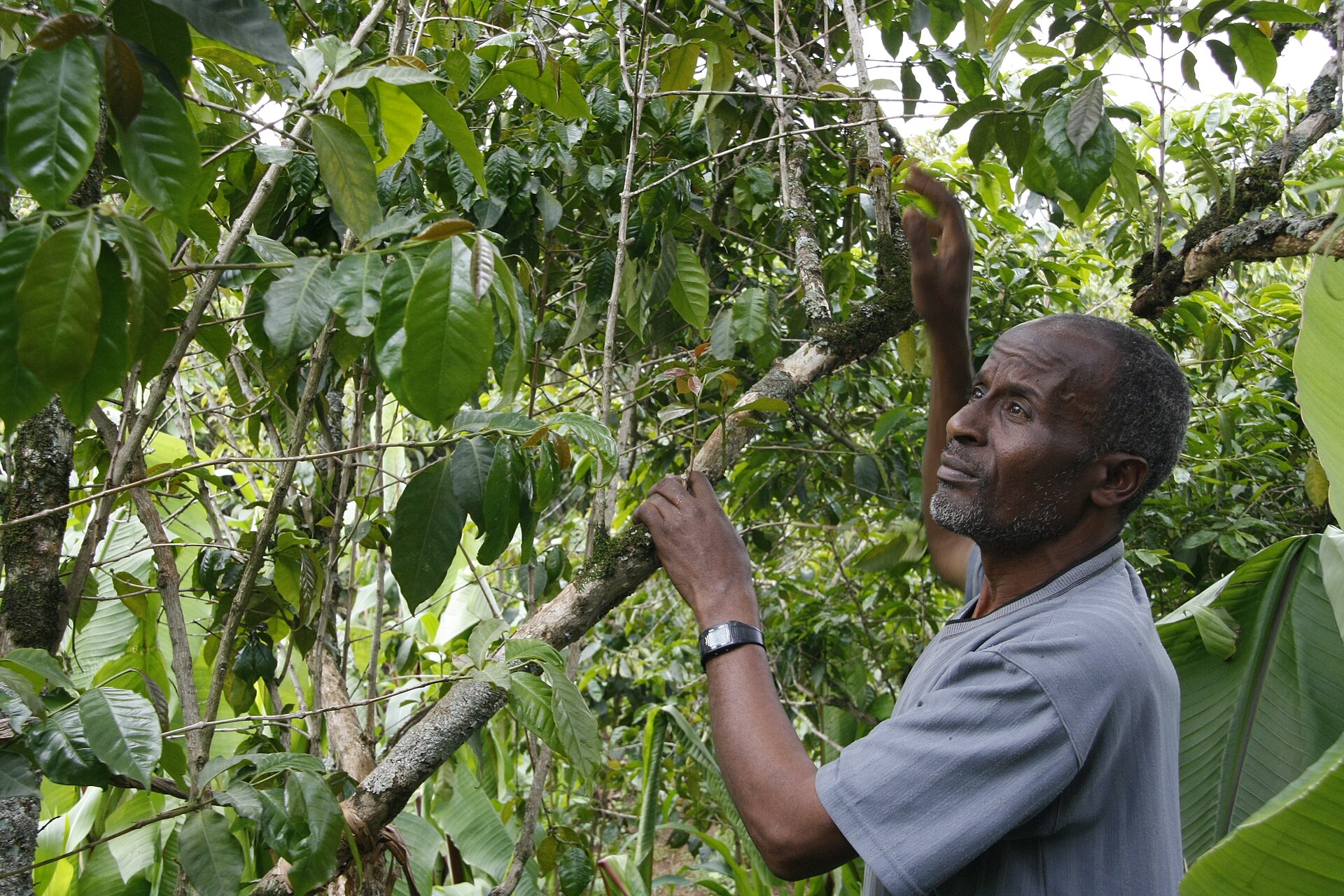
Coffea arabica is native to Ethiopia, where the species shows its widest genetic diversity, according to World Coffee Research. The USDA forecasts a record Ethiopian crop of 12.1 million 60-kilogram bags in 2026/27, the largest in Africa.
Ethiopia’s Ministry of Trade and Regional Integration put coffee export earnings at about US$3 billion in 2025/26, up from US$2.65 billion. The figures were reported in July 2026 by 2merkato, an Addis Ababa business news site.
The latest Ethiopian Cup of Excellence listed by ACE was held in 2024, and the Sidama region dominated it. Of 29 winning lots, 27 came from Sidama, and every one was a natural, dried inside the whole coffee cherry.
The winner, grown by farmer Basha Bekele Butusha, scored 90.50 points. At the auction on 27 August 2024, one of its lots sold for US$445 a pound.
Yirgacheffe, the Ethiopian name most US shoppers know, comes from the Gedeo zone of the South Ethiopia region. UNESCO listed the Gedeo Cultural Landscape as World Heritage in September 2023.
The Ethiopian News Agency (ENA), the state news service, noted the Gedeo people’s layered farming of trees, cereals and Yirgacheffe coffee. In 2019 ENA reported that the coffee authority was building a national Ethiopian Coffee brand above the Yirgacheffe, Harrar and Sidamo names.
Klatch Coffee’s notes for a washed Yirgacheffe cite jasmine, lemon and bergamot. Naturals often taste of riper fruit, because the bean dries inside the cherry.
For the bigger picture, see how coffee drove Ethiopia’s record US$10.7 billion export year.
Colombia, Steady Quality at Scale
Colombia is the third-largest producer, with 13.4 million bags forecast for 2026/27 by the USDA, behind Brazil and Vietnam. Its recent harvests have been weak, as monthly output data through 2026 show.
The National Federation of Coffee Growers (FNC) is the association that represents Colombia’s coffee farmers. It counted 12.58 million bags in the 12 months to August 2026, 15% less than a year earlier.
The FNC also guarantees farmers a daily purchase price. On 7 October 2026 it quoted 2,130,000 pesos (about US$658) per 125-kilogram load of dried parchment coffee.
Parchment coffee is bean still inside its papery husk, before export milling. Conversions use Colombia’s official exchange rate for 8 October 2026, 3,238.88 pesos per US dollar.
For how the exchange rate shapes farm income, see how the peso affects Colombian coffee growers. Colombia’s latest regular Cup of Excellence was held in 2023.
A washed Geisha from Duberney Cifuentes Fajardo’s Montreal farm in Tolima won it with 90.61 points. One lot sold for US$70.50 a pound to Onyx Coffee Lab, a roaster in northwest Arkansas, on 21 November 2023.
Tolima, Nariño and Huila supplied 26 of the 28 winning coffees that year. Tolima also runs its own fairs and auctions, such as a 2026 Geisha microlot sale in Chaparral.
ACE has listed no regular Colombian edition since 2023. Instead, it plans a Colombia Farmers Collection auction with Qima Coffee, a sourcing company, on 19 November 2026.
The FNC’s own quality contest, Colombia Tierra de Diversidad, names its winners on 15 October 2026 in Bogotá. An international auction of the lots follows on 16 October.
Kenya and Brazil, Brightness and Volume
Kenya grows far less, about 950,000 bags in the USDA forecast for 2026/27. Its reputation rests on varieties chosen for the cup.
SL28 was selected in Kenya in the 1930s by Scott Agricultural Laboratories, according to World Coffee Research. The catalogue rates its cup quality potential as very good but notes it is vulnerable to major diseases.
KALRO, Kenya’s state agricultural research organisation, lists SL28 and SL34 among its high-quality selections. It also bred the disease-resistant Ruiru 11 and Batian.
Kenya does not appear in ACE’s Cup of Excellence results. Its quality signal therefore comes from roasters, buyers and the prices paid for its top grades.
Brazil is the giant. The USDA forecasts a record 71.9 million bags in 2026/27, nearly 40% of world output.
Minas Gerais grows over 70% of Brazil’s Arabica, the USDA says. Brazil’s 2025 Cup of Excellence was auctioned on 9 December 2025.
Its top score, 91.68 points, went to a Geisha from Fazenda Rio Verde in Mantiqueira de Minas. The highest price, US$65.10 a pound, was paid for a natural from Fazenda Aracaçu in Sul de Minas.
Everyday Brazilian coffee is far cheaper and the backbone of world supply. Its weather moves world prices, as this look at Brazil’s weather and coffee prices explains.
Other Origins Worth Knowing
Geisha now wins far from Panama. At Guatemala’s Cup of Excellence, auctioned on 23 July 2026, a natural Geisha from El Injerto in Huehuetenango scored 91.86.
Its main lots sold for about US$161 a pound, and a small 33-pound lot fetched US$449.10, the auction’s top price. In Honduras, a washed Geisha from El Pimporro in Intibucá scored 90.50 and fetched US$90 a pound on 16 July 2026.
Peru, forecast at 4.78 million bags by the USDA, auctions its 2026 Cup of Excellence winners on 8 December 2026. Honduras is the largest grower in Central America, with 6.03 million bags forecast for 2026/27.
Two island origins carry premium prices in US shops. On 8 October 2026 Volcanica listed Hawaiian Kona Extra Fancy at US$129.99 a pound and Jamaica Blue Mountain from Wallenford at US$149.99.
What Award Beans Cost in the US
Auction prices are for green, unroasted coffee bought by roasters, and few record lots reach US shelves. Roasted beans of the same varieties cost far less, though still a premium.
The prices below were checked on the roasters’ online shops on 8 October 2026 and converted to a price per pound. All are in US dollars, the currency Panama also uses.
- Panama Geisha, Onyx Coffee Lab (northwest Arkansas): US$90 for 10 ounces of a Savage Coffees washed Gesha, or US$144 a pound; US$180 for a 2-pound bag.
- Panama Geisha, Klatch Coffee (family-owned, Southern California): US$89.95 for 170 grams of Elida Aguacate natural, about US$240 a pound.
- Panama Geisha, Klatch Coffee: US$99.95 for 170 grams of Altieri Luci natural, about US$267 a pound; Don Julián natural costs US$39.95, about US$107 a pound.
- Ethiopian Gesha, Intelligentsia (US specialty roaster): US$50 for 7 ounces of Gesha Village Oma natural, about US$114 a pound.
- Ethiopian Yirgacheffe, Volcanica Coffee (online roaster, Suwanee, Georgia): US$22.99 a pound for an organic washed lot, roasted medium-light.
- Ethiopian Yirgacheffe, Klatch Coffee: US$24.95 for 310 grams of Konga Qawissa washed Grade 1, about US$36.50 a pound.
- Kenya AA, Volcanica Coffee: US$26.99 a pound, roasted medium-light.
- Colombian Supremo and Brazil, Volcanica Coffee: US$21.99 a pound each, roasted medium.
Even at US$267 a pound, roasted Panama Geisha costs a sliver of the US$8,170 a pound paid for 2026’s top green lot. Colombian Geishas are cheaper; Onyx sells one from Brayan Smith at US$40 for 10 ounces.
The Bureau of Labor Statistics (BLS) put the average US retail price of ground coffee at US$9.30 a pound in August 2026. That was up 4.8% from US$8.87 a year earlier, after a peak of US$9.72 in April 2026.
Best Regions and Roast Levels for US Home Brewers
Roast level shapes flavour as much as origin does. Lighter roasts keep floral and fruit notes, while darker roasts add body and bittersweet, roasty flavours.
Look for the region on the bag, not just the country. Recent winners cluster in Sidama in Ethiopia, Tolima, Huila and Nariño in Colombia, and Minas Gerais in Brazil.
- Ethiopia, Yirgacheffe or Sidama: light to medium-light roast for pour-over or drip; Volcanica roasts its Yirgacheffe medium-light.
- Kenya: medium-light roast to keep its bright acidity; Volcanica labels its Kenya AA medium-light.
- Panama Geisha, Boquete: light roast, brewed by weight in small batches, since a 170-gram bag can cost US$90 or more.
- Colombia, Huila, Nariño or Tolima: medium roast for any brewer; Volcanica roasts its Colombian medium.
- Brazil, Cerrado Mineiro, Sul de Minas or Mantiqueira de Minas: medium to medium-dark for espresso and milk drinks.
Buy whole beans with a roast date and grind just before brewing. The SCA certifies home coffee makers that pass its third-party brewing tests, a useful filter when buying a machine.
What It Means for US Readers
The United States is the largest single-country coffee market, with consumption forecast at 26.95 million bags in 2026/27 by the USDA. Its imports are forecast at 26.9 million bags.
Prices may ease. The USDA forecasts record world output of 189.7 million bags and said prices fell 25% in seven months.
That decline, measured by the ICO’s composite price, covered the seven months before the USDA’s July 2026 report.
The ICO’s August 2026 report, however, flagged the risk of a very strong El Niño during Brazil’s next flowering. That flowering is critical for the size of the 2027/28 Arabica crop, and so for future prices.
For travellers, Panama hosts the World of Coffee trade show in Panama City from 23 to 25 October 2026, SCAP says. For Colombia’s capital, see this guide to the specialty café scene in Bogotá.
More on the third-largest producer is on the Colombia news hub.
What Is Not Known
ACE lists no Cup of Excellence for Colombia since 2023 or for Ethiopia since 2024, so newer head-to-head scores are missing. Scores from different competitions and juries are not directly comparable.
Retail prices change with every crop and roast batch, and the figures here are a dated snapshot. Kenyan auction prices move from sale to sale and were not independently confirmed for this guide.
Brazil’s and Peru’s 2026 Cup of Excellence results will only be priced at auctions on 10 and 8 December 2026. It is not known how the El Niño forecast or future US tariff decisions will affect US shelf prices.
Frequently Asked Questions
What is the best coffee in the world?
No single coffee holds that title. On recent scores and auction prices, Panama’s Geisha leads, followed by Ethiopia, Colombia, Kenya and Brazil.
What is the most expensive coffee sold at auction?
Panama’s specialty association cites a 98-point washed Geisha from Hacienda La Esmeralda. It sold for US$30,204 a kilogram, about US$13,700 a pound, in August 2025.
How much does Panama Geisha cost in the US?
On 8 October 2026, US roasters charged about US$90 to US$267 a pound for roasted Panama Geisha. Small 170-gram bags at the top end cost about US$90 to US$100.
How much does Ethiopian Yirgacheffe cost?
On 8 October 2026, US online prices ran from US$22.99 a pound at Volcanica Coffee to about US$36.50 at Klatch Coffee.
Which country produces the most coffee?
Brazil, with a record 71.9 million 60-kilogram bags forecast for 2026/27 by the USDA. Vietnam is second at 32.5 million bags.
What roast is best for Ethiopian or Kenyan coffee?
Light to medium-light roasts keep their floral and fruity notes. Colombian beans suit a medium roast, and Brazilian beans work well medium to medium-dark.
Where does Geisha coffee come from?
The variety was collected in Ethiopian coffee forests in the 1930s and reached Panama in the 1960s, according to World Coffee Research.
Sources: Primary: USDA Foreign Agricultural Service, Coffee: World Markets and Trade, July 2026; International Coffee Organization, Coffee Market Report, August 2026; Alliance for Coffee Excellence, competition and auction results; ACE, Ethiopia 2024; ACE, Colombia 2023; ACE, Brazil 2025; ACE, Brazil 2026; ACE, Guatemala 2026; ACE, Honduras 2026; ACE, Peru 2026; ACE, Colombia Farmers Collection 2026; SCAP, Best of Panama 2026 auction results, 24 September 2026; SCAP, Best of Panama 2026 competition results, 2 August 2026; SCAP, Best of Panama 2025 auction, 7 August 2025; SCAP, Best of Panama 2025 lots, 1 August 2025; FNC, internal reference price, 7 October 2026; FNC, FEPCafé monthly report (August 2026 data); FNC, Colombia Tierra de Diversidad 2026; Superintendencia Financiera via datos.gov.co, official exchange rate (TRM); US Bureau of Labor Statistics, average price of ground coffee; Specialty Coffee Association, What Is Specialty Coffee; SCA, Certified Home Equipment; World Coffee Research, Geisha (Panama); World Coffee Research, SL28; World Coffee Research, History of Arabica; KALRO Coffee Research Institute; Ethiopian News Agency, Gedeo Cultural Landscape, 17 September 2023; Ethiopian News Agency, umbrella Ethiopian coffee brand. Regional: 2merkato, July 2026. US retail prices (8 October 2026): Onyx Coffee Lab; Onyx, Colombia Gesha; Klatch Coffee, Elida; Altieri; Don Julián; Yirgacheffe; Intelligentsia; Volcanica Coffee, Yirgacheffe; Kenya AA; Colombian Supremo; Brazil; Kona; Jamaica Blue Mountain (all accessed 8 October 2026).
Editorial responsibility: Matthias Camenzind, Editor-in-Chief · Editorial standards · Report an error
Part of our ongoing coverage
Africa: The New Scramble — the great-power contest over the continent.