In Chile’s Atacama, the driest desert on Earth, an extraordinary event unfolds sporadically.
Known as the “Flowering Desert,” this phenomenon occurs when unexpected rain showers—often linked to El Niño—revive seeds that have been dormant for decades.
Suddenly, the barren sands burst into a vibrant display of yellows, oranges, and pinks, transforming the landscape dramatically.
The Atacama’s harsh climate, characterized by scant rainfall and severe temperature swings, has shaped its flora’s unique adaptations.
Plants here evolve tough seeds that can withstand extreme aridity, lying in wait for the perfect conditions to sprout.
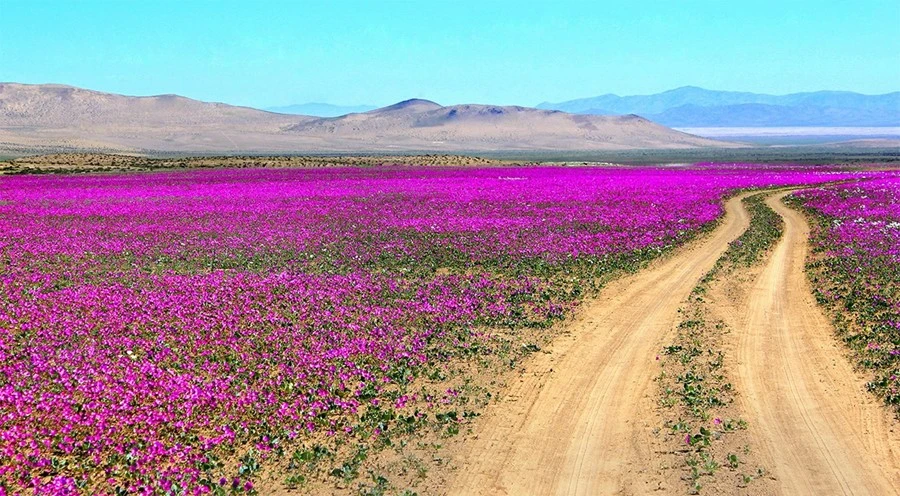
This blooming period, though brief, is a crucial time for local wildlife. It attracts a diverse mix of insects, birds, and mammals, all drawn by the abundance of flowers.
These species engage in pollination and seed dispersal, essential processes that maintain the desert’s floral diversity.
However, the spectacle faces threats from climate change and human interference, prompting strict conservation efforts.
Guidelines emphasize the importance of following designated paths and not picking flowers or disturbing seeds.
They also stress the need to remove all trash to ensure this phenomenon persists for future generations.
The Atacama‘s flowering desert stands as a stark reminder of nature’s resilience and adaptability.
It reveals the beauty and continuity of life in even the most inhospitable environments, underscoring the delicate balance between survival and extinction.
This article was produced by The Rio Times’ automated newsroom system. How we use AI · Report an error · Editorial responsibility: Matthias Camenzind, Editor-in-Chief
Read More from The Rio Times