A Strategic Mistake: Colombian Business Leaders Clash with Petro Over Silk Road Accession
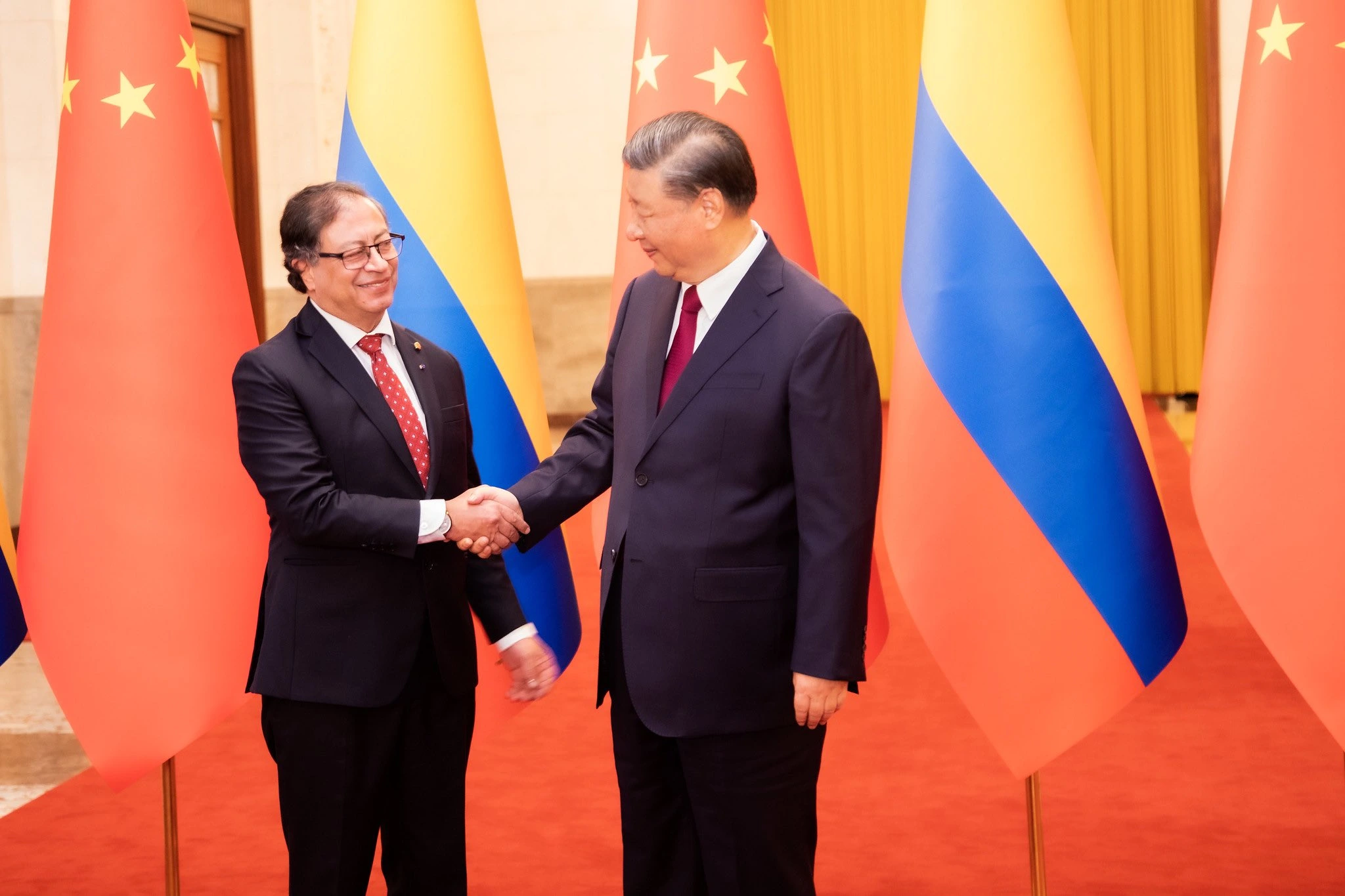
Colombia formally joined China’s Belt and Road Initiative (BRI) on May 14, 2025, sparking sharp divisions between the government and business leaders.
President Gustavo Petro hailed the move as a “historic step” to reduce Colombia’s $14 billion annual trade deficit with China and transform marginalized regions into tech hubs.
However, private-sector groups like the National Association of Industries (ANDI) condemned the decision as a strategic blunder, warning of devastating competition from Chinese industries.
The BRI, launched in 2013, aims to expand global connectivity through infrastructure projects and trade deals. Over 150 countries have joined, but Colombia’s accession marks a pivot from its traditional U.S. alignment.
Petro framed the move as vital for closing the trade gap, citing plans to boost exports of agricultural goods like coffee and avocados. He also highlighted ambitions to turn San Andrés, Buenaventura, and Zipaquirá into digital services hubs, leveraging undersea fiber-optic links to Asia and Europe.
Critics argue these goals clash with reality. In 2024, Colombia’s exports to China fell 3.7% to $2.377 billion, while imports surged 15% to $14.768 billion. The deficit widened further in early 2025, with exports dropping 22.2% in the first quarter.
Colombia’s BRI Membership Sparks Debate Over Sovereignty
ANDI president Bruce Mac Master warned that Colombian industries-from automotive to plastics-cannot compete with China’s subsidized sectors, which often bypass labor and environmental standards. “We risk losing jobs and economic autonomy,” he said, urging the government to reconsider.
Opposition extends beyond ANDI. The Colombian-American Chamber of Commerce and Analdex, a trade association, joined calls for transparency, questioning the lack of public studies on long-term impacts.
Former President Iván Duque, a pro-U.S. figure, echoed concerns, stating BRI membership would compromise Colombia’s strategic independence. The geopolitical stakes are high.
China has surpassed the U.S. as Colombia’s top trading partner, and its $9.2 billion in loans to Latin America raises debt sustainability fears. Panama’s recent BRI withdrawal under U.S. pressure highlights regional tensions, as Beijing seeks to expand influence.
Petro defended the move as a rejection of “external interference,” emphasizing Colombia’s sovereignty. However, critics counter that BRI terms remain unclear.
Public-private partnerships (PPPs) with Chinese firms, once booming in infrastructure and clean energy, have slowed due to Colombia’s fiscal crisis and peso devaluation.
While the government bets on BRI-driven tech investments, business leaders warn of deindustrialization. The trade deficit with China already exceeds $12 billion annually, leaving little room for error.
As Colombia navigates this gamble, the real test lies in whether BRI membership will bridge divides or deepen vulnerabilities.
More: Colombia news in English, every day from The Rio Times.
This article was produced by The Rio Times’ automated newsroom system. How we use AI · Report an error · Editorial responsibility: Matthias Camenzind, Editor-in-Chief