Troop Deployment Marks Argentina’s New Strategy for Security on Brazil, Paraguay, and Bolivia Borders
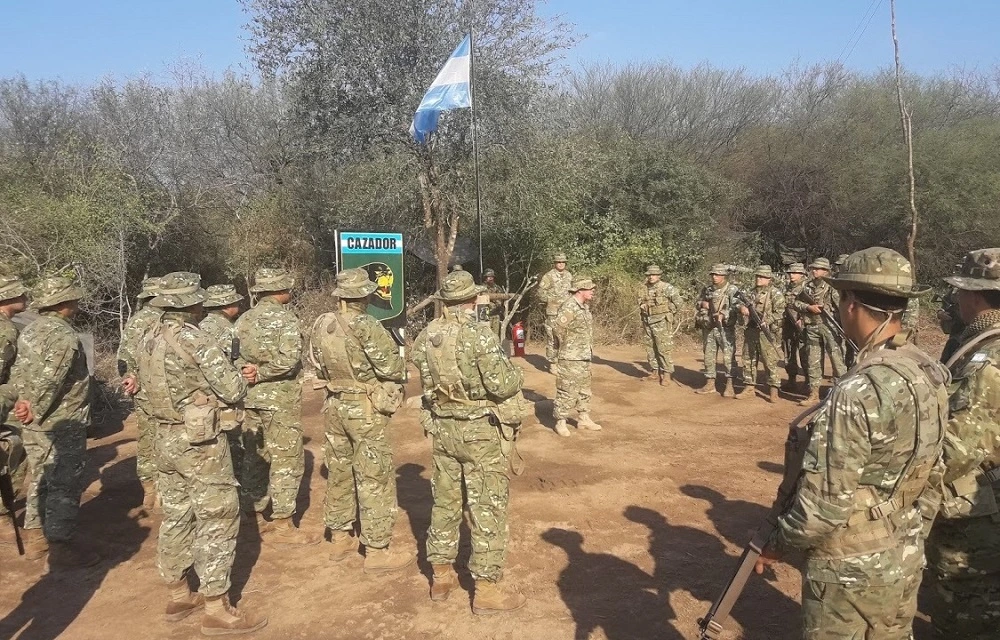
Argentina’s government, led by President Javier Milei, has launched “Operación Roca,” a major military deployment along its northern borders with Brazil, Paraguay, and Bolivia.
The Ministry of Defense confirmed this move, which aims to combat drug trafficking, smuggling, and illegal immigration in key trade corridors.
The operation, which began on April 15 and runs through December 15, 2025, involves over 10,000 army personnel, with 1,300 troops stationed permanently in intervention zones.
Authorities structured this campaign under Decree 1112/2024 and Resolution 347/2025, which allow the Armed Forces to operate in rural, uninhabited areas away from official crossings and urban centers.
The government has equipped troops with drones, mobile radars, helicopters, Diamond surveillance aircraft, and advanced communications systems. The military can now temporarily detain civilians caught committing crimes, a power previously reserved for police forces.
The government argues that these measures will protect the movement of legal goods and secure Argentina’s position in regional trade. Officials stress that criminal groups threaten not only public safety but also the country’s ability to maintain efficient export and import flows.
The operation’s flexible action plan adapts to the varied geography of the northern border, ensuring coverage of critical points used for both legal commerce and illicit activities.
Coordinated Efforts in Border Security
The Ministry of Defense and the Ministry of Security coordinate the operation with the National Gendarmerie and local authorities. They have also launched the Plan Güemes, a parallel initiative to reinforce state presence and disrupt criminal control in border areas.
The government claims that the new system will enable real-time cooperation with Bolivia, improving interception of illegal flights and shipments. While officials defend the deployment as necessary for national defense and economic stability, critics raise concerns about oversight and civil liberties.
They warn that the lack of public information about the military’s rules of engagement is troubling. The government maintains that the operation follows national law and international norms, and that neighboring countries have been informed as required.
Argentina’s move reflects a pragmatic approach to securing its borders and trade routes in a region where organized crime and illicit flows have long undermined legitimate business.
The success of Operación Roca will likely depend on the government’s ability to balance security, trade interests, and civil rights.
Key Facts
— Deep Dive
— For the complete picture, read our in-depth guide: Paraguay: Washington's Most Valued Ally in Latin America
More: Argentina news in English, every day from The Rio Times.
This article was produced by The Rio Times’ automated newsroom system. How we use AI · Report an error · Editorial responsibility: Matthias Camenzind, Editor-in-Chief
Read More from The Rio Times