Soybean Surge: Brazil’s Bumper Crop Boosts China’s Imports by 11.7%
In April 2024, China boosted its soybean imports from Brazil by 11.7%, totaling 5.92 million tons.
Despite severe floods in Brazil’s key agricultural region, Rio Grande do Sul, the country managed to harvest and export a significant amount of soybeans.
This increase is part of China’s strategy to diversify its agricultural imports and secure its food supply.
Interestingly, while Brazil saw an uptick in shipments to China, the U.S. also reported a 44% increase in soybean exports to China in April, totaling 2.45 million tons.
However, overall U.S. shipments to China this year have fallen by 40% compared to last year.
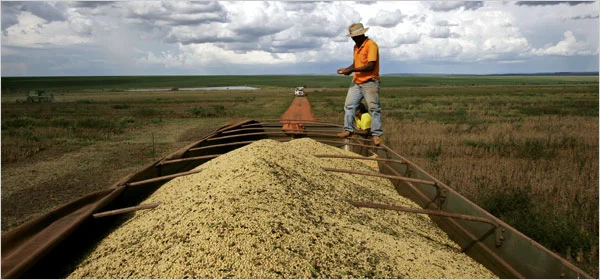
From January to April, Brazil’s total soybean exports to China surged by 72% year-over-year, reaching 15.9 million tons.
This robust growth highlights Brazil’s crucial role in feeding China’s massive demand for soybeans.
These developments are significant for the global agricultural market. They not only affect international trade dynamics but also impact soybean pricing globally.
China’s increasing soybean imports highlight their crucial role in global food security and economic stability in agriculture.
This trend reflects broader economic shifts and highlights the interconnected nature of global supply chains in agriculture.
Background
Brazil’s journey with soybean exports is a topic of much debate among experts.
The relationship with China stands as a cornerstone for Brazil’s economy, serving as a major trade ally.
However, concerns about over-reliance on this single market have surfaced.
Despite a global push for self-sufficiency in food production, China has consistently been a leading buyer of Brazilian soy.
In early 2024, data revealed Brazil shipped out 9.46 million tons of soybeans, with an impressive 73% going to China.
The trend of dependence on China is not recent. Since 2010, the Asian nation has gradually increased its stake in Brazilian soy, moving from 65% to an average of 70.1% in the past five years.
More: Brazil news in English, every day from The Rio Times.
This article was produced by The Rio Times’ automated newsroom system. How we use AI · Report an error · Editorial responsibility: Matthias Camenzind, Editor-in-Chief