Spain’s Premier Calls Rival as Trump Cheers
Spain’s Socialist prime minister has congratulated his conservative rival, and Washington has noticed.
Spain Election 2026 · Reaction
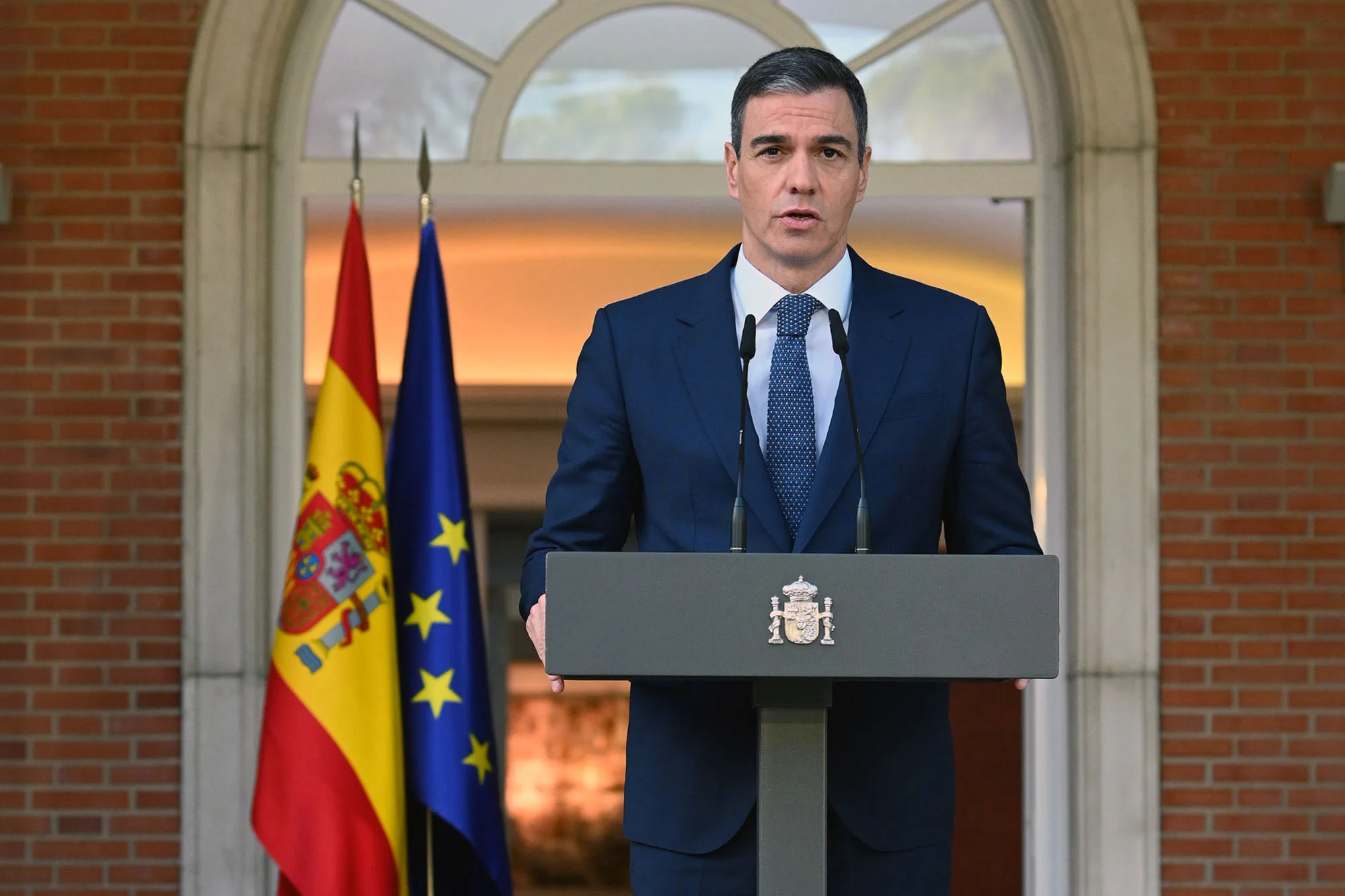
Spain’s prime minister picked up the phone on election night and congratulated the rival who is set to replace him. Pedro Sánchez, who has led the Socialist government since June 2018, called Alberto Núñez Feijóo, leader of the conservative People’s Party (PP), at about 4:30 p.m. ET (10:30 p.m. Madrid), PP sources said.
President Donald Trump also cheered Sánchez’s defeat in front of reporters outside the White House. The call came as the provisional count showed the PP and Vox, a conservative nationalist party, holding a majority together, which our Spain Election 2026 coverage tracks.
Key Facts
- Who. The prime minister phoned the PP leader after the count put his party first.
- Count. At 95% counted (5:27 p.m. ET): PP 133 to 134 seats, Socialists (PSOE) 115, Vox 52 to 53.
- Majority. The PP and Vox together reach about 185 of 350 seats; a majority needs 176.
- US angle. Trump called the Socialist defeat “great news”; Spain had resisted a 5% NATO defence target.
- Prediction markets. Polymarket, a prediction market, puts PP at 132 to 137 seats: 97.2% (US$72,901 traded, Nov. 29, 5:27 p.m. ET).
This story is part of our coverage of the Spain Election 2026. Dates, times and how to follow it are in our guide.
Spain’s Socialist prime minister has congratulated his conservative rival, and Washington has noticed.
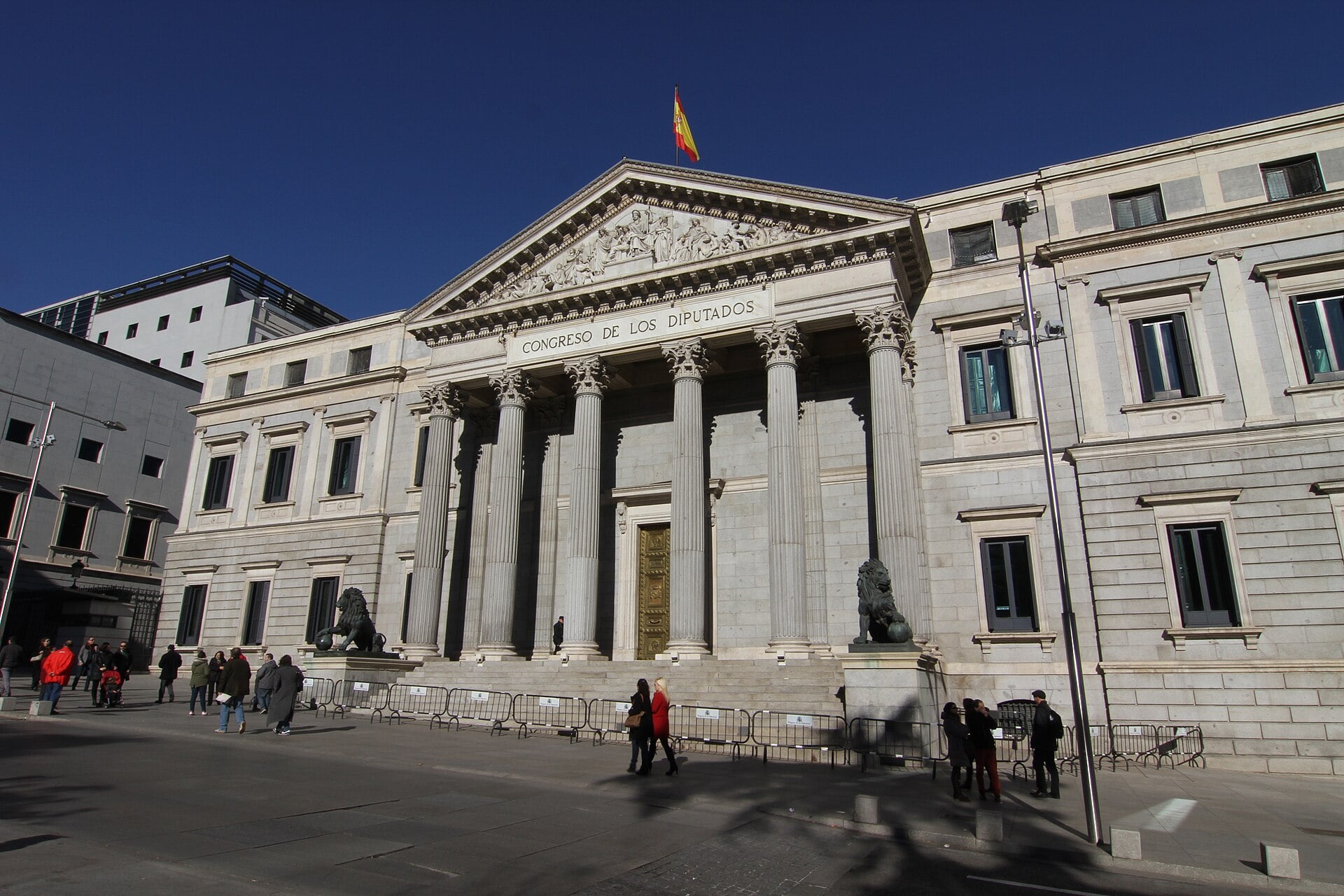
With about 95% of ballots counted, the PP leads with 133 or 134 of the 350 seats in Congress, on the provisional count published by the Interior Ministry. That is three or four fewer than in 2023, when it won 137 seats and still could not form a government.
The Socialist Party (PSOE) of Sánchez holds 115 seats, six fewer than in 2023. Vox rose from 33 seats to 52 or 53, and its roughly 16% of the vote and more than four million ballots are its best showing in votes.
Together the PP and Vox reach about 185 seats, nine above the 176 needed for a majority. Two more seats from the PP’s joint list with the Navarrese People’s Union (UPN), a regional ally, would lift the bloc to about 187.
Feijóo followed the count from his office at the PP headquarters on Génova street in Madrid, where former prime ministers Mariano Rajoy and José María Aznar also turned up. Supporters gathered outside with Spanish flags to celebrate.
Sánchez reached the Socialist headquarters on Ferraz street at about 10:30 p.m. Madrid time (4:30 p.m. ET), arriving in three official cars. He remains acting prime minister until a successor wins an investiture vote.
At a rally in Eibar, in the Basque Country, on Nov. 17, Feijóo said that whatever separated him from Vox, he would “always feel closer to Santiago Abascal than to Arnaldo Otegi” (translated from Spanish, as are all quotes here). Abascal leads Vox, while Otegi leads EH Bildu, the Basque pro-independence left, which won seven seats.
Abascal, Vox’s leader, closed his campaign in Valencia saying: “I aspire to say mission accomplished. Sánchez is leaving.”
On Sunday night, Vox supporters waved Spanish flags outside the party’s Madrid headquarters once the count passed 30%, and party sources spoke of “absolute satisfaction.” Polls at the start of the campaign had put Vox at about 63 to 70 seats, more than it won.
Even so, its seats give it the deciding voice on any PP government.
What Prediction Markets Say
Polymarket, a crypto-based prediction market, priced the PP at 132 to 137 seats at 97.2% (5:27 p.m. ET, US$72,901 traded across the market), a bracket the provisional count already sits inside. These prices are bets, not polls or results.
Why we show this: prediction markets turn real-money bets into a live probability that moves within minutes of the news, which is why investors, campaigns and newsrooms in the United States now follow them closely. We show them next to polls and official results, never instead of them.
Turnout reached 79.6% on the provisional count, the highest since 1982. A bigger electorate did not save the Socialists, who lost Seville in a general election for the first time in their history.
Asked by a reporter about Spain, Trump replied: “Pedro Sánchez lost? Oh, that’s good.
He did a terrible job. He deserves to lose.”
He then called it “great news” (translated from Spanish reports of his remarks). Trump has criticised Sánchez before, above all for refusing to commit 5% of Spain’s GDP to defence, a target agreed within NATO.
How a Feijóo government would handle that target is an open question for Washington and for Spanish taxpayers. Under the Spanish Constitution, the new Congress must be convened within 25 days of the vote, which means by Thursday, Dec. 24.
Feijóo then needs to win an investiture vote, the ballot that confirms a prime minister: an absolute majority on the first round, or a simple majority on a second round 48 hours later; in September 2023 he lost his first attempt after falling four votes short. The count is provisional, and the general count that adds votes from Spaniards abroad is still to come.
Seat totals have moved by one or two seats between updates, so the final figures may differ.
Frequently Asked Questions
Has Pedro Sánchez conceded Spain’s election?
PP sources say he phoned Feijóo to congratulate him on the party’s win. The count is still provisional, and the official result follows the general count.
Can the PP govern without Vox?
Not on the provisional numbers, because the party falls well short of a majority alone. Vox’s seats are what turn a first-place finish into a working majority.
What happens next?
The new Congress meets by late December, and Feijóo must then win an investiture vote. Talks with Vox come first.
Sources
- Spain’s Interior Ministry provisional results (interior.gob.es, 29 November 2026)
- Congress of Deputies
- Spanish Constitution, articles 68 and 99
- statements by Feijóo (17 November), Abascal (27 November) and Trump (29 November 2026). Earlier today: our first results report
This article was produced by The Rio Times’ automated AI newsroom. Editorial responsibility: Matthias Camenzind, Publisher and Editor-in-Chief. The Rio Times also runs Ask Rio Times, which answers from 100,000+ of our own articles, the daily Latin America Power Map, and prediction-market odds on elections and markets.. How we use AI · Report an error
LatAm Markets: Live Signals → — real-time movers, turnover leaders and FX across Latin America.