
RWANDA · ECONOMY
Key Facts
- —The country Rwanda is a landlocked East African country of about 14 million people, slightly smaller than the US state of Maryland.
- —The background Its economy has grown fast for years but relies on aid and loans, with public debt near 73% of GDP.
- —Why now In June the IMF approved a US$250 million loan programme, and its first semi-annual check has just ended.
- —What happened On Tuesday, 6 October, Rwanda’s finance ministry said IMF staff had agreed the first review of the programme.
- —The numbers Approval would release about US$35.7 million; growth hit 9.7% in the first half, while inflation reached 15.7% in August.
- —What it means for you The sum is small, but an IMF seal of approval reassures investors and donors as aid budgets shrink.
- —Still open The IMF Executive Board must still approve the review, which the ministry expects in December.
Rwanda’s IMF programme is on track, its finance ministry says, but the next payout still needs a board vote in Washington.
Rwanda has reached a staff-level agreement with the International Monetary Fund (IMF) on the first review of its loan programme. Once the IMF’s Executive Board signs off, expected in December, the country can draw about US$35.7 million.
The Ministry of Finance and Economic Planning announced the Rwanda IMF review result in Kigali, the capital, on Tuesday, 6 October. For the US, Rwanda matters as a partner in the US-brokered peace process with neighbouring DR Congo.
What the Rwanda IMF Review Found
The review covers a 38-month arrangement under the Extended Credit Facility (ECF), the IMF’s main lending tool for low-income countries. It lends on cheaper-than-market terms with long repayment periods.
The ministry said Rwanda met all measurable targets set for the end of June 2026. Albert Touna Mama, the IMF’s mission chief for Rwanda, said programme implementation has been satisfactory, according to the statement.
A staff-level agreement means IMF experts and the government agree on policies and figures. It is not final, because the IMF’s Executive Board, representing its 191 member countries, must approve the review.
The board approved the arrangement on Monday, 8 June 2026, for SDR 185.031 million (about US$250 million). Special drawing rights, or SDR, are the IMF’s own unit of account, based on a basket of major currencies.
The seven equal payments are SDR 26.433 million each, about US$35.7 million at approval and US$35.8 million on 5 October. The first was paid out in June, so December’s would be the second.
The IMF said 60% of each payment goes to budget support, meaning it helps fund government spending directly. The New Times, Kigali’s main English-language daily, also reported the agreement and the December timetable.
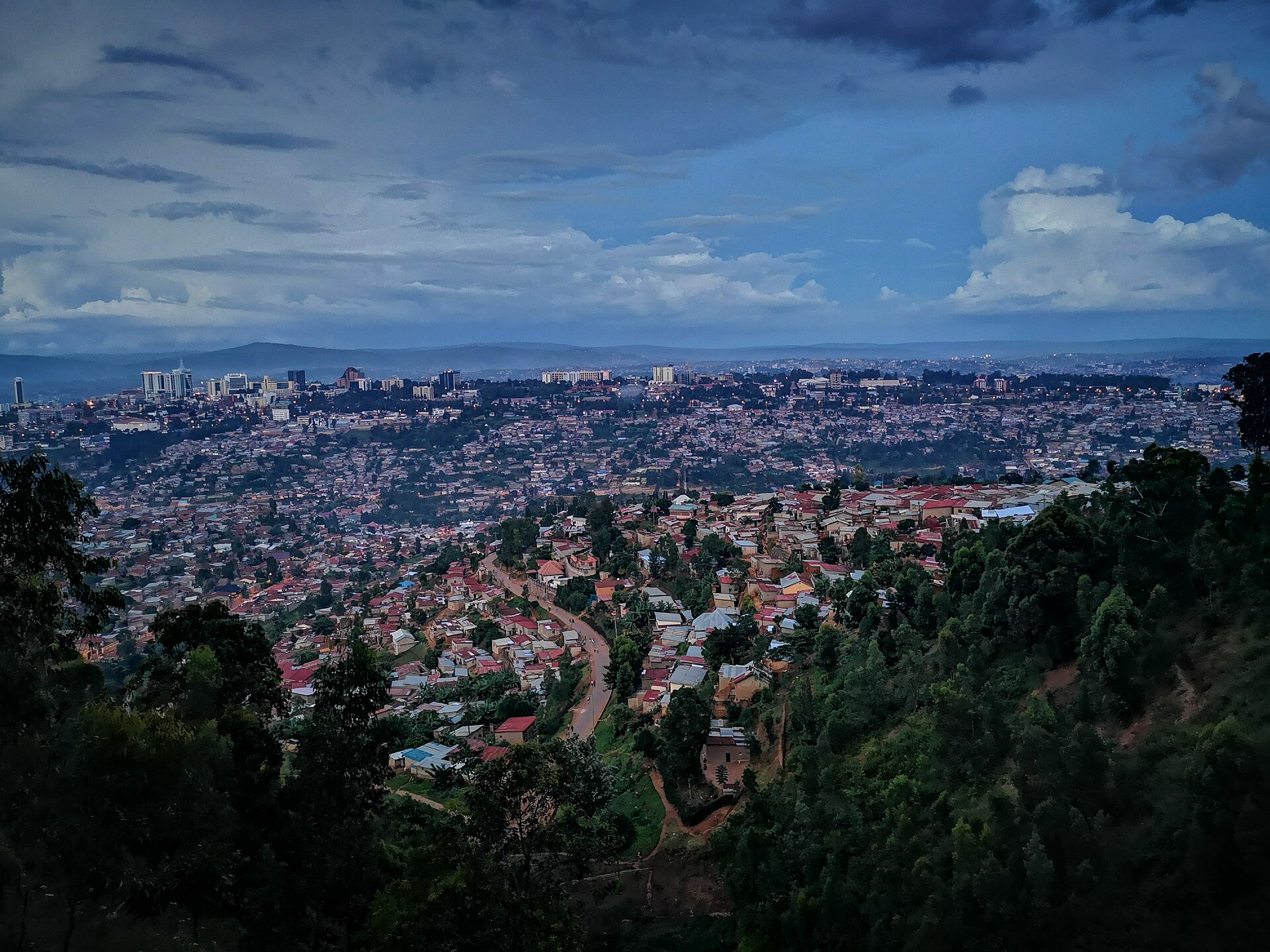
Fast Growth, but Inflation Has Jumped
Rwanda’s economy grew 9.7% in the first half of 2026, and growth is projected at 7.8% for the full year. That is well above the 6.8% the IMF projected for 2026 when it approved the programme in June.
The economy produced about RWF 23.4 trillion (about US$15.8 billion) in 2025, according to IMF figures. That is less than half the size of Vermont’s economy, and conversions here use exchange rates of 5 October 2026.
Inflation, however, reached 15.7% in August, far above the 5% medium-term target of the National Bank of Rwanda, the central bank. At that pace, prices would double in under five years.
The ministry blamed existing price pressures and higher world oil and fertiliser prices, including spillovers from the Middle East war. The central bank has tightened monetary policy in response.
When it approved the programme in June, the IMF projected average inflation of 10.4% for 2026. The August reading suggests price pressure has been stronger than expected.
What Rwanda Has Promised in Return
The ministry put the budget deficit at 4.8% of GDP for the 2025/26 fiscal year, which ended in June. Priorities include narrowing that gap and raising more revenue at home through a second medium-term revenue strategy.
IMF staff put total public debt, including guarantees, at about 73% of GDP for 2026, with a moderate risk of debt distress. That is below the US ratio, but poorer countries pay far more to borrow.
The government also pledged to prioritise spending carefully while protecting social programmes, and to manage public investment better. Foreign reserves cover about four months of imports, the statement said.
Finance Minister Yusuf Murangwa said the programme “will cushion the impact of the Gulf war and declining budget support”. He said the government remains committed to reforms that build a stronger, more self-reliant economy.
Risks named in the statement include volatile commodity prices, geopolitical tensions, possible El Niño weather shocks and tighter global financing. A new fuel procurement framework at the state energy company is expected to improve supply security.
Peace Talks and Aid Cuts Shape the Outlook
Rwanda’s western neighbour, the Democratic Republic of the Congo, has fought the M23 rebel group in its eastern provinces for years. UN experts have accused Rwanda of backing M23, which Rwanda denies.
On Friday, 27 June 2025, their foreign ministers signed a peace agreement in Washington, witnessed by US Secretary of State Marco Rubio. It commits both sides to end state support for armed groups and to build a regional economic framework.
That framework envisages mineral value chains, from mine to processed metal, developed with the US government and US investors. The region produces tin, tantalum and tungsten, which are used in electronics.
Murangwa’s reference to declining budget support reflects a wider squeeze. The United States and other donors have cut foreign aid budgets since 2025.
What It Means for US Readers
The United States is the IMF’s largest shareholder and holds an effective veto over major decisions that need an 85% majority. Routine reviews like this one are decided by the board as a whole.
A clean Rwanda IMF review supports the country’s place in the Washington-brokered peace framework, which links security to minerals investment. US companies weighing those mineral partnerships would deal with a government under IMF monitoring.
With budget support declining, as the minister noted, low-cost IMF money carries more weight in Rwanda’s finances. For travellers and tour operators, the programme changes nothing day to day.
What Is Not Known
The IMF had not issued its own statement on the review by Tuesday, leaving the finance ministry’s account as the main source. The exact Executive Board date in December has not been announced.
It is not clear whether new conditions were added, or how long the central bank expects inflation to stay in double digits. The dollar value of the payout will also shift with the SDR exchange rate.
What Comes Next
The IMF Executive Board is expected to consider the first review in December, according to the ministry. If it approves, Rwanda can draw about US$35.7 million, the second of seven payments.
The second review should follow about six months later, in line with the semi-annual schedule. Approval would not mean inflation or debt worries are over; it would mean the IMF judges policies to be on track.
Frequently Asked Questions
What is a staff-level agreement with the IMF?
It is a deal between IMF experts and a government on policies and numbers after a review. It becomes final only when the IMF Executive Board approves it, which for Rwanda is expected in December.
How much money does Rwanda get from the IMF?
The arrangement approved in June is worth about US$250 million over 38 months, paid in seven equal parts. Each part is about US$35.7 million, and December’s would be the second.
Why is Rwanda’s inflation so high?
The finance ministry cites existing price pressures and higher world oil and fertiliser prices linked to the war in the Middle East. Inflation reached 15.7% in August against a 5% target.
Is the IMF programme linked to the DR Congo peace deal?
Not directly, because the IMF programme concerns Rwanda’s budget and economy. Regional stability and the US-brokered peace framework do shape how investors see the country.
Does the IMF money affect visitors to Rwanda?
It has no direct effect, because the money supports the government’s finances. It does not change visa rules or travel conditions.
Sources: Ministry of Finance and Economic Planning (MINECOFIN), Rwanda, statement of 6 October 2026; IMF, Rwanda: Request for a 38-Month Arrangement Under the ECF (June 2026); IMF, SDR valuation of 5 October 2026; National Institute of Statistics of Rwanda, CPI August 2026; The New Times; The EastAfrican; US Department of State media note of 27 June 2025 (GlobalSecurity mirror); DRC-Rwanda Peace Agreement text (PA-X database) (all accessed 6 October 2026).
This article was produced by The Rio Times’ automated newsroom system. How we use AI · Report an error · Editorial responsibility: Matthias Camenzind, Editor-in-Chief