Portugal has a housing crisis, and the government’s package includes help to pay the rent
By Fábia Belém
In Portugal, there is little supply of houses and apartments for sale and rent, and the price of those available on the real estate market is increasing.
The impact on people’s lives is enormous.
There are cases of young people who work but cannot afford the rent and continue living with their parents.
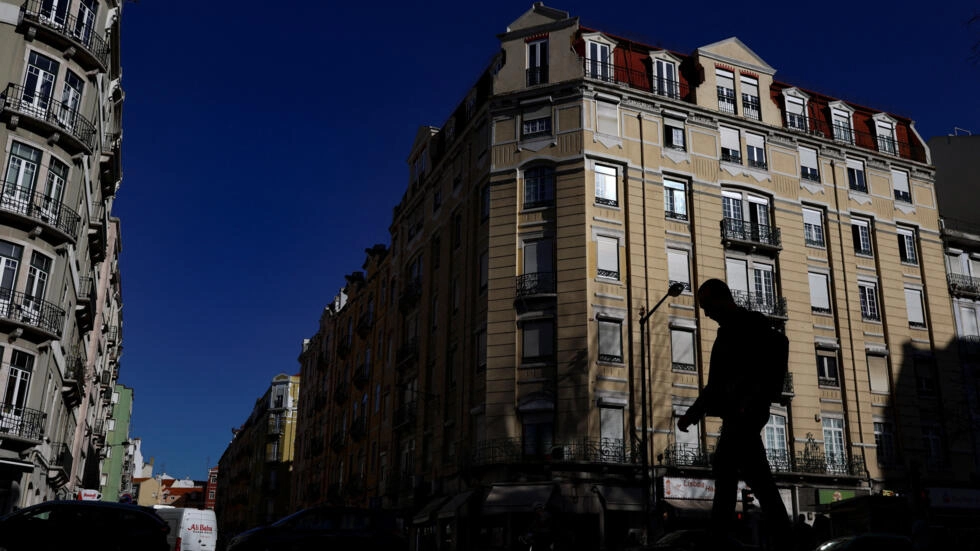
There are Lisboners who went to live far away from the Portuguese capital looking for affordable rent.
Many immigrants, including Brazilians, seek alternatives in small towns far from the main urban centers.
That’s what Felipe Barbosa, from Ceará, who has lived in Portugal for almost four years, did.
Owner of a small company that provides services in civil construction, he found himself in trouble when he decided to change the rent of a small house for an apartment in the district of Lisbon, where he already lived.
He tried but couldn’t find anything that fit the budget. He then moved to the city of Barcelos, located in the north of the country, where he found the needed property.
“I had an apartment available, which I could rent. That apartment was half the value of the apartment I was considering renting in the Lisbon region,” he recalls.
WAGES DON’T KEEP UP WITH RISING PRICES
According to data from the Portuguese Ministry of Labor, more than 50% of the workers were paid less than €1,000 last year.
In the case of young people under 30, this percentage rose to 65%.
As wage increases do not keep up with inflation, renting a property with low pay is always difficult.
In Lisbon, the rent for a one-bedroom apartment in reasonable housing is around €800.
REASONS FOR THE SIZE OF THE CRISIS
The housing problem is due to several factors.
One has been associated with local housing, a term in the country that designates temporary housing.
For example, many properties in Lisbon and Porto, which could be rented by those who live in the two cities, have been turned into local accommodations for tourists.
There are just over 100,000 scattered from north to south of the country.
In 2019, for example, the Portuguese capital was already the European city with the most local accommodations per thousand inhabitants, according to Moody’s agency.
Meanwhile, the real estate market apartments are often rented to those with greater economic power, such as foreign retirees and digital nomads.
In addition, many vacant properties are not put on the market and little new housing construction.
It is also worth noting that only 2% of the country’s total housing stock is public, as opposed to 20-30% in the Netherlands.
These and other factors mean that there is little supply and a lot of demand, pushing prices.
THE REPERCUSSION OF THE INTEREST RATE INCREASE
Considering that in Portugal, about 90% of the bank loans for home purchases are subject to variable interest rates, the impact of the interest rate increase on mortgages has been significant – many families have seen their mortgage payments double in the last year.
Brazilian real estate consultant Ana Paula Oliveira has been working in the Portuguese market for six years and has witnessed the suffocation of those trying to buy their own homes in these complex and uncertain times.
“We do a ‘bankable viability’ for a client today, and in 30 days, we don’t know if he has the capacity [financially to buy the property].”
“If we don’t find a property in that period, we don’t know if 30 days from now he still has the financial capacity to move on to the same property,” she said in an interview with RFI.
PLAN TO RESPOND TO THE CRISIS
The Portuguese government launched measures to respond to the housing crisis in February.
According to the plan, the state will regulate the value of rents for new contracts, and not only that: those who have income up to about €1,100 gross and spend more than 35% of their salary on rent will be entitled to receive a monthly allowance of up to €200.
“It is a temporary measure that will be in effect for the next five years, a period that we consider desirable so that the public housing supply and the set of other measures to support affordable renting allow the rental market to normalize so that there is housing to rent in affordable conditions,” stressed the Prime Minister of Portugal, António Costa.
Those with a mortgage and fit the same profile – income up to about €1,100 gross and spending on rent exceeding 35% of their salary – will receive a monthly allowance of €60 to pay the installments.
In addition, banks will be required to have a fixed rate for home loans.
LOCAL HOUSING AND “FORCED” RENT
To increase the housing supply, the package also provides that the Portuguese state can rent and sublet unoccupied houses and apartments, committing to pay the rents if tenants default on their obligation.
One of the proposals also suspends new licenses for local accommodation, and existing ones will be re-evaluated in 2030.
Excluded from this measure are rural lodgings in inland locations across the country.
“GOLDEN VISAS”
To combat real estate speculation, the plan also ends with issuing new Golden Visas, the name given to residence permits for investment activity.
Visas already issued can be renewed if the housing is for the owner’s or their descendants’ permanent residence or if the property is available for rent.
Part of the proposals is under public consultation until Friday.
Once the Council of Ministers approve it, they will proceed to the Parliament for a vote.
With information from RFI
More: Brazil news in English, every day from The Rio Times.
This article was produced by The Rio Times’ automated newsroom system. How we use AI · Report an error · Editorial responsibility: Matthias Camenzind, Editor-in-Chief