Painting Paradise, Sculpting Protest: MASP’s Nature Narrative
The Museu de Arte de São Paulo (MASP) unveils two exhibitions, Monet’s Ecology and Frans Krajcberg: Rediscovering the Tree, probing humanity’s bond with nature.
Running from May 16, 2025, to August 24 (Monet) and October 19 (Krajcberg), these shows drive MASP’s 2025 theme, Ecological Histories. They contrast sharply, revealing art’s power to mirror and challenge environmental realities.
Claude Monet’s exhibition displays 32 paintings, many unseen in the Southern Hemisphere, sourced from the Musée d’Orsay, Art Institute of Chicago, and National Gallery of Art. It recasts Monet as a witness to 19th-century ecological shifts.
His Fog and Smoke section, featuring Charing Cross Bridge (1903), captures London’s industrial haze. Meanwhile, his Giverny garden, a manicured ecosystem, shaped his Japanese Bridge series, reflecting control over nature amid Darwin’s ecological theories.
Conversely, Frans Krajcberg’s retrospective showcases over 50 works, emphasizing his eco-activist stance. The Polish-Brazilian artist (1921–2017) used charred wood and mangroves to craft sculptures like Flor do Mangue (1970s).
His 1960s shift to fire-ravaged materials and 1978 Manifesto do Naturalismo Integral marked him as a pioneer. Photographs from his 1970s Amazon expeditions document early deforestation, amplifying his urgent message.
Monet & Krajcberg at MASP
Monet’s idyllic landscapes contrast with Krajcberg’s raw protests. Monet manipulated Giverny, diverting rivers and importing plants, echoing industrial dominance. Krajcberg’s Série Queimadas (1980s) mourns ravaged forests, blending art with activism.
This juxtaposition highlights art’s dual role: celebrating nature and decrying its destruction.
MASP expects strong attendance, aiming to rival Monet’s 1997 show, which drew 401,201 visitors. Tickets, available online, grant access to both exhibitions.
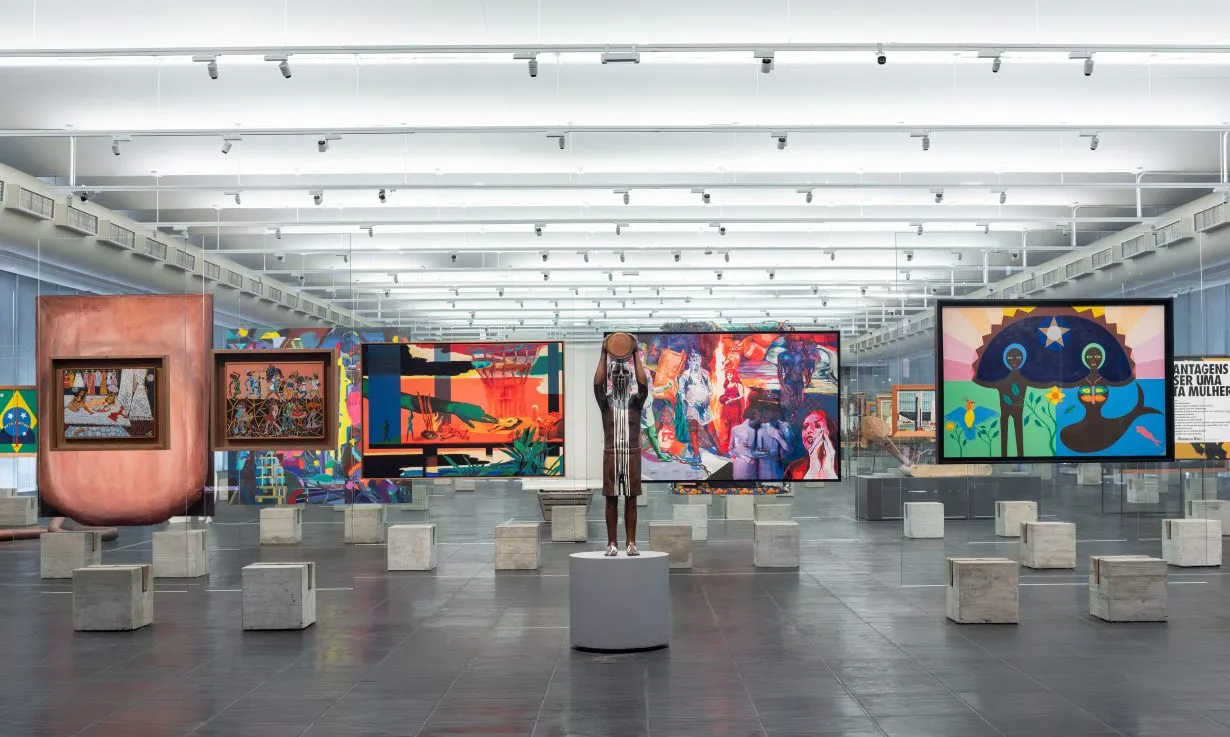
Monet’s works grace the first floor of Lina Bo Bardi’s iconic building, while Krajcberg’s pieces sit in the second basement, grounding their raw intensity. These exhibitions reveal art’s commercial and cultural weight.
Monet’s global draw fuels tourism, while Krajcberg’s activism resonates with rising environmental concerns, potentially shaping market trends. Together, they underscore art’s role in navigating humanity’s complex ties to nature, offering lessons for a world at an ecological crossroads.
This article was produced by The Rio Times’ automated newsroom system. How we use AI · Report an error · Editorial responsibility: Matthias Camenzind, Editor-in-Chief
Read More from The Rio Times