Brazil’s Art Market Defies Global Slump with Surging Growth and Gritty Resilience
São Paulo’s SP-Arte fair, Latin America’s largest art event, opens its 21st edition this week with 200 exhibitors, signaling Brazil’s unexpected rise in a volatile global market.
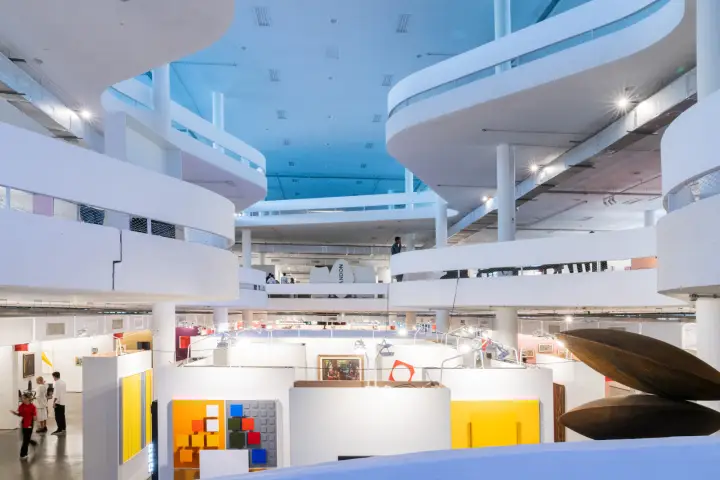
The fair’s director, Fernanda Feitosa, confirms 102 galleries and 81 design studios will showcase works at the Bienal Pavilion from April 2-6, 2025. Behind the vibrant displays lies a story of growth: Brazil’s art market expanded by 21% in 2023 to $580 million despite a 4% global contraction.
While the country holds just 0.89% of the $65 billion global art industry, its trajectory contrasts sharply with stagnation elsewhere. High import taxes—often 50-60%—remain a hurdle for foreign galleries, but temporary exemptions during SP-Arte slice rates to 15-16%.
This year, 12 foreign galleries will participate, down from a peak of 30%, yet four new international entrants join, drawn by Brazil’s untapped potential.
Domestic galleries rely on the fair for 99% of yearly revenue, while collectors like David Teplitzky, a U.S. expat based in Thailand, return to acquire emerging talent. “Brazilian artists have a raw energy missing elsewhere,” he says.
Private collectors and institutions now fill voids left by sparse government funding. Nearly 200 artworks were donated to São Paulo museums last year alone. MASP, the city’s flagship art museum, recently opened a $50 million wing funded entirely by private donors.
Such efforts reflect a market adapting to survive. Brazilian collectors also lead global spending, outpacing peers in 2024 purchases, per an Art Basel-UBS report. Diversity drives innovation.
Brazil’s Art Scene Flourishes with Socially Conscious
With 56% of Brazil’s population identifying as non-white, galleries increasingly spotlight Black and Indigenous artists. At SP-Arte, socially charged works sit alongside Yayoi Kusama’s polka dots and Beatriz Milhazes’ vibrant abstractions.
A chair woven from cigarette butts and ceramic shards exemplifies sustainable design gaining traction. Younger buyers, aged 35-55, flock to digital and socially conscious pieces, reshaping demand.
SP-Arte’s scale—up from 40 exhibitors in 2005—mirrors Brazil’s ambitions. Yet challenges persist. The fair’s $580 million sales pale next to Art Basel Miami’s $3 billion annual haul.
Logistics and currency volatility deter deeper global integration. Still, mergers like Almeida & Dale’s acquisition of Millan Gallery signal market maturation, blending primary and secondary sales.
Feitosa, who founded SP-Arte two decades ago, remains pragmatic. “Tax reforms are slow, but collectors see value here,” she says. With 70 international curators attending—triple recent figures—the fair fuels optimism.
Brazil’s art scene, once niche, now punches above its weight, blending grit, creativity, an sector hustle to carve a unique niche. As global markets wobble, its resilience offers a blueprint for survival.
This article was produced by The Rio Times’ automated newsroom system. How we use AI · Report an error · Editorial responsibility: Matthias Camenzind, Editor-in-Chief
Read More from The Rio Times