Naked with hand in pocket: without beaches, naturists from São Paulo take refuge in the countryside
The lack of official beaches for the practice of naturism on the coast of São Paulo has led thousands of fans of this lifestyle to carry out an arduous search for quieter stretches of sand, far from the prying eyes of bathers.
The most deserted and far from urban centers are the most sought-after.
During the week, naturists organize themselves into groups and “elect” a place to go the following weekend.

The Mansa and Lagoa beaches in Ubatuba; Praia Brava, in São Sebastião; and Desertinha, in Peruíbe, although not official, are the most sought-after.
Even without official recognition from the political authorities, Lagoa beach appears on Google Maps as “Naturist Lagoon Beach”.
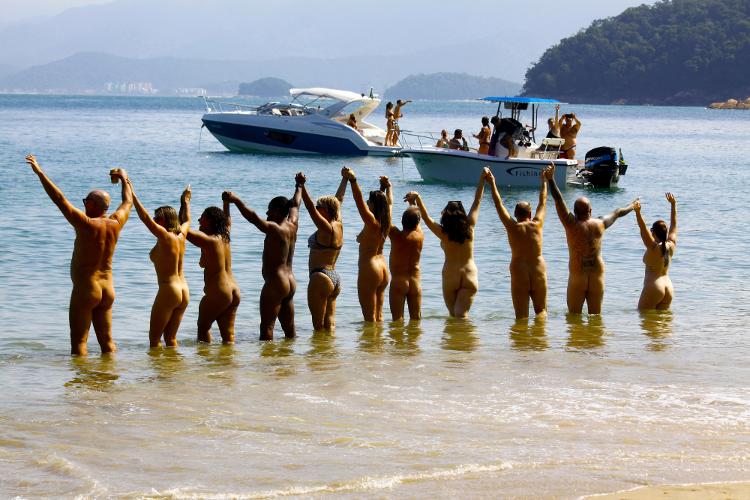
On weekends it is common to find practitioners at the Mansa and Lagoa beaches, exercising the main motto of the lifestyle, which is direct contact with nature in harmony with the open-air environment.
To get to both beaches, it is necessary to access a trail that starts at the Ponta Aguda beach, on the border with Caraguatatuba.
With no official beaches in São Paulo state, they must travel to the Northeast, Rio de Janeiro, or even to the country’s south to exclusively naturist beaches.
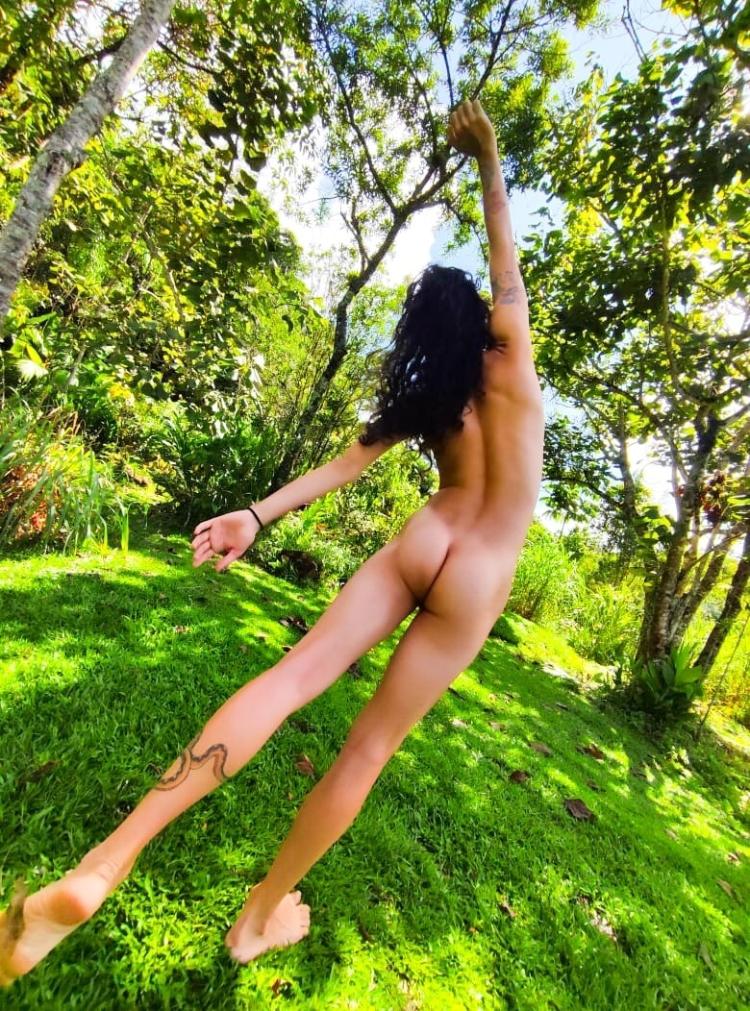
If a swimmer is caught by the police totally naked on common beaches, he can be arrested for three months to one year or pay a fine for “performing obscene acts in a public place, or open or exposed to the public”, as foreseen in article 233 of the Penal Code.
Brazil has only 8 official nudist beaches:
- Praia do Pinho (SC), Balneário Camboriú
- Pedras Altas Beach (SC), in the municipality of Palhoça
- Galheta Beach (SC), Florianópolis
- Barra Seca Beach (ES), Linhares
- Olho de Boi Beach (RJ), Búzios
- Abricó Beach (RJ), Rio de Janeiro
- Tambaba Beach (PB), Conde
- Massarandupió Beach (BA), Entre Rios
*beaches recognized by their respective municipal governments and by the Brazilian Federation of Naturism (FBrN).
In 2018, a movement headed by NatVale (Naturist Association of the Paraíba Valley and North Coast) held several offensives by trying to transform Mansa Beach into an exclusive naturist place.
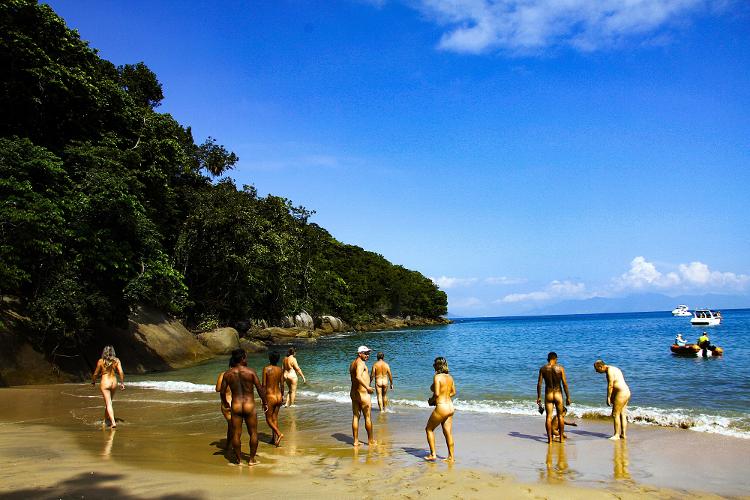
For a few months, the adepts of this lifestyle, even with the presence of textile bathers, frequented the site to sensitize the Ubatuba residents to accept them.
Before taking off their clothes, however, the naturists talked to the bathers.
The majority consented to the practice.
Supporters have made efforts to show that naturism could also boost tourism, especially in the low season, increasing the occupancy rate of hotels and restaurants.
“It was part of the awareness plan to show that in other regions of the country, naturism helps promote tourism and boosts hotels, inns, and restaurants and that it could be an extra attraction for Ubatuba,” said Éder da Silva Ferreira, president of NatVale
A bill was presented to the Ubatuba City Council at the time, but the proposal didn’t even get on the agenda because it was withdrawn by popular pressure.
FRUSTRATED ATTEMPTS
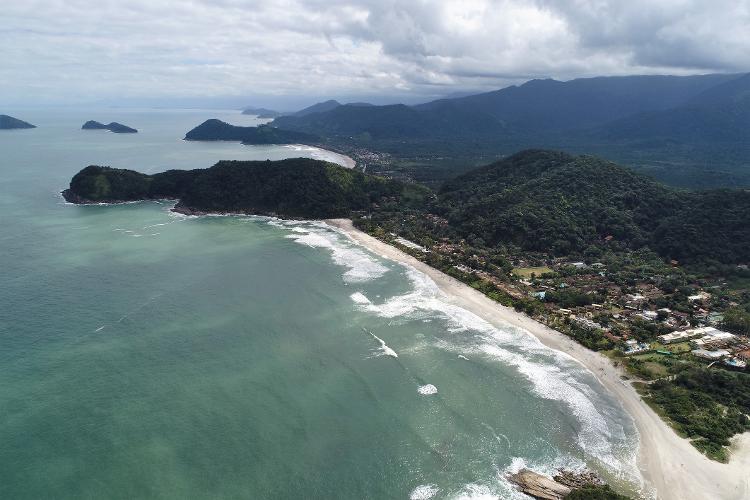
In 2013, FBrN (Brazilian Federation of Naturism) started a lobby to transform Brava Beach, in Boiçucanga (São Sebastião), into a place for naturists.
The offensive was retaliated against by local caiçaras, tourists, and surfers, who expelled the naturists from the site.
However, despite protests from local bathers, the small strip of sand continues to be used today for the practice due to its difficult access location.
Desertinha beach, located in the Jureia-Itatins Ecological Station, in Peruíbe, on the south coast, which for decades has received naturists, was also in the entity’s plans for legalizing the public space, but even with the proposal being well received by the tourist trade, city hall, and residents, the entity collected yet another defeat.
When asked to comment on the initiatives to legalize naturist beaches in the state of São Paulo, the federation president, Paula Silveira, declined.
In the 1990s, a bill initiated by the Ilhabela City Council, which foresaw the transformation of Caveira beach into a naturist area, also failed.
The beach faces the open sea, and access is only by boat.
Even though it is not official, several naturists use the space practically deserted during the week.
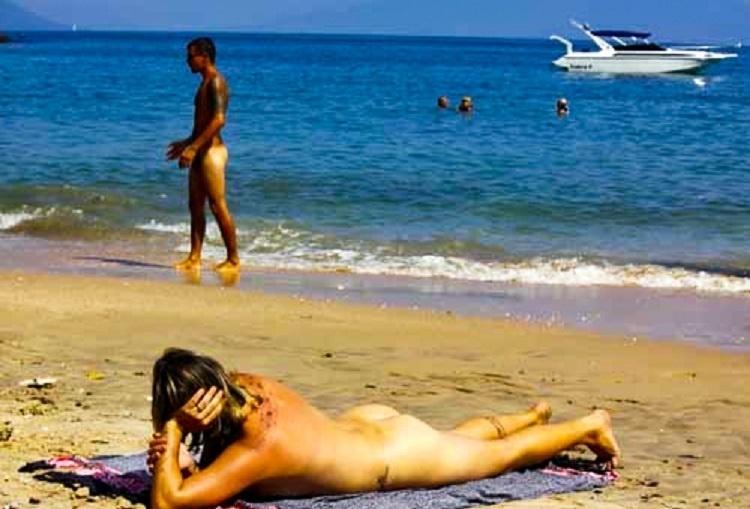
With its 7,491 kilometers of coastline, Brazil has only eight official beaches for the practice of naturism.
Tambaba (PB) was the first to authorize beachgoers to remove their clothes officially.
In Santa Catarina, there are three such beaches: Pedras Altas (Palhoça), Galheta (Florianópolis), and Praia do Pinho (Balneário Camboriú).
The state of Rio de Janeiro has two areas for the practice of naturism: Olho de Boi (Búzios) and Praia do Abricó (west zone of the capital).
The others are in Espírito Santo, in Barra Seca (Linhares), and in Bahia, at Massarandupió beach (Entre Rios).
The owner of the Terra Viva community – Soraya Aguillera
GOING UP THE MOUNTAIN
With no exclusive beaches for the practice of naturism, fans look for places, inns, and even private properties that have become strongholds for the segment.
Most of these places are located in Vale do Paraíba, Serra da Mantiqueira, and southern Minas Gerais.
The three regions are less than three hours from the São Paulo capital, where most naturists reside.
“We are very much sought after by several groups and families of naturists, especially from São Paulo, to spend the weekend at our resort. They tell us that they are looking for new places to practice naturism since it is increasingly difficult to find exclusive places and the beaches are more and more crowded, which makes it impossible for them to take off their clothes”, says Valdinei Vander Porfiro, owner of the Morada do Luar inn, located in Gonçalves (MG), 220 kilometers from the São Paulo capital.
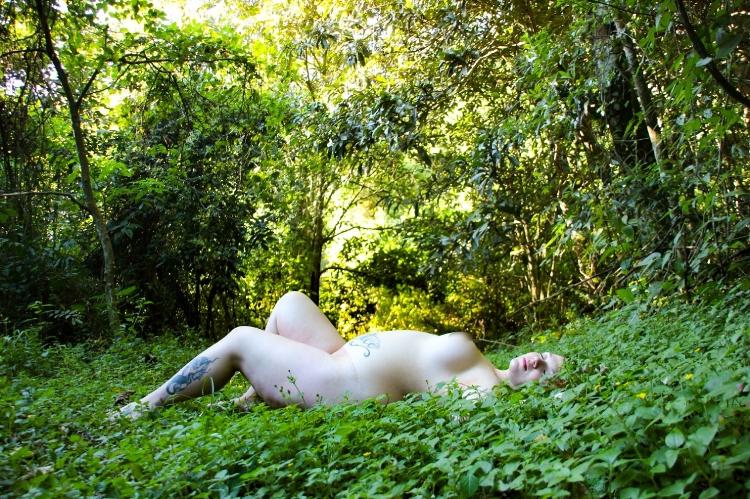
According to him, the space is sought after because it is located 8.5 kilometers from downtown, in a rural area, and 1,450 meters high, on top of a mountain.
“The chalets are far from each other, which guarantees more privacy, and our area has a belvedere overlooking the mountains, where they like to chat at sunset, light a fire, sing, and play guitar, all without clothes, without the opportunity to be seen, since we have no neighbors nearby,” he says.
Porfiro adds that the pousada is not exclusively for naturists but that it closes some specific dates for this type of public.
Psychologist Lenina Campos, 31, from Taubaté (SP), one of the activists who participated in the lobby to transform Mansa Beach into a naturist place in 2018, also swapped the sands of Ubatuba for private places in the interior.
The pandemic and motherhood kept her away from the naturist groups that used to go to the beach frequently.
She says she practices indoor naturism daily. “Clothes are my social accessories.”
Outside the house, she prefers to practice naturism in a private area of a hotel farm in São Roque.
“During that time (of the pandemic), I always practiced naturism indoors, including with my baby. When it became possible to socialize without great risks, I started to choose private places that provided all the security and privacy necessary to practice naturism in its essence, getting in touch with nature, our natural habitat. Almost always, the places chosen are those of friends who support the practice or sympathize and do not create resistance,” she says.
ANARCHIST NATURIST COMMUNITY
In the quiet town of Monteiro Lobato, 130 kilometers from São Paulo, a naturist community receives about two thousand members annually, who are attracted by nature, waterfalls, and a lot of privacy in its 54 thousand square meters area surrounded by the typical vegetation of Mantiqueira.
“The anarchist and naturist community Morada Terra Viva combines naturism with holistic and shamanic therapies and monthly parties, where the adepts can experience and watch cultural and artistic manifestations and celebrations, such as the cocoa and snuff ceremonies.”
“Our community was born naturally. I would always receive friends at home, where we started to practice naturism.”
“The number grew, and people had to bring tents to sleep in since the house could not hold the number of visitors,” explains acrtess and singer Soraya Aguillera.
She says the number of visitors is only not higher due to a rigorous screening process for those interested in participating in the collective’s parties.
“We carry out a previous selection because we are a place of freedom, and we need to be surrounded by safety and respect”, she adds.
She has already started this screening for the “Carnaval da Alegria”, a carnival party that will be held in the space between February 17 and 22.
Photographer Jonas Araújo, 25, from São Paulo, one of the regulars at Morada Terra Viva, also complains about the lack of places and public spaces to practice naturism.
“This doesn’t occur only in the state of São Paulo. In the whole country, there is a shortage of official places to practice naturism”, he stresses.
He has been a naturist for a year and has already practiced the lifestyle at Praia Brava in São Sebastião.
In the Monteiro Lobato community, he highlights that the contact with nature and the programming of the place gave him a feeling of welcome and freedom, “which the standard society does not allow”.
Dancer Brun Willi, 28, from São José dos Campos (SP), a naturist for six years at Morada Terra Viva, also agrees with the majority of beach goers:
“In fact, we need a beach with a naturist-friendly environment where we feel at ease connecting with nature. Without the beach, I prefer to go to the community, which allows me to express my body in integration with nature.”
With information from UOL
This article was produced by The Rio Times’ automated newsroom system. How we use AI · Report an error · Editorial responsibility: Matthias Camenzind, Editor-in-Chief
Read More from The Rio Times