Mexican Government Invests in Domestic Electric Vehicle Technology
The Mexican government unveiled its “Olinia” project on Monday. The initiative aims to produce electric mini-vehicles using domestic technological and scientific expertise.
The government will allocate 25 million pesos (about 1.25 million dollars) to the project this year. Researchers from the National Technological Institute of Mexico and the National Polytechnic Institute will lead the effort.
“Olinia,” meaning “movement” in Nahuatl, seeks to transfer technology from academia to the private sector. The project will create a public-private partnership to reflect the Shared Prosperity model.
A percentage of the income will fund science and education. Rosaura Ruiz Gutiérrez, Secretary of Science, Humanities, Technology, and Innovation, announced these details during a press conference.
The official called this step “historic” as it goes beyond manufacturing Mexican electric mini-vehicles. She believes Olinia and similar projects could revolutionize Mexican industry. Roberto Capuano, the project coordinator, provided more details about the vehicles.
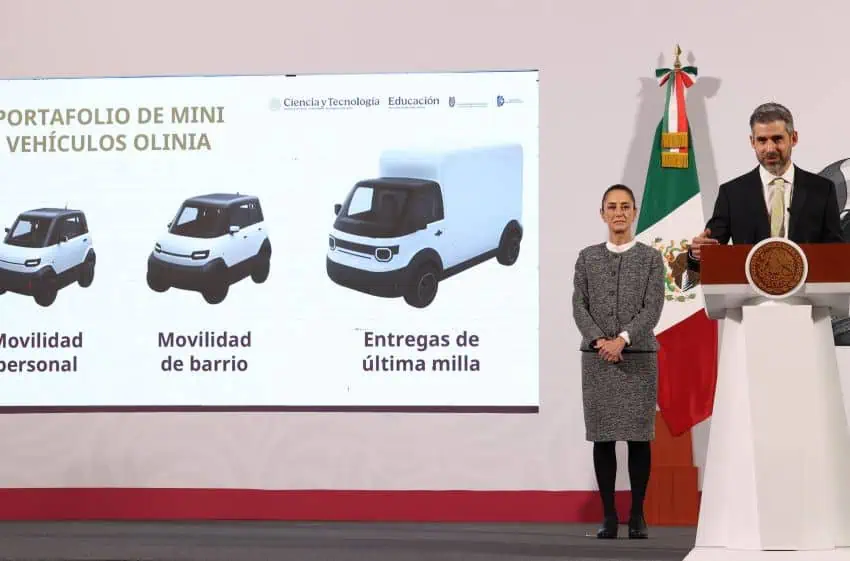
The company will produce three models for personal mobility, neighborhood transport, and last-mile delivery. Capuano emphasized that Olinia will offer safe, efficient, and sustainable urban mobility.
The vehicles will be affordable for millions of Mexicans. Users can charge them using any conventional outlet. The low-cost vehicles will be particularly useful for urban mobility. Prices are expected to range from 90,000 to 150,000 pesos (4,425 to 7,376 dollars).
The government plans to unveil the first Olinia model during the 2026 World Cup opening. The event will take place on June 11 at Mexico City’s Azteca Stadium.
While the manufacturing location remains undisclosed, the project aims to start selling vehicles by 2030. This initiative demonstrates Mexico’s commitment to electric mobility and domestic technological development.
More: Mexico news in English, every day from The Rio Times.
This article was produced by The Rio Times’ automated newsroom system. How we use AI · Report an error · Editorial responsibility: Matthias Camenzind, Editor-in-Chief
In depth