IBOV 185,899.93 ▼ 0.37% IPSA 11,410.19 ▲ 0.46% IPC MEX 63,536.96 ▲ 0.25% MERVAL 2,990,605 ▼ 0.28% COLCAP 2,570.03 ▲ 0.17% BVL PERÚ 59,529.36 ▲ 0.20% USD/BRL5.11▼ 0.01% USD/MXN17.29▲ 0.41% USD/CLP947.01▼ 0.23% USD/COP3,203▲ 0.85% USD/PEN3.36▼ 0.42% USD/ARS1,514▼ 0.02% USD/UYU40.06▲ 2.88% USD/PYG5,918▲ 3.14% USD/BOB11.85▲ 25.24% USD/DOP59.00▲ 3.23% USD/CRC445.27▲ 2.84% USD/GTQ7.63▲ 3.24% USD/HNL26.86▲ 3.32% USD/NIO36.62▲ 2.80% USD/VES850.29▼ 0.13% USD/PAB1.00— 0.00% USD/BZD2.00— 0.00% USD/JMD 157.28 — 0.00% USD/TTD6.74▲ 2.48% EUR/BRL5.85▼ 0.85% BRENT 88.88 ▼ 0.03% WTI 83.11 ▼ 0.11% IRON ORE 161.91 — — COPPER 6.61 ▲ 0.03% GOLD 4,461 ▲ 1.78% SILVER 65.59 ▲ 1.26% SOY 1,184 ▲ 3.20% CORN 480.50 ▲ 10.02% WHEAT 655.00 ▲ 3.93% COFFEE 317.25 ▼ 5.51% SUGAR 16.43 ▼ 1.79% ORANGE JUICE 138.55 ▼ 0.47% COTTON 85.03 ▲ 2.33% COCOA 5,719 ▲ 3.18% BEEF 223.60 ▼ 3.93% CATTLE 339.10 ▼ 3.16% LITHIUM 75.20 ▲ 1.47% PETR4 41.64 ▼ 0.05% VALE3 72.97 ▲ 0.83% ITUB4 38.60 ▼ 1.03% BBDC4 16.85 ▲ 0.36% ABEV3 14.89 ▼ 0.80% BBAS3 19.37 ▲ 0.47% B3SA3 14.26 ▼ 0.21% WEGE3 47.59 ▲ 0.49% PRIO3 59.14 ▼ 0.19% SUZB3 41.33 ▲ 2.35% RENT3 34.68 ▼ 0.09% AZZA3 15.89 ▼ 2.63% CSAN3 3.22 ▼ 1.83% RAIZ4 0.25 — 0.00% PCAR3 2.75 ▼ 0.36% GMAT3 3.65 ▼ 1.08% PSSA3 48.13 ▼ 0.54% CVCB3 1.33 ▼ 2.92% POSI3 3.36 ▲ 2.44% SLCE3 13.34 ▲ 0.30% NATU3 8.14 ▼ 0.73% IBOV 185,899.93 ▼ 0.37% IPSA 11,410.19 ▲ 0.46% IPC MEX 63,536.96 ▲ 0.25% MERVAL 2,990,605 ▼ 0.28% COLCAP 2,570.03 ▲ 0.17% BVL PERÚ 59,529.36 ▲ 0.20% USD/BRL 5.16 ▲ 0.01% USD/MXN 17.06 ▼ 0.24% USD/CLP 913.98 ▲ 0.04% USD/COP 3,140 ▲ 0.03% USD/PEN 3.36 ▼ 0.66% USD/ARS 1,493 ▲ 0.10% USD/UYU 40.27 ▲ 1.24% USD/PYG 5,939 ▲ 1.68% USD/BOB 11.64 ▼ 0.76% USD/DOP 58.34 ▲ 1.25% USD/CRC 445.92 ▲ 0.89% USD/GTQ 7.62 ▲ 2.21% USD/HNL 26.79 ▲ 1.57% USD/NIO 36.62 ▲ 0.69% USD/VES 762.44 ▼ 0.13% USD/PAB 1.00 — 0.00% USD/BZD 2.00 — 0.00% USD/JMD 157.28 — 0.00% USD/TTD 6.70 ▲ 0.61% EUR/BRL 5.95 ▲ 1.01% BRENT 88.88 ▼ 0.03% WTI 83.11 ▼ 0.11% IRON ORE 161.91 — — COPPER 6.61 ▲ 0.03% GOLD 4,461 ▲ 1.78% SILVER 65.59 ▲ 1.26% SOY 1,184 ▲ 3.20% CORN 480.50 ▲ 10.02% WHEAT 655.00 ▲ 3.93% COFFEE 317.25 ▼ 5.51% SUGAR 16.43 ▼ 1.79% ORANGE JUICE 138.55 ▼ 0.47% COTTON 85.03 ▲ 2.33% COCOA 5,719 ▲ 3.18% BEEF 223.60 ▼ 3.93% CATTLE 339.10 ▼ 3.16% LITHIUM 75.20 ▲ 1.47% PETR4 41.64 ▼ 0.05% VALE3 72.97 ▲ 0.83% ITUB4 38.60 ▼ 1.03% BBDC4 16.85 ▲ 0.36% ABEV3 14.89 ▼ 0.80% BBAS3 19.37 ▲ 0.47% B3SA3 14.26 ▼ 0.21% WEGE3 47.59 ▲ 0.49% PRIO3 59.14 ▼ 0.19% SUZB3 41.33 ▲ 2.35% RENT3 34.68 ▼ 0.09% AZZA3 15.89 ▼ 2.63% CSAN3 3.22 ▼ 1.83% RAIZ4 0.25 — 0.00% PCAR3 2.75 ▼ 0.36% GMAT3 3.65 ▼ 1.08% PSSA3 48.13 ▼ 0.54% CVCB3 1.33 ▼ 2.92% POSI3 3.36 ▲ 2.44% SLCE3 13.34 ▲ 0.30% NATU3 8.14 ▼ 0.73%
since 2009
Tuesday, September 22, 2026

Mexico Analysis

China’s Backdoor to America: The Mexican Trade Dilemma

By · January 6, 2025 · 3 min read

The LatAm Brief

One email, every weekday morning. What moved in Latin American markets, politics and expat life.

Yesterday’s subject line: “68 strikes, 223 people. A UN expert says murder.”

Free. We send a confirmation link first — nothing arrives until you click it. Unsubscribe with one click in any edition. If you stop opening us for 30 days we stop sending by ourselves, as we assume the interest is no longer there. See our privacy policy. We never share your email.

(Analysis) In 2023, Mexico surpassed China as the top exporter of goods to the United States, marking a significant shift in North American trade dynamics.

This change has sparked concerns in Washington about Chinese companies using Mexico as a tariff-free gateway into the US market. Donald Trump, eyeing a second presidential term, views Mexico as China’s Trojan horse in North American commerce.

His stance threatens to unravel the United States-Mexico-Canada Agreement (USMCA), as bipartisan worries about Chinese activity in Mexico grow.

The focus has shifted from outright fraud to Chinese companies assembling or manufacturing products in Mexico for US sale. Mexican exports to the US now contain 21% Chinese components by value, up from 5% in 2002.

Electric vehicle (EV) production dominates the conversation. With Chinese-made EVs often cheaper than US-made counterparts, President Biden increased tariffs on Chinese EV imports to 100% in September.
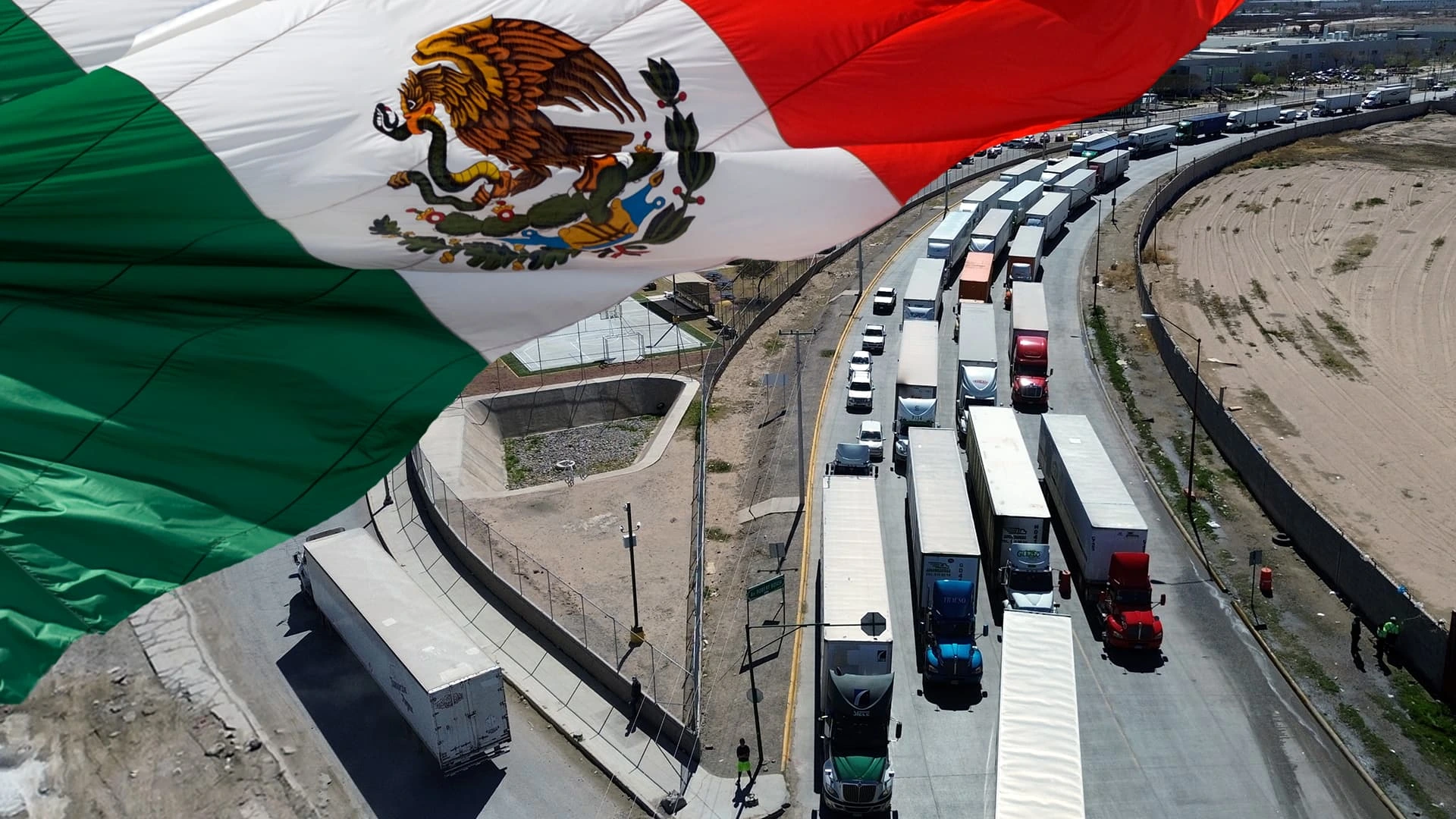
China's Backdoor to America: The Mexican Trade Dilemma
China’s Backdoor to America: The Mexican Trade Dilemma.
One-stop reference
Company Intelligence
Every listed company in Latin America — financials, ownership and structure for 1,450+ companies across 26 exchanges, in one place.
Browse the directory →
RT
Ask Rio Times
17 years of Latin America reporting, on demand.
Open the full Ask Rio Times →

These tariffs don’t apply to vehicles made in Mexico, raising concerns about Chinese automakers exploiting this loophole. Chinese companies are expanding lower in the supply chain.

The number of Chinese auto parts manufacturers in Mexico has more than doubled since 2018. They produce finishes, battery casings, and high-tech elements like driver assistance software.

Mexico’s Trade Crossroads

Mexico faces a dilemma. It benefited from US-China trade tensions but now risks losing ground if Chinese firms displace Mexican ones in North American supply chains.

To appease its northern neighbor, Mexico is establishing an agency to evaluate foreign investments and plans to replace Chinese-imported components with Mexican-made alternatives.

The debate often overlooks trade complexities. Foreign companies, mostly American, account for 70% of exports to the US from Mexico. US automakers have integrated Chinese firms into their supply chains.

As the 2026 USMCA review approaches, the future of North American trade hangs in the balance. Mexico’s message to the US is clear: “How can we help you manufacture what you import from Asia?”

This approach could benefit both nations, but the path forward remains uncertain. Mexican officials argue that the focus on Chinese investment in Mexico is hypocritical.

Chinese foreign direct investment (FDI) in Mexico remains small compared to its investments in the US. However, Chinese FDI in Mexico has grown dramatically while declining in the US.

Mexico is now taking steps to appease its northern neighbor. They’re establishing an agency to evaluate foreign investments, modeled after similar US and Canadian bodies.

Plans are also underway to replace Chinese-imported components with Mexican-made alternatives. The debate often ignores the complexity of trade realities.

Foreign companies, mostly American, account for 70% of exports to the US from Mexico. US automakers have integrated Chinese firms into their supply chains.

Replacing imports takes time and requires incentives. Mexico’s government lacks the resources to offer subsidies for domestic chip and battery production. Some inputs simply can’t be sourced outside of China.

Mexico faces another concern. In the early 2000s, it lost ground to China in exports to the US. If Chinese firms displace Mexican ones in North American supply chains, Mexico could suffer again.

US and Mexican officials agree on one point. Mexico’s message to the US is clear: “How can we help you manufacture what you import from Asia?” This approach could benefit both nations in the long run.

This article was produced by The Rio Times’ automated newsroom system. How we use AI · Report an error

Read More from The Rio Times

The Rio Times · Power Map
See who really holds power in Latin America
Click to open the Power Map

Rotate for Best Experience

This report is optimized for landscape viewing. Rotate your phone for the full experience.