Mercosur Singapore FTA: Brazil Opens Zero-Tariff Asia Trade
Brazil · Trade
Key Facts
—Effective date. The agreement enters into force for Brazil on 1 August 2026.
—Tariff treatment. Singapore will apply zero tariffs on 100 percent of Brazilian exports immediately upon entry into force.
—Mercosur timeline. Mercosur will eliminate tariffs on roughly 95.8 to 96 percent of goods over a period of up to 15 years.
—Oil exports. Fuel oils and crude oil are among Brazil’s main export items to Singapore under the deal.
—Bloc first. This is Mercosur’s first free trade agreement with an Asian economy.
*Brazil has locked in the Mercosur trade bloc’s first foothold in Asia, opening a tariff-free corridor for its exports to one of the world’s busiest shipping and refining hubs.*
What the deal covers
The Mercosur-Singapore Free Trade Agreement is a broad pact that goes beyond goods to include services, investment, government procurement and intellectual property. It is the first comprehensive trade deal Mercosur has signed with a Southeast Asian nation.
On the Mercosur side, the bloc commits to removing import duties on about 95.8 to 96 percent of tariff lines over a transition period of up to 15 years. Roughly 20 to 25.6 percent of those goods will be liberalized immediately when the agreement enters into force.
Singapore, which already maintains a near-zero tariff regime, will eliminate duties on all goods originating in Mercosur countries from day one. For Brazil, that means 100 percent of its exports will enter Singapore duty-free.
For a foreign reader unfamiliar with South American trade architecture, it helps to understand that Mercosur is a customs union. Its full members—Argentina, Brazil, Paraguay and Uruguay—typically negotiate trade deals as a single bloc rather than individually.
That means the tariff-elimination schedule agreed with Singapore applies collectively, and no member can offer a separate, faster timetable. This collective approach strengthens the group’s bargaining power but can also slow internal ratification, because each member must approve the final text through its own legislative process before the agreement can enter into force for that country.
Oil leads Brazilian exports
Brazil’s trade profile with Singapore is heavily weighted toward energy. Singapore has long been one of Brazil’s main destinations for fuel oils and crude oil, and official Brazilian sources identify these products among the top export items covered by the agreement.
The commercial significance for oil shipments is substantial, though the exact tariff treatment for each petroleum product depends on its specific tariff line and staging category in the schedule. Some energy products may be zeroed immediately, while others could follow a phased timetable.
Singapore’s role as Asia’s premier oil refining and trading hub makes the duty-free access particularly valuable for Brazilian producers looking to deepen their footprint in Asian energy markets.
What makes Singapore especially relevant is its position as a pricing and logistics nerve centre. Crude and fuel oil cargoes that pass through Singapore often set regional price benchmarks, and the island’s extensive storage and blending infrastructure allows traders to serve customers across Asia from a single location.
For Brazilian exporters, locking in predictable, duty-free entry to that hub reduces the cost uncertainty that can make long-term supply contracts harder to negotiate.
A strategic signal for Mercosur
The ratification sends a clear signal that Mercosur is serious about diversifying its trade partnerships beyond its traditional focus on the Americas and Europe. Securing a deal with Singapore, a global financial and logistics gateway, gives the South American bloc a strategic foothold in the dynamic Asia-Pacific region.
For Brazil, the agreement also serves as a proof of concept that Mercosur can conclude and implement modern trade deals with Asian partners. It strengthens the case for accelerating other negotiations that have been slow to progress.
This matters because Mercosur has sometimes been criticised for moving too slowly on trade liberalisation compared with Pacific-facing Latin American economies. Completing a deal with a sophisticated, business-friendly economy like Singapore helps counter that narrative.
It shows that the bloc can agree on disciplines covering services, investment and intellectual property—areas that go well beyond the simple exchange of tariff cuts and require deeper regulatory alignment.
China and Africa talks in the background
The Singapore deal enters into force while Mercosur is also engaged in trade negotiations with China and with African partners. A Mercosur-China agreement would be a far larger undertaking, given China’s status as Brazil’s top trading partner and a major buyer of South American commodities.
Progress on those fronts has been cautious, but the successful ratification with Singapore demonstrates that the bloc can move from negotiation to implementation. It provides a template for market-access commitments and regulatory cooperation that could inform future talks.
For international investors and diplomats watching Latin America, the timing suggests Mercosur is gradually pivoting toward a more outward-looking trade policy. The Singapore agreement may be the first Asian deal, but it is unlikely to be the last.
Still, the path from a Singapore-sized agreement to a China-sized one is steep. China’s economy is vastly larger and its trade interests with Mercosur are dominated by agricultural commodities, which tend to be politically sensitive in any negotiation.
The question worth watching is whether the institutional muscle built during the Singapore process—particularly around rules of origin and services scheduling—can be reused to accelerate the China and Africa dossiers, or whether those talks will require a fundamentally different blueprint.
What changes for business
Once the agreement takes effect for Brazil on 1 August 2026, exporters will gain immediate duty-free access to Singapore for all products. Importers in Mercosur will see tariffs fall on a wide range of Singaporean goods, with full liberalization phased in over 15 years.
Beyond tariffs, the deal includes provisions on rules of origin, customs facilitation and trade in services that are designed to reduce red tape and create more predictable conditions for cross-border business. Companies in sectors from agribusiness to technology stand to benefit from the new preferential framework.
For a Brazilian food producer or a Singaporean logistics firm, the practical value lies in the fine print. Rules of origin determine how much local content a product must have to qualify for the lower tariff, and customs facilitation chapters can cut the time goods spend waiting at borders.
Those operational gains often matter more to small and medium-sized enterprises than the headline tariff number, because they reduce the fixed cost of entering a new market. The open question is how quickly businesses on both sides will adapt their supply chains to take advantage of preferences that, in some cases, phase in over many years.
Frequently Asked Questions
When does the Mercosur-Singapore FTA take effect for Brazil?
Brazil has ratified the agreement and it will enter into force for the country on 1 August 2026.
What tariffs will Singapore apply to Brazilian goods?
Singapore will apply zero tariffs on 100 percent of Brazilian exports from the day the agreement enters into force.
Are Brazilian oil exports covered by the deal?
Yes. Fuel oils and crude oil are among Brazil’s main export items to Singapore, though the specific tariff treatment depends on each product’s tariff line and staging category in the schedule.
Is Mercosur negotiating with other Asian or African partners?
Yes. Mercosur is engaged in trade negotiations with China and with African countries, though those talks are at different stages and have not yet concluded.
Connected Coverage
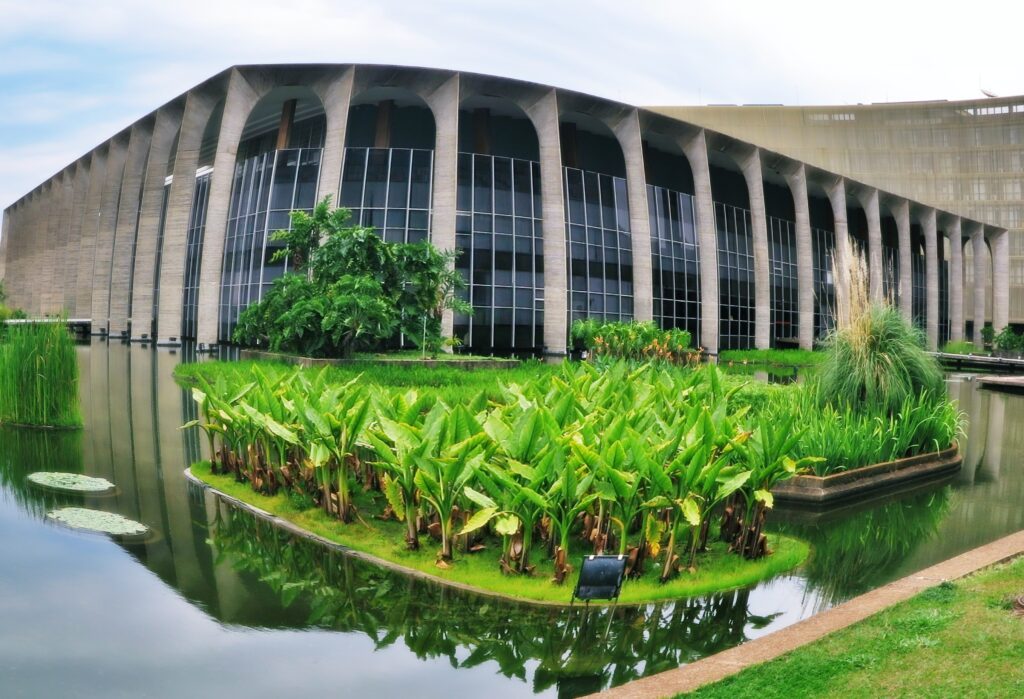
Sources: Itamaraty Palace, Brazil's foreign ministry.
This article was produced by The Rio Times’ automated newsroom system. How we use AI · Report an error
Read More from The Rio Times