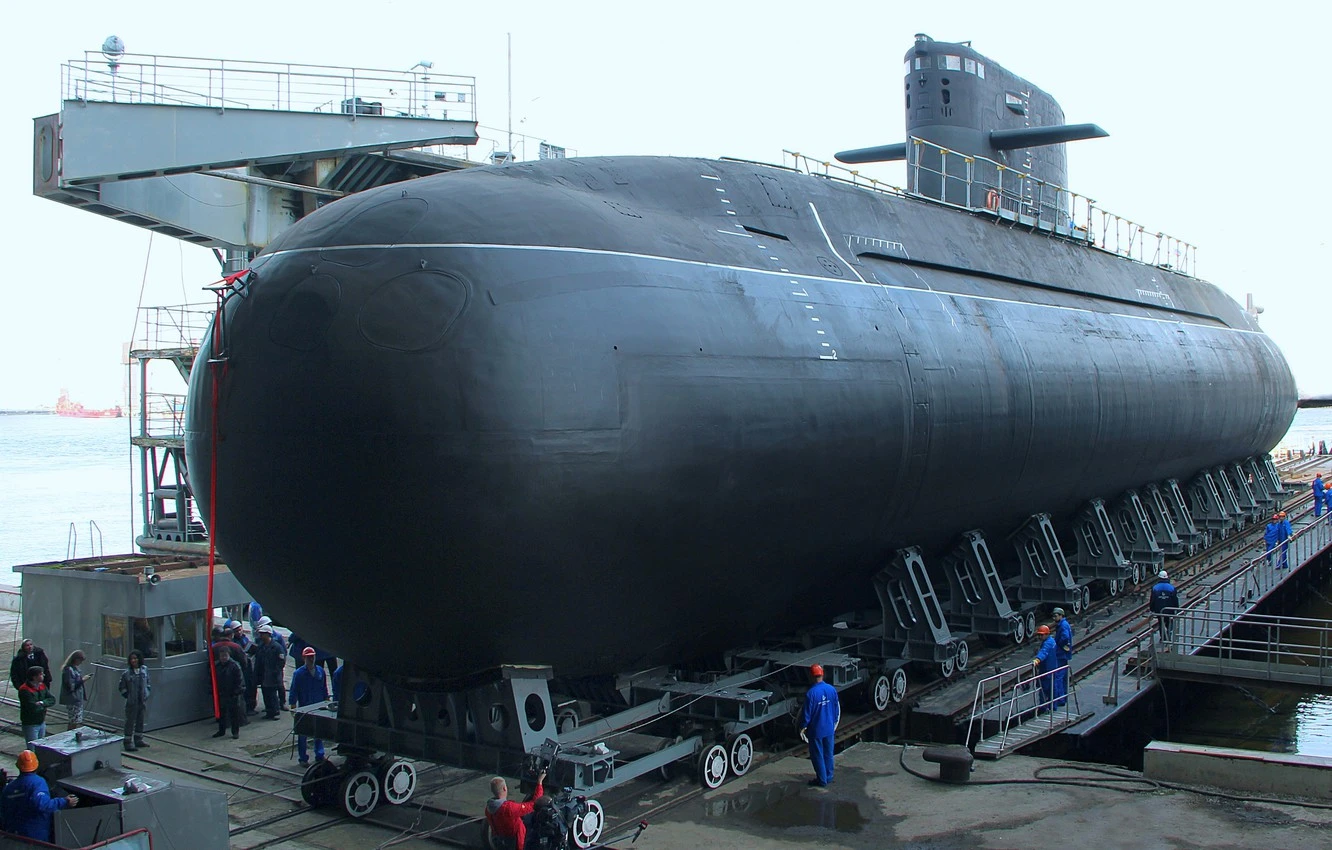
The Russian Navy recently welcomed the B-565 Kronstadt, a conventional submarine, marking the end of its 18-year development journey.
Crafted at Saint Petersburg’s Admiralty Shipyard, this vessel is the second in the Project 677 Lada class series, following the first submarine delivered in 2010.
The Kronstadt stands out for its stealth capabilities, featuring advanced diesel-electric propulsion and a design that minimizes underwater noise.
According to its builders at the Rubin Design Bureau, such innovations present a significant leap over older models.
Handed over in late January, the Kronstadt embodies the latest in fourth-generation submarine technology.
Its long construction period, initiated with a steel-cutting ceremony in 2005, faced delays until its design received the Russian Ministry of Defense’s nod in 2013.
This submarine is poised to bolster the navy’s operational strengths.
After a decade of meticulous assembly and testing, the Kronstadt is ready for service and is expected to last over 30 years.
It leads the way for three more submarines of its class, currently in various stages of production.
The Kronstadt, manned by a crew of 35, spans 66.8 meters with a pressure hull diameter of 7.1 meters.
It can surface displace 1,765 tons and 2,700 tons when submerged, capable of enduring 45-day missions.
At a submerged pace of three knots, it achieves an 810-mile range powered by lithium-ion batteries, diving up to 300 meters.
Kronstadt Sub: A Stealth Marvel Joins Russian Navy
Its arsenal includes six 533 mm torpedo tubes for launching torpedoes, missiles, or mines in precise or volley fire.
This addition to the Russian Navy underscores a significant technological advancement, enhancing the fleet’s stealth and combat capabilities.
The Kronstadt’s deployment marks a milestone in Russia’s naval strategy, reflecting years of innovation and perseverance.
This article was produced by The Rio Times’ automated newsroom system. How we use AI · Report an error · Editorial responsibility: Matthias Camenzind, Editor-in-Chief
Read More from The Rio Times