Corn Fund Falls 0.99% as Soy Fund Slips 0.37% | Grains, Oct 19
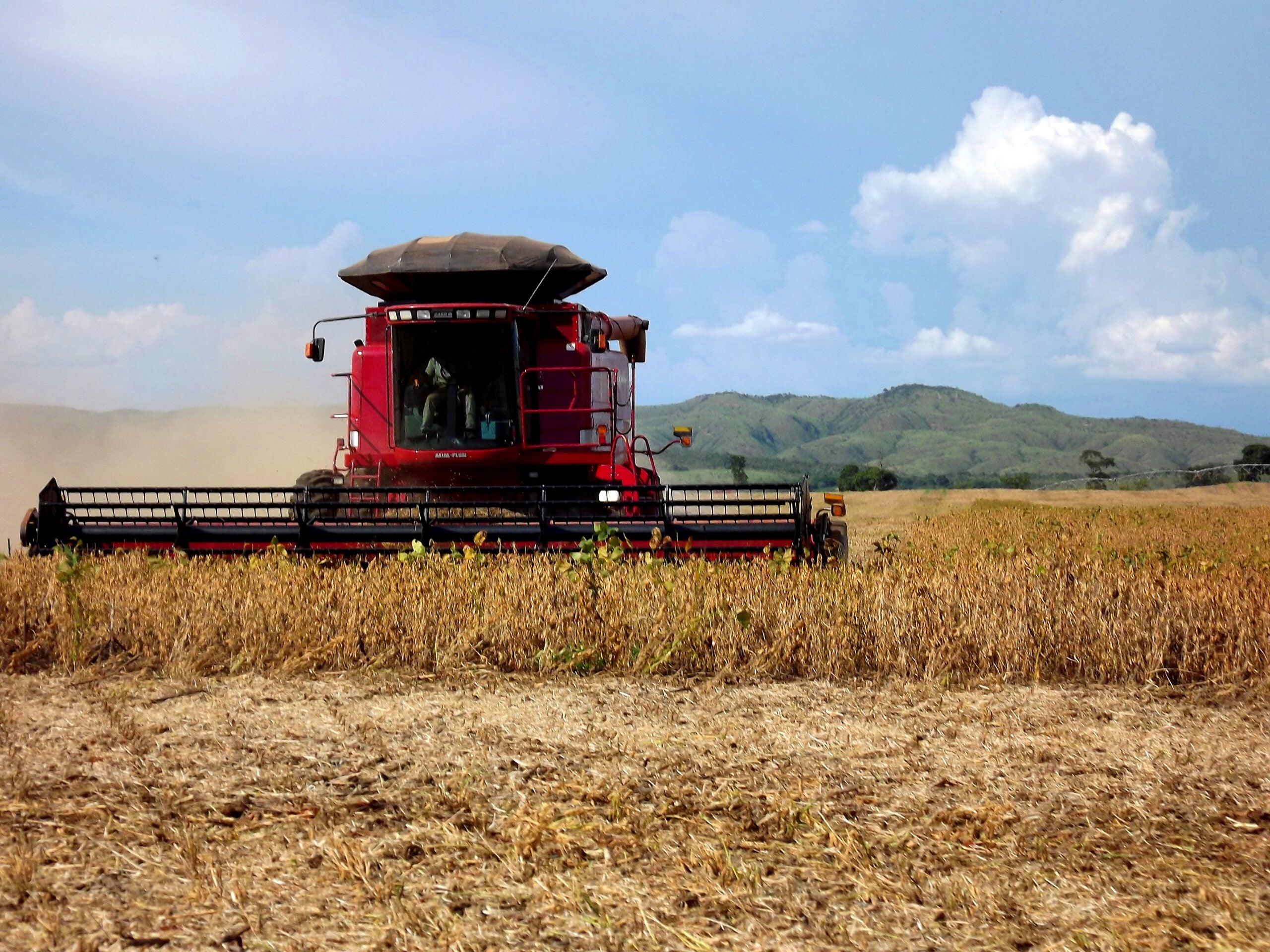
Key Facts
- The CORN fund fell 0.99% to US$18.01 on Monday 19 October, while the SOYB soybean fund fell 0.37% to US$26.78 and the WEAT wheat fund 0.50% to US$23.88.
- The US Agriculture Department raised its corn yield forecast to 181.2 bushels an acre on 9 October, lifting US production to 16.034 billion bushels.
- US corn stocks at the end of the season are now forecast at 1.849 billion bushels, up 282 million bushels from the earlier forecast.
- Brazil and Argentina are two of the world’s main grain exporters, so a large US crop adds to competition for buyers such as China.
Today’s Focus
Grain funds slipped on Monday 19 October. The CORN fund fell 0.99% to US$18.01, the wheat fund 0.50% and the soybean fund 0.37%.
The funds hold futures, so they follow Chicago prices without matching them exactly. They give US investors a simple way to follow the grain market.
The main weight on the market is a larger US corn crop. On 9 October the US Agriculture Department raised its yield forecast to 181.2 bushels an acre.
What matters today. A bigger US corn crop is the main pressure on grain prices, which matters for Brazil and Argentina as rival exporters.
01 The session in one read
Grain funds fell together on Monday, with corn down 0.99%, wheat down 0.50% and soybeans down 0.37%. The moves were modest but in the same direction.
That fits the supply story from the US government’s October crop report. A larger crop usually weighs on prices.
A larger corn crop and higher stocks point to ample supply, which tends to hold prices down. Monday’s fund moves were small and do not by themselves confirm a trend. The variable to watch is whether corn keeps falling as harvest reports arrive.
02 The board
The CORN fund settled at US$18.01, down 0.99%. The WEAT wheat fund closed at US$23.88, down 0.50%, and the SOYB soybean fund at US$26.78, down 0.37%.
These funds hold futures contracts, so they are proxies and not the cash price of grain. We could not verify futures settlement prices for Monday’s session and do not quote them.
| Asset | Level | Change |
|---|---|---|
| Soybeans (SOYB) | US$26.78 | -0.37% |
| Corn (CORN) | US$18.01 | -0.99% |
| Wheat (WEAT) | US$23.88 | -0.50% |
Source: RT close, 2026-10-19. Where a commodity has no spot feed, an exchange-traded tracker or leading producer is shown as a labelled proxy.
Live Market IntelligenceThe live market board
Rio Times · Live Market Intelligence
Latin America — Cross-Market Board
| Instrument | Last | Change | YoY | Prev. | High | Low | Volume |
|---|---|---|---|---|---|---|---|
| IBOV | 205,079.25 | -0.17% | +21.85% | 205,430.33 | 168,310 | 167,142 | — |
| IPSA | 10,972.40 | +0.02% | — | 10,970.29 | 11,210 | 10,984 | 1,513,213,483 |
| IPC MEX | 68,969.69 | +0.06% | +12.17% | 68,929.72 | 66,121 | 65,405 | 108,886,187 |
| MERVAL | 3,017,221 | — | +30.51% | 3,022,485 | 3,042,365 | 2,991,150 | — |
| COLCAP | 2,521.34 | -1.75% | — | 9.04 | 9.05 | 9.02 | 4,133 |
| BVL PERÚ | 59,664.64 | +0.40% | — | — | — | — | — |
| USD/BRL | 5.16 | +0.01% | -5.13% | 5.16 | 5.18 | 5.14 | — |
| EUR/BRL | 5.95 | +1.01% | -5.83% | 5.89 | 5.98 | 5.94 | — |
| USD/MXN | 17.06 | -0.24% | -8.58% | 17.10 | 17.08 | 17.01 | — |
| USD/CLP | 913.98 | +0.04% | -5.67% | 913.65 | 915.11 | 906.68 | — |
| USD/COP | 3,140 | +0.03% | -22.04% | 3,139 | 3,141 | 3,105 | — |
| USD/PEN | 3.36 | -0.66% | -4.82% | 3.38 | 3.38 | 3.35 | — |
| USD/ARS | 1,493 | +0.10% | +12.96% | 1,491 | 1,494 | 1,480 | — |
| USD/UYU | 40.27 | +1.24% | +1.80% | 39.77 | 40.27 | 40.23 | — |
| USD/PYG | 5,939 | +1.68% | -19.54% | 5,841 | 5,939 | 5,925 | — |
| USD/BOB | 11.64 | -0.76% | +72.04% | 11.73 | 11.72 | 11.64 | — |
| USD/DOP | 58.34 | +1.25% | -3.44% | 57.62 | 58.34 | 58.04 | — |
| USD/CRC | 445.92 | +0.89% | -9.71% | 441.97 | 448.50 | 445.92 | — |
03 What moved it
On 9 October the US Agriculture Department raised its forecast for the US corn yield by 2.7 bushels to 181.2 bushels an acre. That lifted forecast production to 16.034 billion bushels.
It also raised forecast end-of-season stocks by 282 million bushels to 1.849 billion bushels. More supply on hand usually means lower prices.
04 The Latin American read
Brazil and Argentina compete with the United States for corn and soybean buyers, so a large US crop is not good news for their exporters. Lower prices cut the dollar income that farmers and governments receive.
We could not verify new export forecasts for either country, so we do not quote any. Their harvests and shipments remain the main swing factor later in the season.
05 The names to watch
The CORN, WEAT and SOYB funds all trade on US exchanges in dollars. Each holds futures for one crop.
Brazilian and Argentine farm groups are the other way to follow the theme, but they move with local markets as well. Their shares do not track Chicago prices one for one.
06 The outlook
The next test is whether harvest reports confirm the large US corn crop. Weather in South America over the coming weeks will shape the next supply estimate.
The next official crop and export figures will show whether demand can absorb the extra supply. Until then the market is likely to stay cautious.
07 What to watch
- US harvest progress: Fast harvests and good yields would add pressure on corn.
- South American weather: Planting conditions in Brazil and Argentina shape the next supply estimate.
- Chinese buying: China is the main buyer of soybeans and a key swing factor.
- The CORN fund: A close below US$18 would extend the recent weakness.
Background: Soy Fund Slips 0.22% as Corn Fund Falls 0.87%.
Background: Brazil Stocks Rise 0.5% as Petrobras Adds 4%.
More: Latin America news in English, every day from The Rio Times.
Frequently Asked Questions
What happened to grain prices on Monday 19 October?
The CORN fund fell 0.99% to US$18.01. The wheat fund fell 0.50% and the soybean fund 0.37%.
What did the US government say about the corn crop?
On 9 October it raised its yield forecast to 181.2 bushels an acre and production to 16.034 billion bushels.
Why does a big US crop matter for Latin America?
Brazil and Argentina export grain, and a large US crop adds supply and lowers prices.
Are these funds the same as grain prices?
No. The funds hold futures contracts, so they follow Chicago prices without matching them exactly.
Market data: RT
This article was produced by The Rio Times’ automated newsroom system. How we use AI · Report an error · Editorial responsibility: Matthias Camenzind, Editor-in-Chief
LatAm Markets: Live Signals → — real-time movers, turnover leaders and FX across Latin America.