Fentanyl Crisis Spurs Mexico’s Call for Joint U.S.-Canada Investigation
Mexican President Claudia Sheinbaum has urged Mexico, the United States, and Canada to investigate fentanyl trafficking from production to U.S. distribution. Her proposal comes amid escalating tensions over the opioid crisis.
This crisis caused nearly 70% of the 107,000 overdose deaths in the U.S. in 2023. Former President Donald Trump has linked the issue to Mexico and Canada, threatening 25% tariffs on their exports unless stronger actions are taken.
These tariffs, temporarily delayed until March 4, have added urgency to the debate. Sheinbaum questioned why investigations focus solely on Mexico and Canada while ignoring potential fentanyl smuggling through U.S. ports.
She also highlighted the demand-side problem in the U.S., asking, “Who sells fentanyl in the U.S.? Where is the money laundering happening?” Her comments reflect frustration with narratives that disproportionately blame Mexico while overlooking domestic factors fueling the crisis.
Fentanyl, a synthetic opioid up to 50 times stronger than heroin, is largely produced by Mexican cartels using precursor chemicals sourced from China.
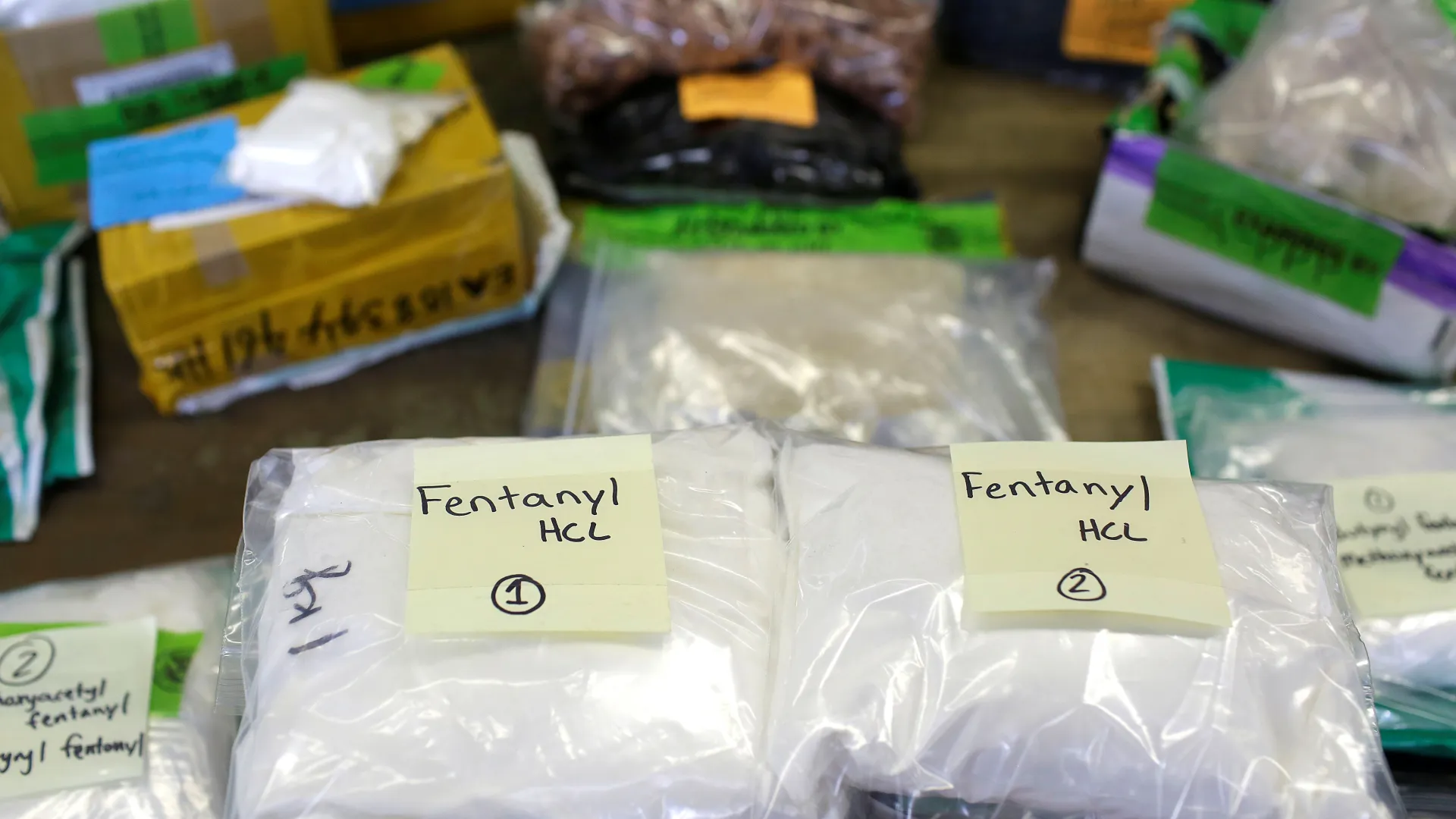
North America’s Fentanyl Crisis
In December 2024, Mexican authorities seized over one ton of fentanyl pills—equivalent to 20 million doses—and deployed 10,000 troops to its northern border to combat trafficking.
Meanwhile, Canada has invested $1.3 billion in border security measures but plays a smaller role in U.S. fentanyl trafficking, accounting for less than 1% of seizures at its border.
The crisis underscores broader issues in North American relations. Sheinbaum criticized U.S. gun trafficking into Mexico, which fuels cartel violence responsible for nearly 480,000 deaths since 2006.
As negotiations continue, her administration seeks a balanced approach that addresses both supply chains and demand while fostering regional cooperation.
This trilateral challenge highlights the need for coordinated strategies. These strategies must tackle fentanyl’s production, distribution, and the underlying drivers of demand across borders.
More: Mexico news in English, every day from The Rio Times.
This article was produced by The Rio Times’ automated newsroom system. How we use AI · Report an error · Editorial responsibility: Matthias Camenzind, Editor-in-Chief
In depth