Mexican Peso Stabilizes at 20.45 Per Dollar Amid Tariff Concerns and Central Bank Signals
The Mexican peso opened Monday trading at 20.45 per US dollar, reflecting a cautious recovery after a turbulent weekend shaped by geopolitical and monetary developments.
Renewed US tariff threats and signals from the Bank of Mexico (Banxico) about potential interest rate cuts dominated market sentiment. Over the weekend, fears of a 25% tariff on Mexican exports resurfaced as former President Trump reiterated his hardline stance on trade.
The threat, though unconfirmed, pressured the peso as investors sought refuge in the US dollar. Market participants also digested Banxico’s dovish tone from its latest minutes, which hinted at a possible 50-basis-point rate cut in March if inflation remains under control.
While this could boost economic growth, it risks narrowing Mexico’s interest rate advantage over the US, reducing the peso’s appeal to foreign investors.
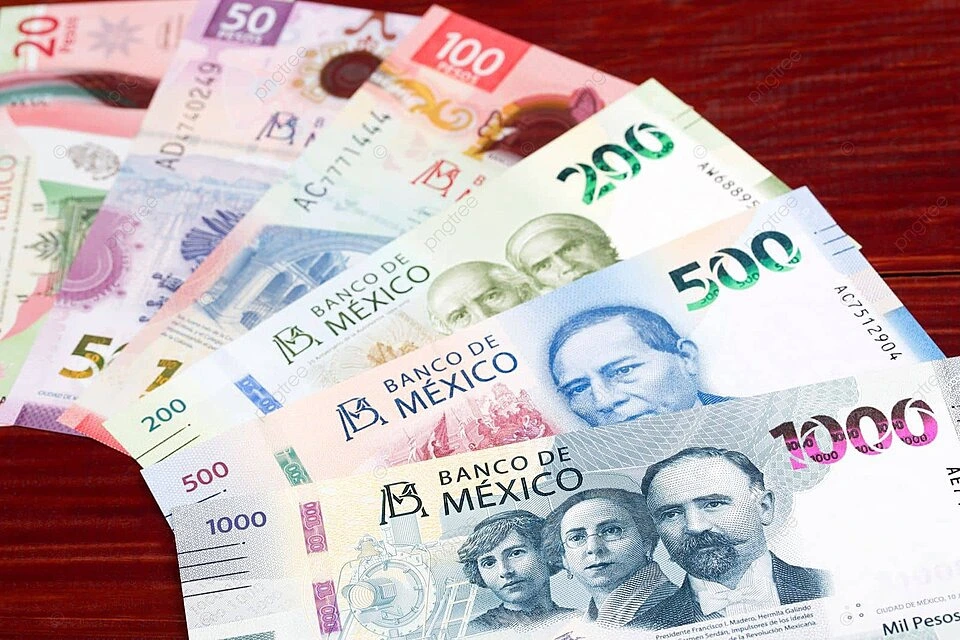
The peso’s recent performance reflects its struggle to recover from early February’s three-year low of 20.85 per dollar. This is despite intermittent support from broad dollar weakness.
USD/MXN Remains Range-Bound Amid Trade Uncertainty
The technical outlook for USD/MXN shows resistance at 20.50 and support at 20.24. The pair remains above its 50-day moving average of 20.42, with traders watching for a potential breakout toward January highs near 20.90 if tariff fears escalate.
Conversely, a dip below 20.24 could signal renewed strength for the peso. Market rumors suggest that US tariffs may be delayed until March, offering temporary relief to Mexican assets.
However, uncertainty surrounding trade negotiations continues to weigh heavily on sentiment. Meanwhile, ETF flows highlight investor caution; the iShares MSCI Mexico ETF saw outflows last week, while US dollar-focused funds experienced inflows.
The peso’s outlook remains fragile as Banxico balances growth concerns with inflation risks and as geopolitical tensions persist. Traders will closely monitor upcoming economic data and any developments in US-Mexico trade talks for further direction.
For now, the peso holds steady but vulnerable under the weight of external pressures and domestic monetary policy shifts.
Key Facts
— Deep Dive
— For the complete picture, read our in-depth guide: Mexico Economy 2026: GDP, Peso, Nearshoring, Banxico and Trade
More: Mexico news in English, every day from The Rio Times.
This article was produced by The Rio Times’ automated newsroom system. How we use AI · Report an error
In depth
Read More from The Rio Times