By Natalia Eiras
When we travel, everything can become a memory of the good times we spent getting to know a new place.
Or, if you are an immigrant, anything can be a link to your homeland.
This can include a snack you love, an ingredient you only have in the place where you have been.

There is no limit to what you can put in a suitcase.
The inspectors at Vigiagro (Vigilância Agropecuária Internacional), the agency responsible for inspecting the entry of agricultural products into the country, know this well.
If you watch the Discovery Channel program “Airport – Restricted Area”, you know well that when opening a suitcase, a Vigiagro agent can find anything: kilos and kilos of dried fish, seeds, ultra-processed foods, vegetables, or, in more unusual cases, impaled rats, dried frogs, and dissected dung.
The Guarulhos Airport (GRU) employees, through which some 100 thousand passengers from all over the world pass, decided to tell their daily routine in a humorous TikTok account.
To the sound of footsteps, children’s songs, and funk, they show the surprises they find in passengers’ luggage, not to mention the strategies people use to evade surveillance.
“They think we started this job yesterday,” jokes the profile.
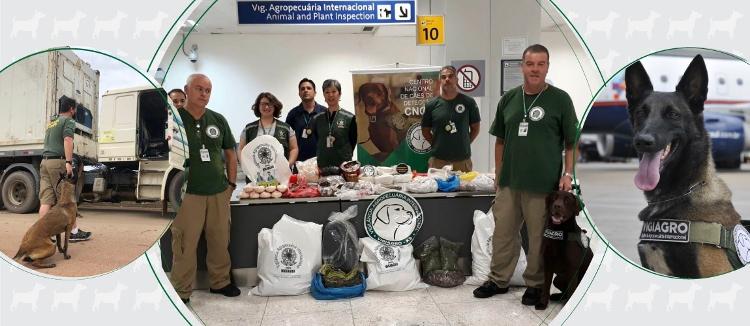
Without showing the faces of any of the employees, the profile uses the caption or the automated voice of TikTok itself to joke, but also to inform about what can and cannot enter the suitcase of travelers, inform about changes in the protocols for bringing or taking pets, among others.
All this with an addictive little vignette (very difficult to leave the profile without humming “Vigiagro, gru”).
IMPALED RATS
In a piece of luggage coming from Nigeria, impaled rats were found.
“They are a delicacy in some Nigerian cultures, where their sale and consumption are considered legal,” says the caption of the publication.
However, this type of item in Brazil is not allowed because it can be a vector for diseases that would compromise the country’s agricultural production.
“With Brazil being a major producer and exporter of food, any possible contamination could have devastating consequences for agribusiness,” writes the post’s author.
DESICCATED CATTLE MANURE
Some people even bring feces in their suitcases. That is desiccated bovine manure.
On the flight from India, the product was seized for destruction. According to the traveler, the product had religious purposes.
DRY BRIDE BOUQUET

Her friend got married in Portugal, she got the bouquet and, as a good souvenir, wanted to bring the flowers in her luggage.
Vigiagro didn’t let her. According to the agency, flowers are major vectors of agricultural diseases.
“An outbreak of coffee rust in Central America was caused by the introduction of infected plants from other regions,” exemplifies the post.
LIVE SNAILS
A passenger from Nigeria brought some live giant snails in his suitcase. As he did not have the necessary documentation, they were seized for destruction. What a pity!
KANGAROO AND CROCODILE DRIED MEAT
These delicacies may not be part of our diet, but nothing prevents you from bringing some of them back if you follow all the rules. I
n the case shown at TikTok; the meats were dried, industrially processed, and in their original unbroken packaging. Vigiagro cleared them.
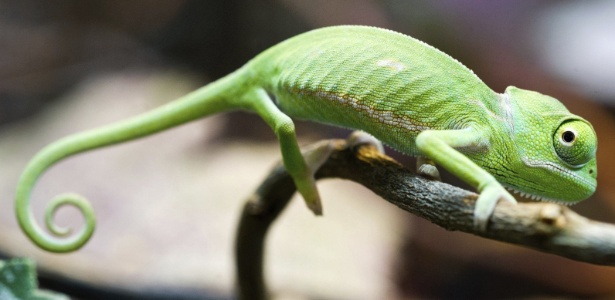
DEAD CHAMELEONS
In this case, Vigiagro had a lot of work to do: 48 dead chameleons, 56 dead wild rats, one unidentified rodent head, 15 snake parts, and ten bird parts were seized.
Besides losing his luggage, the passenger had to pay a fine from Ibama.
AND 28 KILOS OF GOODIES?
It seems like there is no end to the number of cookies, chocolates, and other sweets that come out of that delivery bag.
However, since they were processed items in their original packaging, the candy shipment went through.
SEIZURE SUCCESS: CHEESE AND SAUSAGES
Although curious cases draw the most attention, these are not the most common seizures.
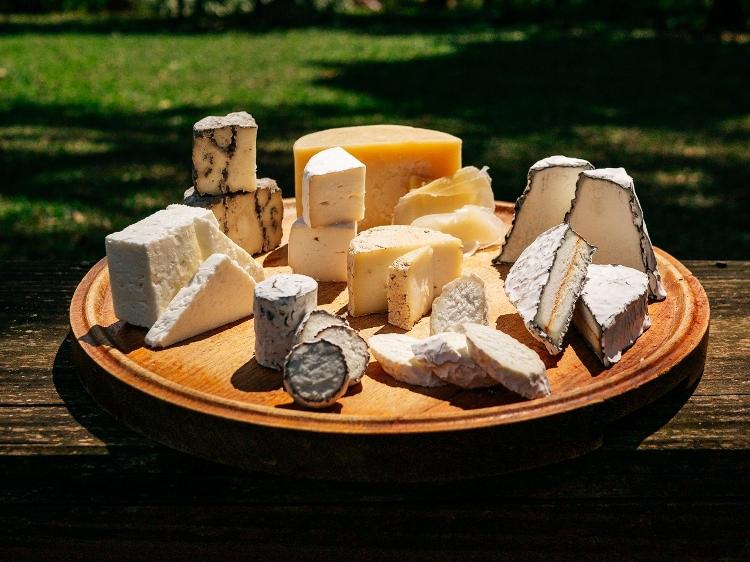
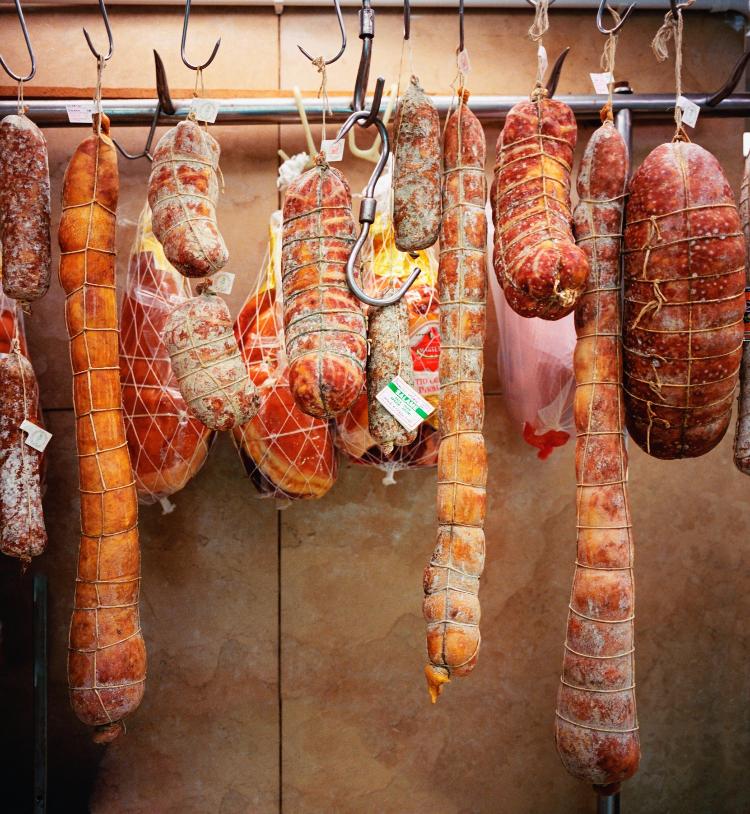
According to TikTok’s profile, some items always end up on Vigiagro’s bench: Portuguese and French cheeses without the correct labeling, as well as Spanish sausages and Italian ham.
Not to mention codfish, one of the favorite items of those from Portugal. Vigiagro even celebrates when it finds one of them within the rules: salted and dried, industrially processed, with the labels of the regulatory agencies.
BUT WHAT CAN YOU BRING?
In most cases, food can enter the country if it is industrialized or has undergone some processing.
For example, it is not enough to have a piece of cheese in a vacuum pack.
It must be in sealed packaging with legible local surveillance seals.
Still, there are exceptions: raw and frozen animal products do not get in, even with all the labels.
So does honey, which has some more complicated requirements to be met. Seeds, too.
Pork products are strictly forbidden from entering Brazil because of African swine fever, which has also been found in European countries besides having outbreaks in the African continent.
Do you know that Italian or Spanish ham you would love to bring back from your European trip? You can’t.
And if you do, it may show up in TikTok’s profile. “You lose. You can cry; you can have a tantrum,” the video says.
Even the delicacies shown here, such as dried frogs, are allowed if imported regularly.
You must fill out a form before your trip advising of the import of these items through the Declarable Goods channel.
They must issue a phytosanitary certificate that will contain information such as the individual weight of the items, as well as the origin and certifications.
With information from UOL
This article was produced by The Rio Times’ automated newsroom system. How we use AI · Report an error · Editorial responsibility: Matthias Camenzind, Editor-in-Chief
Read More from The Rio Times