Congo-Brazzaville Owes Almost as Much as It Produces
CONGO-BRAZZAVILLE · ECONOMY
Key Facts
- —The debt Total public debt hit 97.2% of GDP at end of 2025, above the 70% CEMAC ceiling.
- —The direction The ratio is expected to ease only gradually, toward the mid-90s in 2026, as nominal growth outpaces new borrowing.
- —The oil share Oil makes up 90% of exports, so falling prices squeeze the whole economy at once.
- —The catch Fiscal discipline weakened in 2025 with spending overruns and compressed revenues, not just oil prices.
- —The 2026 budget Approved at 2,550.5 billion CFA francs (US$4.52 billion) in revenue, after an IMF (International Monetary Fund) programme ended.
- —The growth Growth projected at 5.5% for 2026, with both the oil and non-oil sectors expanding.
Congo-Brazzaville’s debt was 97.2% of GDP at end-2025. That is above the 70% limit set by its monetary union.
Oil still makes up 90% of exports.
What the Congo-Brazzaville debt number means
The ratio is expected to drop. But the reason for the debt has not changed.
Public debt hit 97.2 percent of GDP at the end of 2025.
This is a Central African monetary union member, whose ceiling is 70 percent.
So this is a lasting breach, not a close call.
The IMF expects the ratio to ease only gradually, toward the mid-90s in 2026. Much of that improvement comes from nominal growth rather than from repayment.
The country completed an IMF programme and has approved a 2026 budget of 2,550.5 billion CFA francs (US$4.52 billion) in revenue. Officials present this as evidence of restored discipline.
The 2025 record complicates that claim. Fiscal discipline weakened significantly during the year, with sizeable spending overruns while revenues were compressed by lower oil prices.
Arrears to domestic suppliers are the usual pressure valve. They do not appear in headline debt until they are formally recognised.
An economy that is one commodity
Oil accounts for 90 percent of exports. Congo-Brazzaville is the third largest oil producer in sub-Saharan Africa, behind Nigeria and Angola.
Falling oil prices cut export earnings in 2025, pressuring the current account. For this concentrated economy, that is a simple effect, not a complicated one.
Growth of 5.5 percent is projected for 2026. Oil output should grow 5.6 percent, and the non-oil economy 4.8 percent.
The qualifier is what non-oil means here. Much of it is construction and services financed by oil receipts, which is diversification of activity rather than of income.
Gas is the intended successor, with liquefaction capacity added in recent years. It changes the molecule and not the model.
The diversification that has not happened
There is no coherent strategy for moving beyond extraction other than expanding into other extractive industries, principally gas. That has been true across several administrations.
Timber, potash and agriculture are all plausible and none has been developed at scale. The country has substantial arable land and imports much of its food.
Electricity is the practical bottleneck. In August we reported on the state’s goal of 10,000 megawatts.
We also reported on the power utility’s condition. That utility must deliver the electricity.
Without reliable power there is no processing industry, and without processing there is no escape from selling barrels.
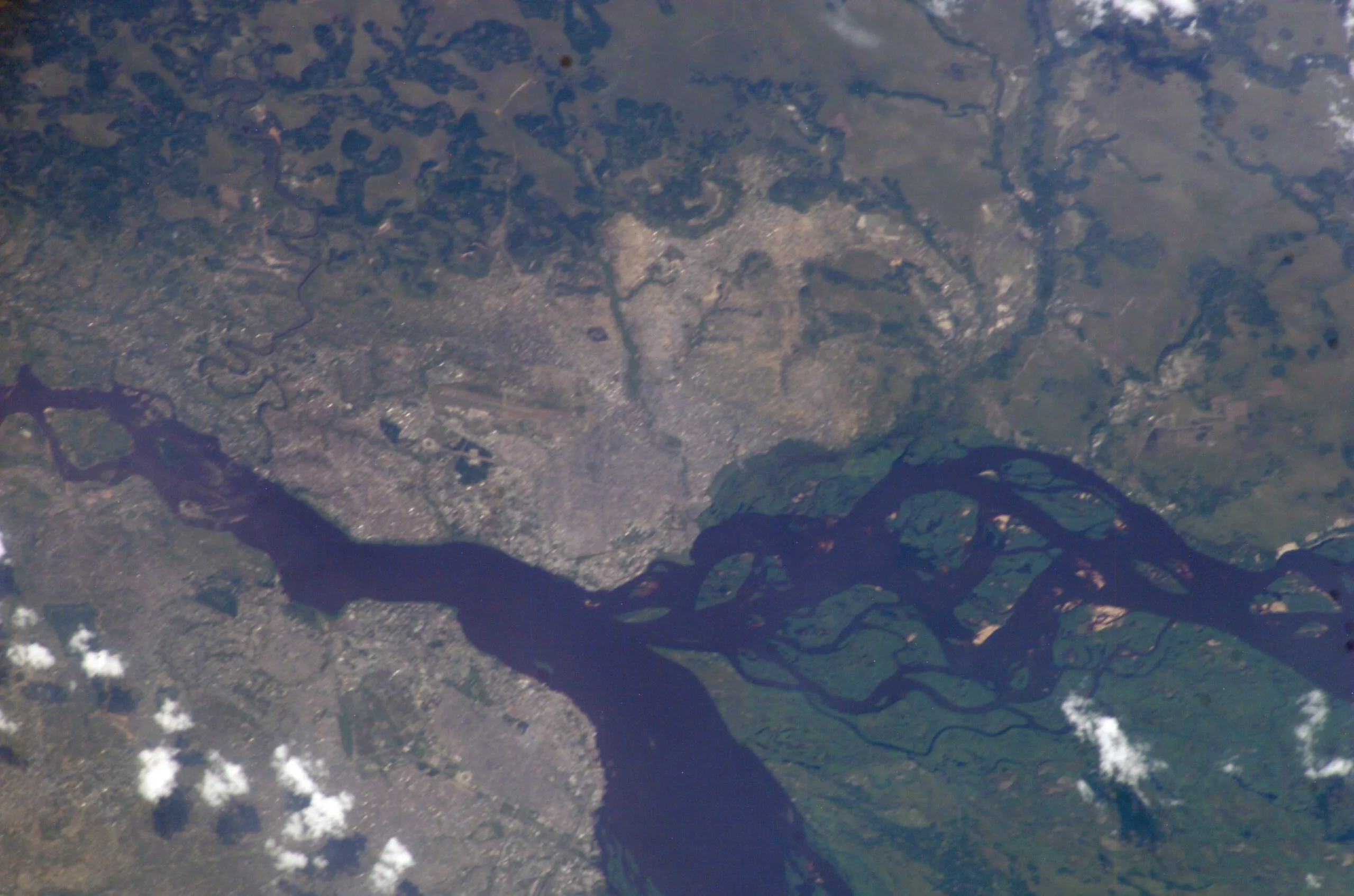
The Congo River offers enormous hydropower potential on the Kinshasa side of the water. Brazzaville has never been able to finance its share of it.
Politics of extraordinary continuity
President Denis Sassou Nguesso won re-election on 15 March 2026. He got 94.9 percent of the vote.
Turnout was 84.99 percent.
This is his fifth term in a row.
He has governed since 1979, apart from a five-year gap in the 1990s. That is one of the longest tenures of any serving head of state anywhere.
Continuity of that duration produces predictable policy and entrenched interests in equal measure. Both are relevant to why the debt built up.
For investors the succession question is unavoidable and unanswerable. It is the largest unpriced risk in the credit.
Neighbouring transitions have been abrupt. Gabon’s own change of government in 2023 came without warning to bondholders.
Why the monetary union makes this everyone’s problem
Congo-Brazzaville belongs to CEMAC, the Central African Economic and Monetary Community. Its members share the Central African CFA franc, pegged to the euro, backed by pooled reserves at a regional central bank.
That is why the convergence ceiling exists, and why breaching it matters beyond Brazzaville. Gabon is simultaneously running its own revenue crisis inside the same union.
Two of the union’s larger economies under fiscal strain at once is a regional question. The peg is credible until reserve cover stops being.
Latin American readers will recognise the structure from the euro’s periphery rather than from their own region. A shared currency without a shared treasury concentrates the adjustment on the weakest member.
The union has tightened reserve repatriation rules on exporters in response. Oil companies are now required to hold more of their proceeds inside the zone.
What to watch next
The first thing is whether the debt ratio actually eases as forecast, or whether it is revised as oil prices move.
The second is regional reserve cover at the central bank, which is the real constraint on all CEMAC members.
The third is the power sector, because that is where any genuine diversification has to start.
Frequently Asked Questions
How much debt does Congo-Brazzaville have?
Total public debt reached 97.2 percent of GDP at the end of 2025, well above the 70 percent CEMAC convergence ceiling.
Is the debt ratio falling?
The IMF expects it to ease only gradually, toward the mid-90s percent of GDP in 2026. The improvement comes mostly from nominal growth, not repayment.
How dependent is the country on oil?
Oil accounts for 90 percent of exports. Congo-Brazzaville is sub-Saharan Africa’s third largest oil producer.
What growth is expected in 2026?
Growth is projected at 5.5 percent, with the oil sector expanding faster than the non-oil economy.
Who governs Congo-Brazzaville?
Denis Sassou Nguesso was re-elected on 15 March 2026 for a fifth consecutive term with 94.9 percent of the vote.
Connected Coverage
- The state power utility must fix the electricity problem first.
- Gabon also has a fiscal strain, and both are in the same monetary union.
- Both sit in Africa. This is called ‘The New Scramble.’
This article was produced by The Rio Times’ automated newsroom system. How we use AI · Report an error · Editorial responsibility: Matthias Camenzind, Editor-in-Chief
LatAm Markets: Live Signals → — real-time movers, turnover leaders and FX across Latin America.