Congo Basin Agroecology Roadmap Adopted by Six Countries in Cameroon
CENTRAL AFRICA · SOCIETY
Key Facts
What happened: Six Congo Basin countries adopted the Yaounde Declaration on agroecology in Cameroon on 27 August 2026.
The main ask: Governments should steer at least 30% of national and regional farm investment plan budgets to agroecology.
The catch: The 30% applies to farm investment plans, not to whole national food budgets.
Who gets the money: At least 20% of climate and biodiversity funds should reach farmers, women, young people and Indigenous communities.
Why it matters in Cameroon: A UN food agency brief expects 2.8 million Cameroonians to face severe hunger by August 2026.
What comes next: The six governments must build national agroecology platforms and a regional fund to pay for the work.
Congo Basin agroecology now has a regional roadmap. The Yaounde Declaration asks governments to put at least 30% of relevant farm investment plan budgets into agroecology.
What the Congo Basin agroecology roadmap asks for
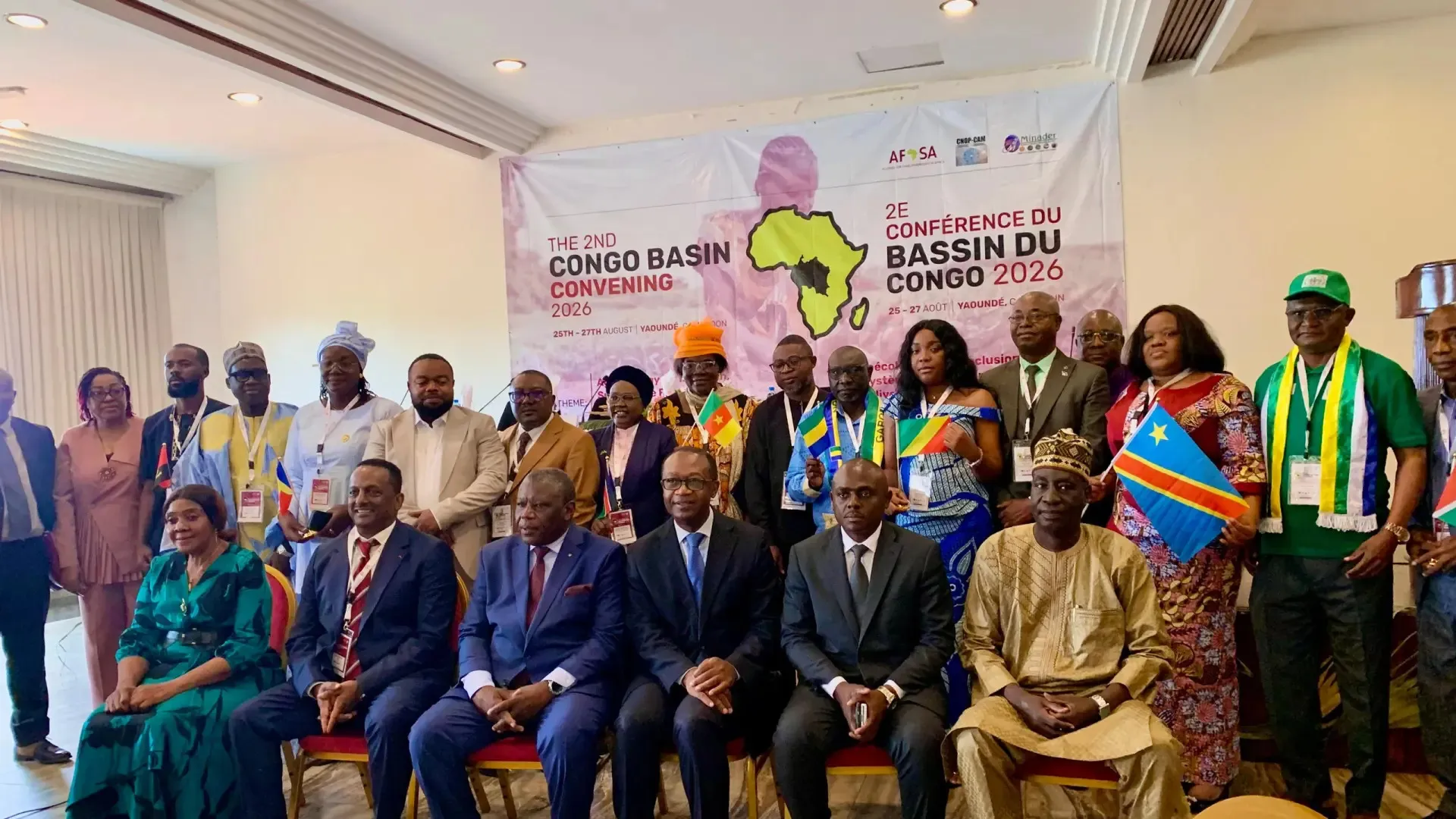
The Second Congo Basin Convening ran in Yaounde from 25 to 27 August 2026. It produced a 24-point declaration and a regional action roadmap.
The Alliance for Food Sovereignty in Africa (AFSA) helped organise it. The meeting drew 187 delegates from 20 countries, according to AFSA.
Cameroon Tribune and other accounts put the turnout at 16 African nations. AFSA is a pan-African network of farmer, pastoralist and civil society groups.
The text is a set of budget instructions rather than a statement of principle. Its central ask concerns the money inside farm investment plans.
Governments should steer at least 30% of relevant budget allocations within national and regional agricultural investment plans to agroecology. Those plans are the documents that set out how a country will spend on farming.
That wording matters. The pledge covers farm investment plans rather than the whole national food budget.
The percentages here come from AFSA’s own published declaration. That is the primary text, and later write-ups paraphrase it.
The declaration also asks governments and the African Union Commission to write agroecology into those investment plans. The Commission is the executive body of the 55-member African Union.
A second money demand concerns who receives the funds. At least 20% of relevant climate and biodiversity financing should reach local groups directly.
Those groups are farmers’ organisations, women, young people, Indigenous peoples and local communities. Direct means the money does not pass through a national ministry first.
Beyond the money, the declaration presses for stronger customary and community land rights. It also asks for protection of farmer-managed seed systems and a regional financing mechanism.
The two goals it is trying to hold together
Two themes are on the record for this meeting. AFSA opened it under the theme “Securing the Heart of Africa: People, Nature, Food and Climate Resilience”.
Other accounts give the theme as “Agroecology for Inclusion, Sustainable Food Systems, Biodiversity, and Climate Justice in the Congo Basin”. The tension inside both versions is the same.
Congo Basin countries need to produce more food for growing populations. They also hold the second-largest tropical forest system on the planet.
The usual route to more farmland runs straight through that forest. Agroecology was presented in Yaounde as the way to avoid that trade-off.
The idea is to raise output on land already in use. Workshop sessions covered ecological resilience, land rights, social inclusion and how to raise money.
Why Cameroon is the test case
The host country shows both halves of the problem. World Bank data show farming, forestry and fishing made up 16.8% of Cameroon’s economy in 2025.
Agriculture employed 41.9% of the workforce in that year. Forest covered 42.7% of the land area in 2023, on the same source.
Congo Basin forest accounts published by the World Bank tell the other half. They show forest condition and biodiversity getting worse in some ecosystems, Cameroon included.
The food pressure is immediate. An April 2026 country brief from the UN Food and Agriculture Organization (FAO) set out the scale.
It projected that more than 2.8 million people would face severe acute food insecurity between June and August 2026. That is about 10% of the population the analysis covered.
Around 250,000 of them were placed in the Emergency category. The brief drew on the October 2025 Cadre Harmonisé analysis.
Cadre Harmonisé is the standard hunger measurement used across West and Central Africa. Conflict, flooding, high food prices and costly farm inputs have all hurt production and access.
Agriculture Minister Gabriel Mbairobe chaired the opening session. He framed the challenge in plain terms.
Countries in the region must grow more food. They must do it as environmental and financial pressure keeps rising.
Who has to make it work
The work now sits with the Congo Basin Biodiversity, Climate and Agroecology Initiative (COBCAI). AFSA helped organise the Yaounde meeting.
It has been asked to raise money for COBCAI and to host the initiative’s regional coordination unit. That makes a civil society network the administrative centre of a government programme.
The six Congo Basin countries are expected to set up or strengthen national agroecology platforms. Those platforms would coordinate the work inside each country.
The six are Cameroon, Gabon, Equatorial Guinea, the Central African Republic, the Republic of Congo and the Democratic Republic of Congo. That is where a regional declaration either becomes policy or does not.
Cameroon already has parallel machinery running. On 25 March 2026 the government and United Nations partners launched CONVERGEFOOD.
CONVERGEFOOD is a programme to strengthen farm value chains and improve access to finance. It also aims to connect smallholder farmers and agribusinesses to markets.
The gap between a percentage and a payment
A 30% target is easy to declare and hard to verify. Nothing in the declaration defines what counts as a relevant budget allocation.
That definition will decide whether the figure means anything. A government could relabel existing spending and hit the target without adding new money.
The 20% direct-financing target faces a harder problem. Climate and biodiversity money has always struggled to reach farmers’ organisations and local communities.
The institutions handing it out are not built to write small cheques. Their reporting rules favour large recipients with full-time compliance staff.
The land-rights element may matter most of all. Farmers without secure title have little reason to invest in practices that pay back over a decade.
What to watch
The first marker is whether any of the six governments writes the 30% figure into a budget document. A communiqué is not a budget line.
The second is whether the regional financing mechanism is actually set up. The third is whether COBCAI is given staff and money rather than a mandate alone.
Readers who follow Latin America will know this argument. The Amazon basin has run its own version for a decade, with the same gap between promises and payments.
More: Brazil news, every day from The Rio Times.
Frequently Asked Questions
What is the Yaounde Declaration 2026?
The Yaounde Declaration is a 24-point text adopted in Cameroon on 27 August 2026. It asks governments to put at least 30% of relevant budget allocations in agricultural investment plans toward agroecology.
Which countries are involved?
They are Cameroon, Gabon, Equatorial Guinea, the Central African Republic, the Republic of Congo and the Democratic Republic of Congo. AFSA counted 187 delegates from 20 countries, though other accounts say 16 African nations.
What else does it ask for?
At least 20% of relevant climate and biodiversity financing should reach farmers’ organisations, women, young people and Indigenous communities directly. It also presses for stronger land rights, protected seed systems and a regional financing fund.
How serious is food insecurity in Cameroon?
An April 2026 FAO brief projected more than 2.8 million people facing severe acute food insecurity between June and August 2026. Around 250,000 of them were placed in the Emergency category.
Who coordinates the initiative?
The Alliance for Food Sovereignty in Africa (AFSA) will raise money for the Congo Basin initiative and host its coordination unit. The six countries are expected to set up or strengthen national agroecology platforms.
Connected Coverage
The financing squeeze behind these promises is visible in a frozen US$140 million loan stalling Cameroon’s first bauxite mine, and the region’s wider institutional build-out in Central Africa licensing its first credit rating agency. What happens when the state is absent from a territory is set out in Kinshasa shutting the universities it no longer controls, and our pillar Africa: The New Scramble follows the money and power across the continent.
This article was produced by The Rio Times’ automated newsroom system. How we use AI · Report an error · Editorial responsibility: Matthias Camenzind, Editor-in-Chief