Colombia Earthquake Kills 331, Damage US$13.4 Billion
COLOMBIA · DISASTER RECOVERY
Colombia latest: Colombia news — latest coverage · US Keeps Million Bounty on Cabello After Clearing Venezuela…
Key Facts
- —What happened A magnitude-7.4 earthquake struck western Colombia on August 10, 2026, near San José del Palmar in Chocó department.
- —How big Official figures now count 331 dead and 4,519 injured, with more than 466,000 people affected across five departments.
- —What it means A joint UN and government study now puts direct physical damage at about US$13.4 billion, far above earlier estimates.
- —The catch Starlink’s free internet in affected zones is funded by SpaceX itself, not by the Colombian government, and only runs through September 12.
- —Who it affects Survivors in Chocó, Valle del Cauca, Risaralda, Caldas, and Quindío, including the cities of Cali, Pereira, and Quibdó.
- —What comes next Authorities are still counting losses, and no official plan has been announced for internet service after September 12.
Four weeks after Colombia’s strongest earthquake in a century, the confirmed death toll has held steady at 331. Damage estimates have climbed sharply, and a free Starlink internet lifeline is nearing its deadline.
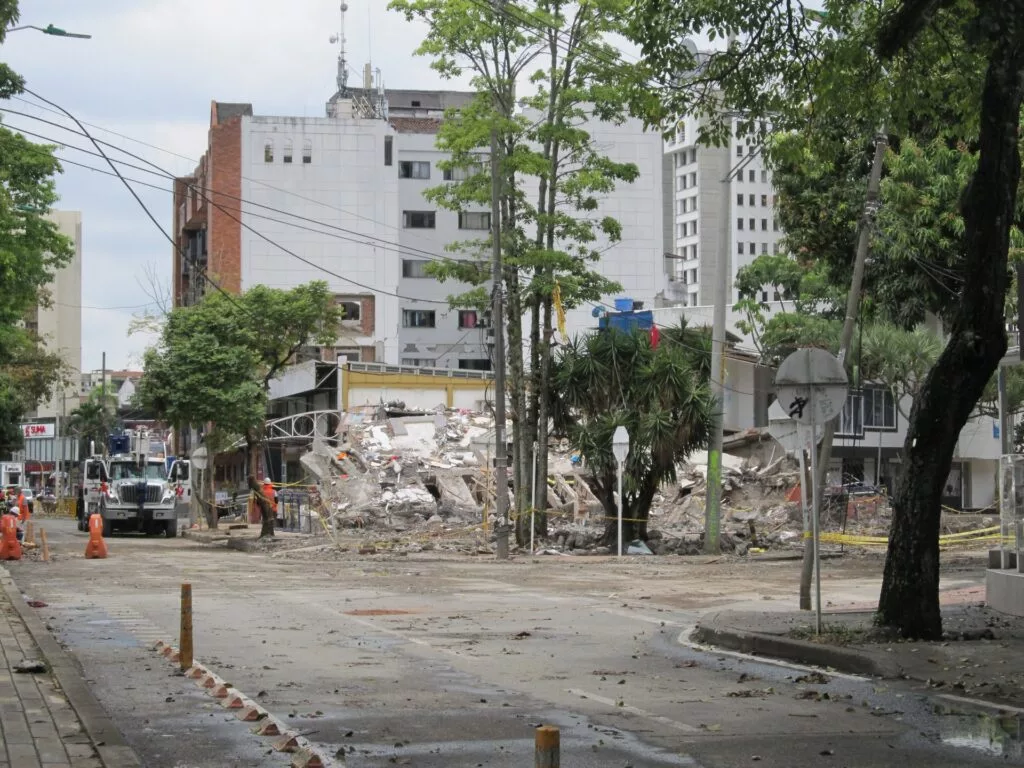
Colombia is entering its fourth week of recovery from the magnitude-7.4 earthquake that struck Chocó department on August 10, 2026. The quake, which hit at about 7:34 a.m. local time, has been widely described as the country’s strongest in a century.
The disaster has affected more than 466,000 people across at least five departments, including Chocó, Valle del Cauca, Risaralda, Caldas, and Quindío. Major cities such as Cali, Pereira, Quibdó, Manizales, and Armenia have all reported damage.
Death Toll Climbed, Then Held Steady
The official death toll climbed steadily in the first days after the quake. On the first day, reports counted at least 20 dead, but that number rose to more than 130 within 24 hours.
By August 13, figures ranged from 265 to 281 dead depending on the source, with hundreds more listed as missing. Colombia’s national disaster agency, UNGRD, has since updated its count several times after cross-checking records.
The most current official figure, reported by UNGRD on August 25–26, stands at 331 dead and 4,439 injured. That number supersedes the earlier 265 figure, which was only accurate as of August 13 and is now outdated.
The toll has not risen since. UNGRD’s latest update, on September 3, still counted 331 dead, though the injured count had climbed to 4,519.
Damage Cost Climbs Sharply
Early damage estimates have also been revised sharply upward. On August 18, President Abelardo de la Espriella announced preliminary losses of about US$9.6 billion.
That estimate was based on modeling by Ingeniar Risk Intelligence, a private catastrophe-risk firm. The figure, roughly 30 trillion Colombian pesos, was widely reported as preliminary and represented roughly 1.5%-2% of the country’s GDP.
President De la Espriella‘s government cited the same figure days later when it declared an economic emergency. However, a joint evaluation by the United Nations Development Programme (UNDP) and UNGRD, published August 31, found far higher losses.
Direct physical damages reached 42.1 trillion pesos, roughly US$13.4 billion, about 40% above the earlier US$9.6 billion estimate.
Starlink Provides Free Internet
SpaceX’s Starlink satellite internet service has been providing free connectivity in the affected regions since mid-August. The company confirmed the program in its own posts and support materials, covering Chocó, Caldas, Valle del Cauca, Risaralda, and Quindío.
The free service is funded directly by SpaceX through account credits, not by any Colombian government subsidy. Existing customers receive account credit, while cancelled customers get a reactivation credit, and new customers must buy a kit first.
The Colombian government’s role has been limited to distributing Starlink hardware kits in the epicenter area. The free service itself is scheduled to run through September 12.
What Happens After September 12
No official announcement has been made about what happens to internet service after the September 12 cutoff date. Starlink’s own materials do not specify whether free service will continue, be extended, or convert to paid plans.
This remains an open question for the hundreds of thousands of people still recovering from the quake. Relief workers and residents in remote areas of Chocó have relied heavily on the satellite connection for emergency coordination.
Meanwhile, recovery efforts continue across the affected departments, with authorities still counting the full scale of the damage. The revised US$13.4 billion estimate suggests reconstruction will be a long and costly process.
More: Colombia news in English, every day from The Rio Times.
The big picture: Colombia explained — economy, politics, society and daily life in one read.
Frequently Asked Questions
How many people died in the Colombia earthquake?
The official death toll stands at 331 as of August 25–26, according to Colombia’s national disaster agency UNGRD. Earlier figures of 265 were only accurate as of August 13.
How much damage did the earthquake cause?
A joint UN and government study published August 31 puts direct physical damages at about US$13.4 billion. That figure supersedes an earlier preliminary estimate of US$9.6 billion from a private modeling firm.
Who is paying for the free Starlink service?
SpaceX itself is funding the free Starlink service through account credits, not the Colombian government. The government only distributed the physical hardware kits in affected areas.
When does the free Starlink service end?
The free service is scheduled to run through September 12, 2026. No official plan has been announced for what happens after that date.
Which areas were most affected by the earthquake?
The hardest-hit departments are Chocó, Valle del Cauca, Risaralda, Caldas, and Quindío. Major cities including Cali, Pereira, Quibdó, Manizales, and Armenia all reported damage.
Sources: UNGRD, Infobae, Anadolu Agency, Reuters, CNN, World Vision, Semana, Noticias Caracol, Starlink Help Center, UNDP, El País, BBC, The Guardian, Al Jazeera, Bloomberg, BTG Pactual, BBVA, Correo del Sur, AFP, Reforma, Emol, Anews, Yeni Şafak English, En-Colombie, Pulzo, Time, NYT, USGS.
This article was produced by The Rio Times’ automated newsroom system. How we use AI · Report an error · Editorial responsibility: Matthias Camenzind, Editor-in-Chief