Brazil’s Military Boost: Power, Politics, and Latin America’s Top Armored Vehicle
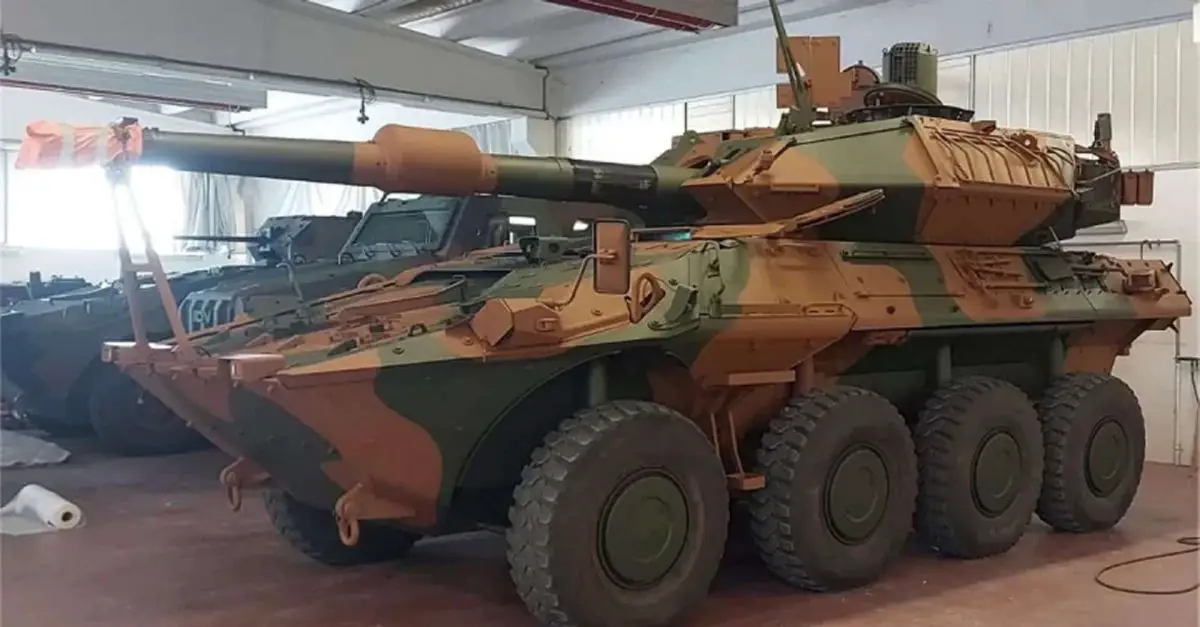
Today, Hamburg, Germany, marks the departure of Brazil’s first Centauro II-BR armored vehicle, set to arrive in Rio de Janeiro on August 15.
This vehicle is a product of the Italian consortium Iveco-OTO Melara (CIO), boasting a 120 mm cannon.
Brazil’s Centauro II-BR will be South America’s most powerful armored vehicle once operational, advancing its modernization efforts.
The journey of this armored vehicle to Brazil faced significant hurdles. Under Chancellor Olaf Scholz, Germany’s government decided to temporarily store the equipment at Hamburg’s port.
German customs cited the absence of a transportation guide from the BMWK as the reason but denied it was an embargo.
The standoff began on May 28, just four days after the Iveco factory in Bolzano, northern Italy, had shipped the vehicle to Hamburg for its scheduled sea voyage to Brazil.
The vehicle was intended for testing at the Brazilian Army‘s Evaluation Center (CAEx) in Rio. The vehicle wasn’t cleared for shipment until June 20.
The delay was exacerbated by geopolitical tensions and suspicions regarding Germany’s dissatisfaction with Brazil’s neutral stance in the Ukrainian conflict.
Geopolitical Tensions and Brazil’s Defense Industry
In 2023, Germany also blocked the sale of Guarani armored vehicles to the Philippines. These vehicles, made by Iveco in Minas Gerais, contained German components.
In addition, the backdrop of this decision was Brazil’s refusal to supply weapons to Ukraine, exacerbating the geopolitical rift.
Despite the challenges, the Brazilian Army and Iveco decided to ship the second Centauro II-BR unit directly from Italy to Brazil. They chose to bypass European ports.
This move ensures the delivery of the armored vehicles as stipulated in the contract signed on December 22, 2022. The contract is worth €900 million.
The scenario underscores Brazil’s vulnerability to international dynamics and highlights the necessity for a robust, indigenous defense industry.
As global power plays reshape alliances and access to military technology, Brazil’s journey toward strengthening its military capabilities faces numerous challenges.
In short, this reflects the broader geopolitical maneuvers shaping our modern world.
This article was produced by The Rio Times’ automated newsroom system. How we use AI · Report an error
Read More from The Rio Times