Brazil’s Economy Minister laughs at IMF mispredictions and tells it to take its forecasts elsewhere
RIO DE JANEIRO, BRAZIL – With a healthy self-confidence that must be the secret envy of most of his Latin American counterparts, Brazilian Economy Minister Paulo Guedes on Wednesday laughed off the International Monetary Fund (IMF) for its inaccurate forecasts of the country’s growth and urged it to make its predictions “elsewhere.”
“I would like to say, very delicately, that we are even dispensing with the IMF mission,” said Guedes, an orthodox Chicago School liberal, at a meeting with businessmen in São Paulo attended by President Jair Bolsonaro, accompanied by other ministers.
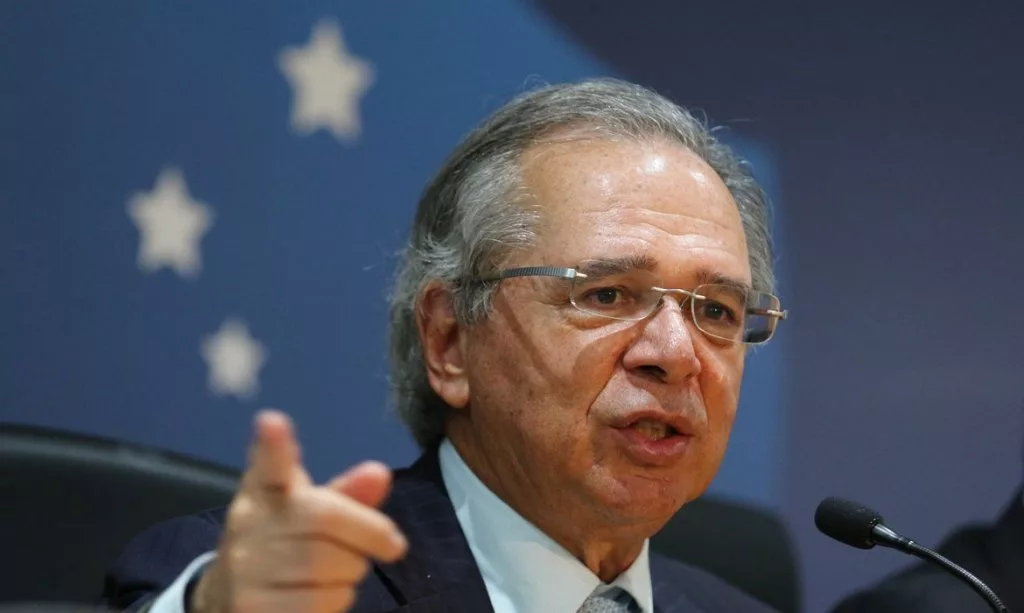
Guedes considered that the IMF’s presence may have been justified in the past because Brazil “always lived in imbalance.” Still, he indicated that “a week ago,” he signed a document rejecting the IMF’s visit so that “they can get out of Brazil (and go to other countries),” he said.
The much-admired minister, in office, since Bolsonaro took power in 2019, specifically lashed out at the agency for forecasting a drop in Brazilian Gross Domestic Product (GDP) close to 10% for 2020, which in the end did not materialize, registering a retraction of 3.9%, according to official data.
“I think they should make forecasts elsewhere,” he said, amid laughter and applause from the audience present at the event.
Guedes defended that the government of Jair Bolsonaro has “put the Brazilian economy on its feet,” which has declined “less than expected,” and criticized those who have predicted that 2022 will be “a calamity” for the largest Latin American economy.
The financial market projects for 2021 an expansion of Brazil’s GDP of 4.65%, although it has reduced its estimates to 0.50% for next year.
The IMF is rejected practically throughout Latin America as a stooge of international high finance.
More: Brazil news in English, every day from The Rio Times.
This article was produced by The Rio Times’ automated newsroom system. How we use AI · Report an error · Editorial responsibility: Matthias Camenzind, Editor-in-Chief