Brazil Bolsters Air Defense with Advanced Radar Technology
Amidst geopolitical tensions and evolving aerial threats, the Brazilian Air Force announced the acquisition of cutting-edge Thales Ground Master 200 Multi-Mission All-in-One radars.
This announcement was made during Paris’ Eurosatory 2024 from June 17–21.
These systems are a game-changer, designed for rapid deployment and capable of transforming from transport to operational status in just 15 minutes.
Equipped with dual-beam 4D AESA technology, the GM200 MM/A radars provide unmatched precision over greater distances.
They excel at detecting stealthy and slow-moving targets like mini-drones.
Furthermore, they can be repositioned in a mere 10 minutes, highlighting their adaptability in various tactical scenarios.
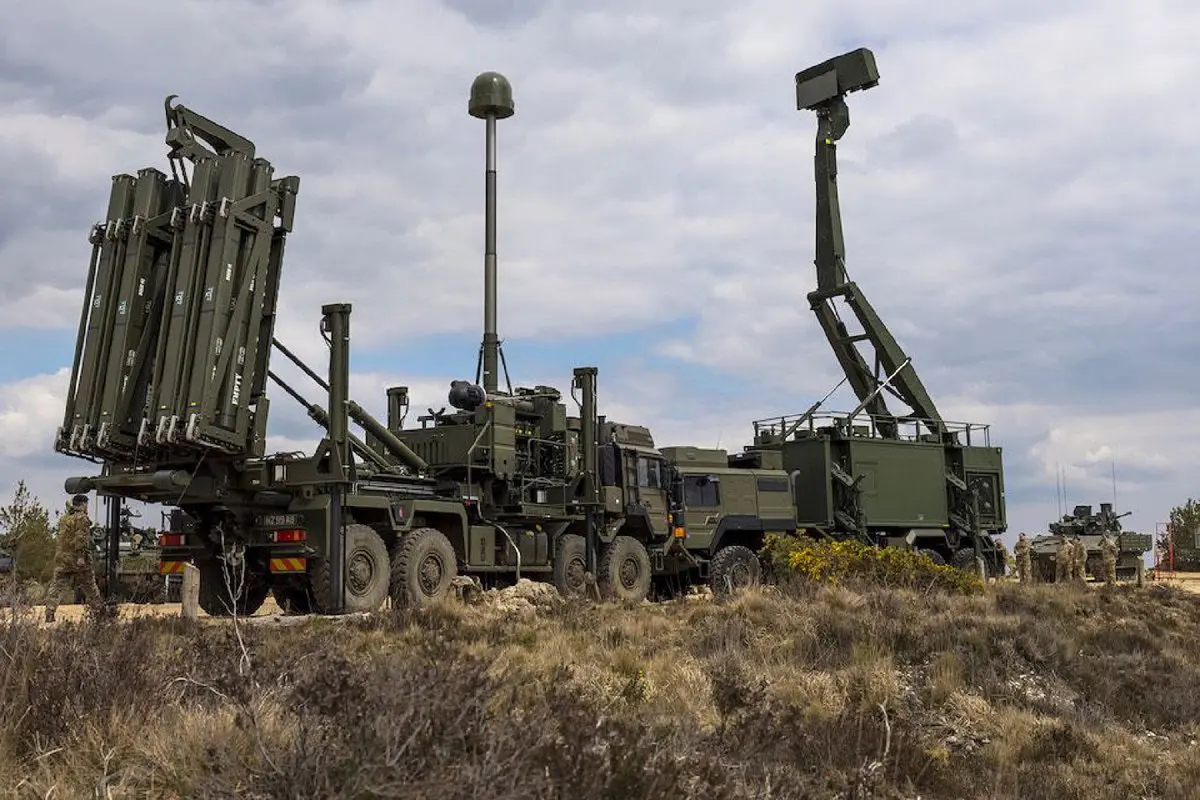
Housed in a 20-foot air-transportable container, these radars come complete with a power generation unit and a cabin for two operators.
Their robust build ensures reliability for continuous field operations.
Moreover, the Brazilian Air Force‘s KC-390 Millennium aircraft can quickly transport these radars across bases, setting up extensive no-fly zones swiftly.
The GM200 MM/A system stands out for its versatility. It is capable of tracking a wide range of threats—from low-flying drones to high-speed aircraft.
Thales’s technology backbone supports this flexibility, with a scalable and upgradeable antenna system that anticipates future threats and technology upgrades.
Brazil’s Strategic Evolution in Airspace Defense
This acquisition isn’t just about hardware; it reflects Brazil’s broader strategy to safeguard its airspace sovereignty.
With Thales’s long-standing partnership, emphasized by Eric Huber, Vice President of Surface Radars, Brazil fortifies its defensive posture significantly.
Major General Alexandre Arthur Massena Javoski highlighted the enhanced air navigation safety and quick defense responsiveness provided by these radars.
As threats evolve, so does Brazil’s defense technology. Collaboration with Embraer under the Lorad initiative explores potential long-range capabilities.
This augments existing short-range systems like the Saber M200 Vigilante.
This proactive approach ensures Brazil stays ahead, capable of defending its expansive airspace against modern aerial threats. It thereby bolsters national security and readiness on a global scale.
This article was produced by The Rio Times’ automated newsroom system. How we use AI · Report an error · Editorial responsibility: Matthias Camenzind, Editor-in-Chief
Read More from The Rio Times