Bolivia Inflation Rises to 5.70% as Tomatoes Jump 38%

BOLIVIA · ECONOMY
Key Facts
- —The country Bolivia is a landlocked Andean country whose currency, the boliviano, officially traded at 11.97 per US dollar on 6 October.
- —What happened INE, the national statistics institute, said on Monday 5 October that consumer prices rose 0.85% in September.
- —The numbers Bolivia inflation reached 5.70% over 12 months, up from 5.02% in August, and prices are 3.88% higher than in December.
- —Biggest movers Tomatoes jumped 38.12% and chicken fell 19.21% in the month, according to the institute’s bulletin.
- —Where it hit Sucre had the steepest monthly rise at 2.26%, while the Santa Cruz urban area rose only 0.38%.
- —Still open The institute gave no reason for the tomato spike and no forecast for October.
Bolivia inflation climbed to 5.70% over 12 months in September, up from 5.02% in August, the statistics institute said on Monday 5 October. A 38% jump in tomato prices led a monthly rise of 0.85%.
For Americans who travel, invest or send money to Bolivia, the figures show prices still rising in local currency. The central bank’s official rate stood at 11.97 bolivianos per US dollar on Tuesday 6 October.
What the September Figures Show
INE, Bolivia’s National Statistics Institute, tracks consumer prices each month in the capital cities and main urban areas. Its September release put the monthly rise at 0.85%, down from 1.10% in August.
Even so, 12-month Bolivia inflation rose to 5.70% from 5.02%, because September 2026 added more than the same month a year earlier. Prices have climbed 3.88% since the end of 2025.
The 12-month rate is still far below September 2025, when it stood at 23.32%, the bulletin’s table shows. It fell to 4.93% in July, its lowest reading this year, and has risen in both months since.
Prices rose in all 12 spending groups the institute listed, led by furniture and household goods, transport and health. The institute’s September bulletin puts those three at 1.90%, 1.20% and 1.14%.
Food and non-alcoholic drinks rose a milder 0.73%, the bulletin shows. Clothing and footwear gained 1.06% and communications 0.95%.
Tomatoes Up, Chicken Down
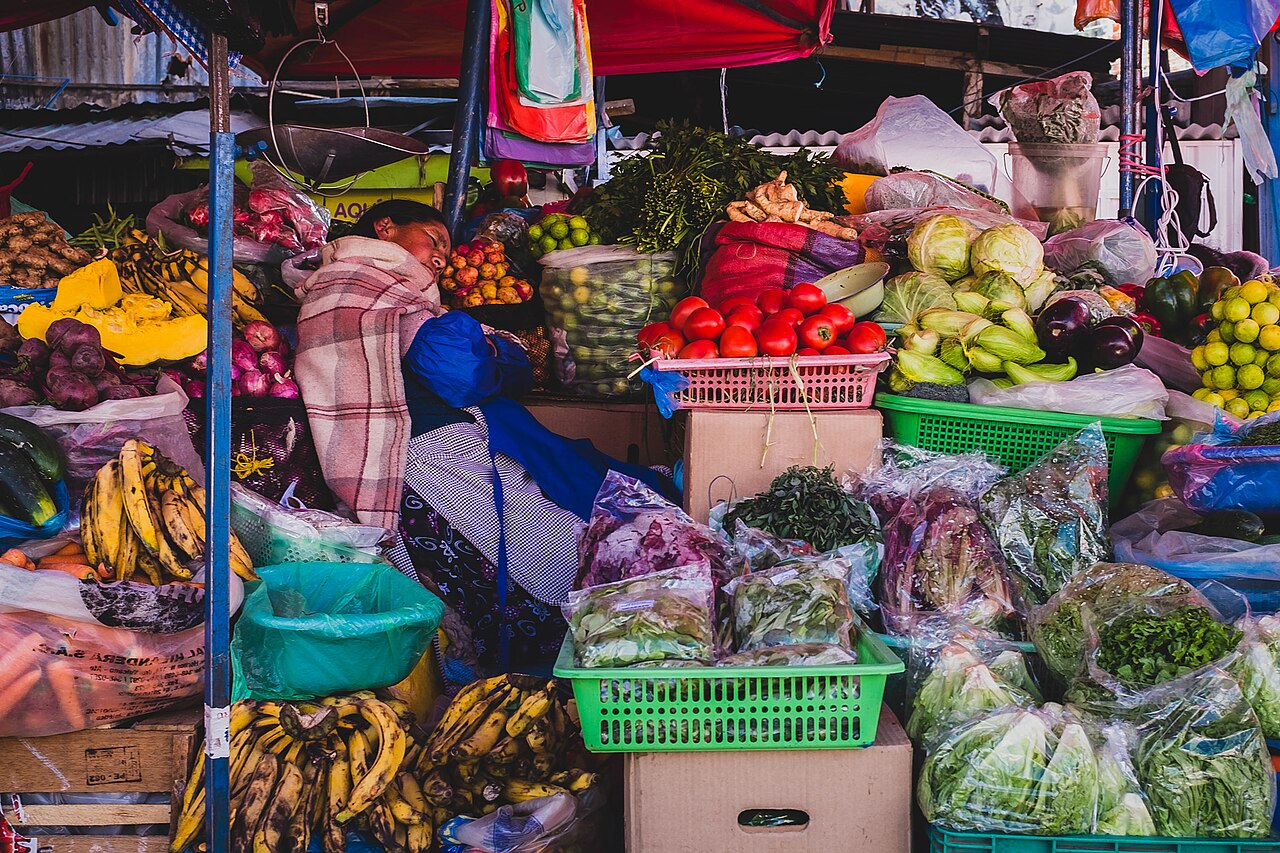
The institute named tomatoes, soft drinks, potatoes, city bus fares, mobile phones and onions as the main drivers. The bulletin puts the tomato increase at 38.12%, potatoes at 8.82% and onions at 6.03%.
Mobile phones rose 5.64%, soft drinks 3.75% and urban public transport 2.21%, the bulletin shows. Chicken fell 19.21% and topped the institute’s list of items that got cheaper.
Sunscreen, six-hole bricks, skin cream, cheese and bras also got cheaper, according to the institute.
The pattern reverses August, when chicken led the rise and tomatoes got cheaper. In its August release, INE blamed the chicken spike on slow restocking of poultry farms after 53 days of blockades.
Chicken prices then eased from the second week of August as production returned to normal, the institute said at the time. September’s drop continued that slide.
Sucre and Potosí See the Biggest Rises
Sucre, Bolivia’s constitutional capital, posted the steepest monthly rise at 2.26%. Potosí, the highland mining city, followed at 1.88%.
The Cochabamba metropolitan area, which INE calls the Kanata Metropolitan Region, rose 1.47%. Cobija, on the Brazilian border, rose 1.42% and Tarija 1.40%.
The La Paz urban area rose 0.76% and Oruro 0.45%. Trinidad, in the Amazon lowlands, barely moved at 0.05%.
El Deber, a Santa Cruz daily, noted that the Santa Cruz urban area’s 0.38% was less than half the national rate.
That differs sharply from August, when Oruro, Potosí and Santa Cruz led and Sucre rose only 0.37%. City readings can swing sharply from one month to the next.
What It Means for You
Visitors and foreign residents who pay in bolivianos face higher bills for fresh food, city transport and phones. The central bank’s official rate was 11.97 bolivianos per US dollar on Tuesday 6 October.
The Central Bank of Bolivia posts that official rate on its website. Travellers should compare it with what banks and exchange houses actually pay before changing money.
For investors and exporters, Bolivia inflation over 12 months is the figure to watch, because it rose as the monthly pace slowed. It came after August’s 1.10% monthly rise, which chicken prices had driven.
Bolivia inflation at 5.70% does not mean a price spiral. Several items, led by chicken, got cheaper in September, and the Santa Cruz urban area saw only a small rise.
What Is Not Known
The institute’s release did not explain why tomato prices jumped in September. It gave no forecast for October or for the year as a whole.
It is not known whether tomatoes will fall back in October, as chicken did after its August spike, or keep Bolivia inflation climbing. The next monthly release will show whether the slower September pace holds.
More: Bolivia news in English, every day from The Rio Times.
Frequently Asked Questions
What is Bolivia’s inflation rate now?
Bolivia inflation stood at 5.70% in the 12 months to September 2026, according to INE, Bolivia’s National Statistics Institute. The monthly rise was 0.85%, and prices are up 3.88% since December.
Why did prices rise in September?
Tomatoes, soft drinks, potatoes, city bus fares, mobile phones and onions contributed most, the institute said. Cheaper chicken held the overall rise down.
Which Bolivian cities saw the biggest increases?
Sucre led at 2.26%, followed by Potosí at 1.88%. The Santa Cruz urban area rose 0.38% and Trinidad 0.05%.
How many bolivianos does a US dollar buy?
The Central Bank of Bolivia’s official rate was 11.97 bolivianos per US dollar on Tuesday 6 October 2026. Rates offered by banks and exchange houses can differ.
Sources: Instituto Nacional de Estadística (INE), September 2026 consumer price index, 5 October 2026; Instituto Nacional de Estadística (INE), September 2026 CPI bulletin (PDF), 5 October 2026; Instituto Nacional de Estadística (INE), August 2026 consumer price index, 3 September 2026; Banco Central de Bolivia, official exchange rate, 6 October 2026; El Deber, 5 October 2026.
In depth
Editorial responsibility: Matthias Camenzind, Editor-in-Chief · Editorial standards · Report an error