Belarus receives first batch of Russian Mi-35 assault helicopters amid ongoing Ukraine conflict
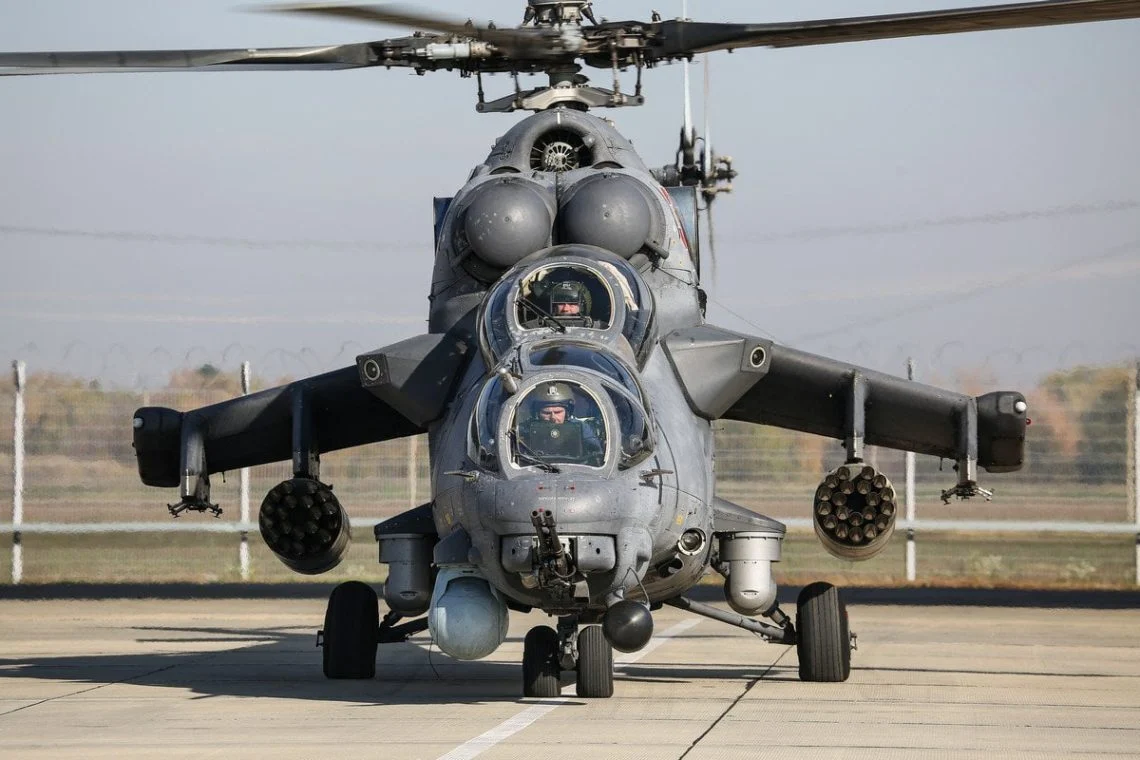
Today, Belarus welcomed the initial batch of Russian Mi-35 assault helicopters, as confirmed by the Belarusian Defense Ministry.
Belarus has been Russia’s primary ally in the ongoing conflict with Ukraine.
As per an official statement, air defense troops at one of the airbases are unloading the Mi-35 helicopters meant for the Belarusian army.
The helicopters, which traveled over two thousand kilometers, will be flown by Belarusian military personnel who have undergone appropriate training in Russian centers.
The statement highlighted that the helicopters will be operational after a detailed analysis of their technical features in the coming weeks.
This delivery is in line with Belarus’s efforts to modernize its military capabilities, reflecting the country’s past Soviet ties.
Earlier this year, Belarusian President, Alexandr Lukashenko, mentioned the forthcoming Mi-35 delivery.
He also anticipated the acquisition of Russian Su-30 combat aircraft, Iskander cruise missiles, and S-400 air defense systems.
In August, Lukashenko stated that half of the tactical nuclear weapons promised by the Kremlin are now deployed in Belarus, seen by Russian President Vladimir Putin as a deterrent against NATO threats.
However, Russian Defense Minister, Serguéi Shoigú, emphasized that Moscow would retain control over the warheads, including decisions on their potential use.
Speaking to the media, Lukashenko today assured that if Ukraine doesn’t cross the border, Minsk will abstain from active conflict.
He emphasized that the Belarusian troops wouldn’t significantly boost Moscow’s efforts, but Belarus would continue to support Russia’s military campaign.
Furthermore, Lukashenko admitted for the first time that Russian military units entered Ukraine from Belarusian territory, specifically in the Chornobyl region, in February 2022.
This article was produced by The Rio Times’ automated newsroom system. How we use AI · Report an error · Editorial responsibility: Matthias Camenzind, Editor-in-Chief
Read More from The Rio Times