IBOV 177,418.78 ▲ 1.00% IPSA 11,315.26 ▼ 1.14% IPC MEX 65,430.32 ▼ 0.08% MERVAL 3,033,848 — 0.00% COLCAP 2,425.08 ▼ 1.33% BVL PERÚ 59,928.30 ▼ 0.80% USD/BRL5.19▲ 0.17% USD/MXN17.00▲ 0.01% USD/CLP936.04▲ 0.19% USD/COP3,223▲ 0.68% USD/PEN3.36▼ 0.14% USD/ARS1,509▼ 0.28% USD/UYU40.29▲ 0.05% USD/PYG5,892▼ 0.13% USD/BOB11.84▲ 0.51% USD/DOP58.61▲ 0.46% USD/CRC446.47▼ 0.04% USD/GTQ7.62▼ 0.02% USD/HNL26.84— 0.00% USD/NIO36.62▲ 0.14% USD/VES796.33▲ 0.29% USD/PAB1.00— 0.00% USD/BZD2.00— 0.00% USD/JMD 157.28 — 0.00% USD/TTD6.69▼ 0.37% EUR/BRL6.01▼ 0.01% BRENT 88.88 ▼ 0.03% WTI 83.11 ▼ 0.11% IRON ORE 161.91 — — COPPER 6.61 ▲ 0.03% GOLD 4,461 ▲ 1.78% SILVER 65.59 ▲ 1.26% SOY 1,184 ▲ 3.20% CORN 480.50 ▲ 10.02% WHEAT 655.00 ▲ 3.93% COFFEE 317.25 ▼ 5.51% SUGAR 16.43 ▼ 1.79% ORANGE JUICE 138.55 ▼ 0.47% COTTON 85.03 ▲ 2.33% COCOA 5,719 ▲ 3.18% BEEF 223.60 ▼ 3.93% CATTLE 339.10 ▼ 3.16% LITHIUM 75.20 ▲ 1.47% PETR4 41.64 ▼ 0.05% VALE3 72.97 ▲ 0.83% ITUB4 38.60 ▼ 1.03% BBDC4 16.85 ▲ 0.36% ABEV3 14.89 ▼ 0.80% BBAS3 19.37 ▲ 0.47% B3SA3 14.26 ▼ 0.21% WEGE3 47.59 ▲ 0.49% PRIO3 59.14 ▼ 0.19% SUZB3 41.33 ▲ 2.35% RENT3 34.68 ▼ 0.09% AZZA3 15.89 ▼ 2.63% CSAN3 3.22 ▼ 1.83% RAIZ4 0.25 — 0.00% PCAR3 2.75 ▼ 0.36% GMAT3 3.65 ▼ 1.08% PSSA3 48.13 ▼ 0.54% CVCB3 1.33 ▼ 2.92% POSI3 3.36 ▲ 2.44% SLCE3 13.34 ▲ 0.30% NATU3 8.14 ▼ 0.73% IBOV 177,418.78 ▲ 1.00% IPSA 11,315.26 ▼ 1.14% IPC MEX 65,430.32 ▼ 0.08% MERVAL 3,033,848 — 0.00% COLCAP 2,425.08 ▼ 1.33% BVL PERÚ 59,928.30 ▼ 0.80% USD/BRL 5.16 ▲ 0.01% USD/MXN 17.06 ▼ 0.24% USD/CLP 913.98 ▲ 0.04% USD/COP 3,140 ▲ 0.03% USD/PEN 3.36 ▼ 0.66% USD/ARS 1,493 ▲ 0.10% USD/UYU 40.27 ▲ 1.24% USD/PYG 5,939 ▲ 1.68% USD/BOB 11.64 ▼ 0.76% USD/DOP 58.34 ▲ 1.25% USD/CRC 445.92 ▲ 0.89% USD/GTQ 7.62 ▲ 2.21% USD/HNL 26.79 ▲ 1.57% USD/NIO 36.62 ▲ 0.69% USD/VES 762.44 ▼ 0.13% USD/PAB 1.00 — 0.00% USD/BZD 2.00 — 0.00% USD/JMD 157.28 — 0.00% USD/TTD 6.70 ▲ 0.61% EUR/BRL 5.95 ▲ 1.01% BRENT 88.88 ▼ 0.03% WTI 83.11 ▼ 0.11% IRON ORE 161.91 — — COPPER 6.61 ▲ 0.03% GOLD 4,461 ▲ 1.78% SILVER 65.59 ▲ 1.26% SOY 1,184 ▲ 3.20% CORN 480.50 ▲ 10.02% WHEAT 655.00 ▲ 3.93% COFFEE 317.25 ▼ 5.51% SUGAR 16.43 ▼ 1.79% ORANGE JUICE 138.55 ▼ 0.47% COTTON 85.03 ▲ 2.33% COCOA 5,719 ▲ 3.18% BEEF 223.60 ▼ 3.93% CATTLE 339.10 ▼ 3.16% LITHIUM 75.20 ▲ 1.47% PETR4 41.64 ▼ 0.05% VALE3 72.97 ▲ 0.83% ITUB4 38.60 ▼ 1.03% BBDC4 16.85 ▲ 0.36% ABEV3 14.89 ▼ 0.80% BBAS3 19.37 ▲ 0.47% B3SA3 14.26 ▼ 0.21% WEGE3 47.59 ▲ 0.49% PRIO3 59.14 ▼ 0.19% SUZB3 41.33 ▲ 2.35% RENT3 34.68 ▼ 0.09% AZZA3 15.89 ▼ 2.63% CSAN3 3.22 ▼ 1.83% RAIZ4 0.25 — 0.00% PCAR3 2.75 ▼ 0.36% GMAT3 3.65 ▼ 1.08% PSSA3 48.13 ▼ 0.54% CVCB3 1.33 ▼ 2.92% POSI3 3.36 ▲ 2.44% SLCE3 13.34 ▲ 0.30% NATU3 8.14 ▼ 0.73%
since 2009
Tuesday, September 1, 2026

Latin America Argentina

Argentina’s Peso Volatility Masks Economic Recovery

By · April 4, 2025 · 2 min read

Daily Brief

The morning intel from across Latin America. Free.

By subscribing you agree to our privacy policy. We never share your email.

Argentina’s peso faced renewed volatility this week, with the official exchange rate reaching 1,074.35 ARS/USD and the blue dollar climbing to approximately 1,240 ARS/USD.

While this widening gap suggests market skepticism, the underlying economic data tells a different story. Argentina’s economy is performing better than it has in years, driven by robust GDP growth, a sharp drop in inflation, and a significant reduction in poverty.

The peso’s instability largely stems from concerns over ongoing negotiations with the International Monetary Fund (IMF) to restructure debt. However, these currency fluctuations contrast sharply with Argentina’s improving economic fundamentals.

The Central Bank projects GDP growth of 4.8% for 2025, following a rebound in late 2024 when the economy grew by 3.9% in the third quarter after a prolonged recession.

This recovery reflects President Javier Milei’s sweeping reforms, which include strict fiscal discipline and an end to Central Bank money printing. Inflation, once a crippling issue for Argentina, has shown dramatic improvement.
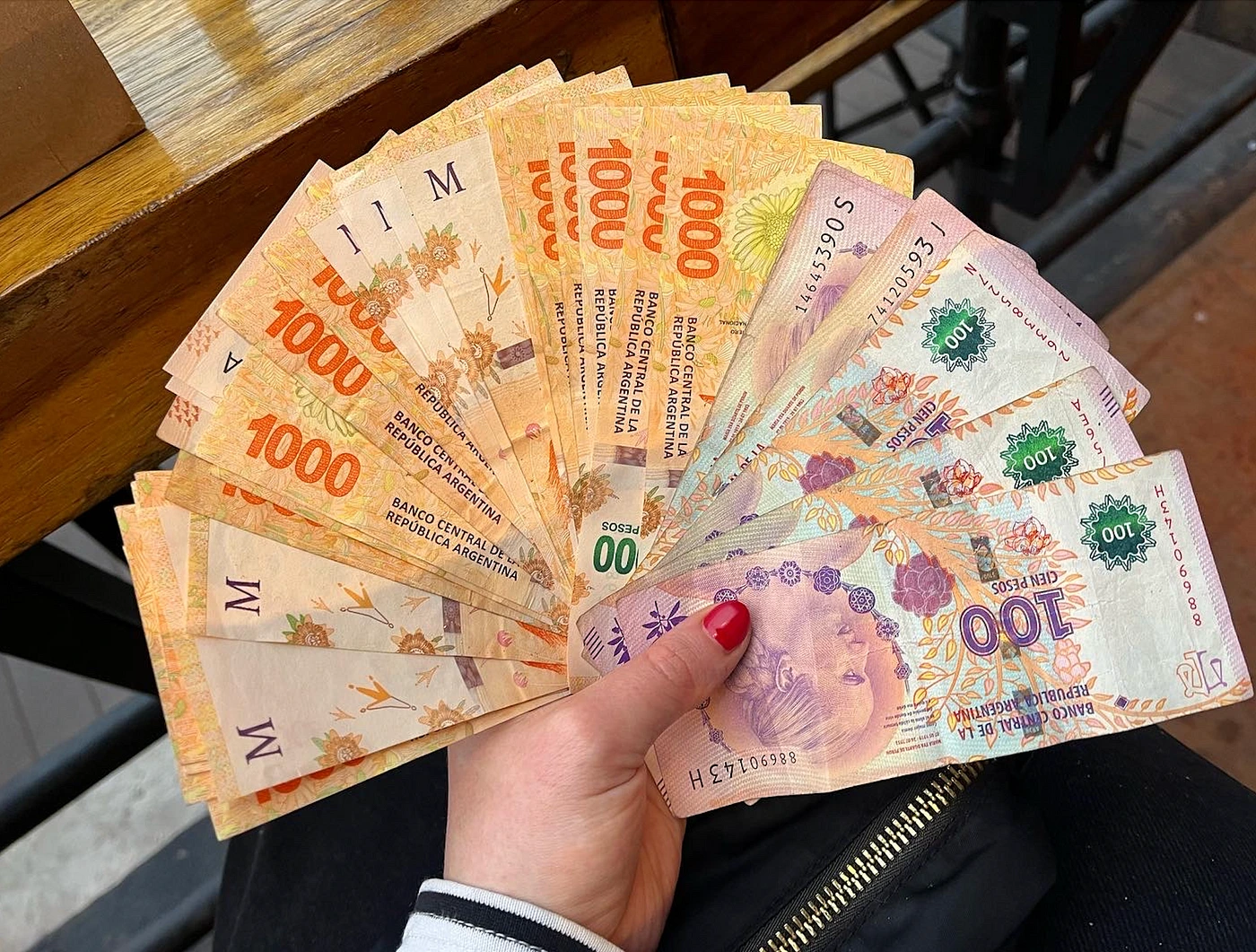
Argentina’s Peso Volatility Masks Economic Recovery
Argentina’s Peso Volatility Masks Economic Recovery. (Photo Internet reproduction)
One-stop reference
Company Intelligence
Every listed company in Latin America — financials, ownership and structure for 1,450+ companies across 26 exchanges, in one place.
Browse the directory →
RT
Ask Rio Times
17 years of Latin America reporting, on demand.
Open the full Ask Rio Times →

After peaking at an annualized rate of 289% in early 2024, inflation dropped to 66.9% by the end of the year and continues to decline. Monthly inflation rates now hover around 2.2%, their lowest levels since mid-2020. These gains have provided much-needed relief for households and businesses.

Argentina’s Trade Surplus & Economic Resilience

Trade performance further underscores Argentina’s economic resilience. The country recorded an $17.2 billion trade surplus in 2024, driven by a 26.4% surge in agroindustrial exports and a sharp decline in imports.

Key agricultural products like soybeans, corn, and wheat led export growth, buoyed by improved weather conditions and streamlined trade policies. Exports reached $72.6 billion last year, with China emerging as a critical trading partner.

Social indicators also reflect progress. Poverty fell dramatically from 52.9% in early 2024 to 38.1% by year-end—the sharpest decline in decades—thanks to targeted social assistance programs and rising real wages. Extreme poverty dropped from 18.1% to just 8.2%, lifting millions out of dire conditions.

Despite these achievements, the peso’s volatility highlights lingering challenges. The gap between the official and blue dollar rates reflects persistent doubts about Argentina’s ability to maintain currency stability amid IMF negotiations and global economic uncertainty.

However, the broader picture suggests that Argentina is on a path to recovery. Fiscal reforms have delivered the first budget surplus in over a decade, while inflation control measures are restoring purchasing power. Robust export growth and poverty reduction further validate the government’s economic agenda.

The peso’s fluctuations may capture headlines, but they obscure an economy that is steadily regaining its footing after years of turmoil. Investors should weigh short-term currency risks against long-term improvements in Argentina’s economic fundamentals.

This article was produced by The Rio Times’ automated newsroom system. How we use AI · Report an error

Read More from The Rio Times

The Rio Times · Power Map
See who really holds power in Latin America
Click to open the Power Map

Rotate for Best Experience

This report is optimized for landscape viewing. Rotate your phone for the full experience.