IBOV 177,418.78 ▲ 1.00% IPSA 11,315.26 ▼ 1.14% IPC MEX 65,430.32 ▼ 0.08% MERVAL 3,033,848 — 0.00% COLCAP 2,425.08 ▼ 1.33% BVL PERÚ 59,928.30 ▼ 0.80% USD/BRL5.19▲ 0.15% USD/MXN16.99▼ 0.04% USD/CLP939.10▲ 0.52% USD/COP3,223▲ 0.68% USD/PEN3.36▼ 0.14% USD/ARS1,509▼ 0.28% USD/UYU40.29▲ 0.05% USD/PYG5,892▼ 0.13% USD/BOB11.84▲ 0.51% USD/DOP58.61▲ 0.46% USD/CRC446.47▼ 0.04% USD/GTQ7.62▼ 0.02% USD/HNL26.84— 0.00% USD/NIO36.62▲ 0.14% USD/VES796.33▲ 0.29% USD/PAB1.00— 0.00% USD/BZD2.00— 0.00% USD/JMD 157.28 — 0.00% USD/TTD6.69▼ 0.37% EUR/BRL6.02▲ 0.19% BRENT 88.88 ▼ 0.03% WTI 83.11 ▼ 0.11% IRON ORE 161.91 — — COPPER 6.61 ▲ 0.03% GOLD 4,461 ▲ 1.78% SILVER 65.59 ▲ 1.26% SOY 1,184 ▲ 3.20% CORN 480.50 ▲ 10.02% WHEAT 655.00 ▲ 3.93% COFFEE 317.25 ▼ 5.51% SUGAR 16.43 ▼ 1.79% ORANGE JUICE 138.55 ▼ 0.47% COTTON 85.03 ▲ 2.33% COCOA 5,719 ▲ 3.18% BEEF 223.60 ▼ 3.93% CATTLE 339.10 ▼ 3.16% LITHIUM 75.20 ▲ 1.47% PETR4 41.64 ▼ 0.05% VALE3 72.97 ▲ 0.83% ITUB4 38.60 ▼ 1.03% BBDC4 16.85 ▲ 0.36% ABEV3 14.89 ▼ 0.80% BBAS3 19.37 ▲ 0.47% B3SA3 14.26 ▼ 0.21% WEGE3 47.59 ▲ 0.49% PRIO3 59.14 ▼ 0.19% SUZB3 41.33 ▲ 2.35% RENT3 34.68 ▼ 0.09% AZZA3 15.89 ▼ 2.63% CSAN3 3.22 ▼ 1.83% RAIZ4 0.25 — 0.00% PCAR3 2.75 ▼ 0.36% GMAT3 3.65 ▼ 1.08% PSSA3 48.13 ▼ 0.54% CVCB3 1.33 ▼ 2.92% POSI3 3.36 ▲ 2.44% SLCE3 13.34 ▲ 0.30% NATU3 8.14 ▼ 0.73% IBOV 177,418.78 ▲ 1.00% IPSA 11,315.26 ▼ 1.14% IPC MEX 65,430.32 ▼ 0.08% MERVAL 3,033,848 — 0.00% COLCAP 2,425.08 ▼ 1.33% BVL PERÚ 59,928.30 ▼ 0.80% USD/BRL 5.16 ▲ 0.01% USD/MXN 17.06 ▼ 0.24% USD/CLP 913.98 ▲ 0.04% USD/COP 3,140 ▲ 0.03% USD/PEN 3.36 ▼ 0.66% USD/ARS 1,493 ▲ 0.10% USD/UYU 40.27 ▲ 1.24% USD/PYG 5,939 ▲ 1.68% USD/BOB 11.64 ▼ 0.76% USD/DOP 58.34 ▲ 1.25% USD/CRC 445.92 ▲ 0.89% USD/GTQ 7.62 ▲ 2.21% USD/HNL 26.79 ▲ 1.57% USD/NIO 36.62 ▲ 0.69% USD/VES 762.44 ▼ 0.13% USD/PAB 1.00 — 0.00% USD/BZD 2.00 — 0.00% USD/JMD 157.28 — 0.00% USD/TTD 6.70 ▲ 0.61% EUR/BRL 5.95 ▲ 1.01% BRENT 88.88 ▼ 0.03% WTI 83.11 ▼ 0.11% IRON ORE 161.91 — — COPPER 6.61 ▲ 0.03% GOLD 4,461 ▲ 1.78% SILVER 65.59 ▲ 1.26% SOY 1,184 ▲ 3.20% CORN 480.50 ▲ 10.02% WHEAT 655.00 ▲ 3.93% COFFEE 317.25 ▼ 5.51% SUGAR 16.43 ▼ 1.79% ORANGE JUICE 138.55 ▼ 0.47% COTTON 85.03 ▲ 2.33% COCOA 5,719 ▲ 3.18% BEEF 223.60 ▼ 3.93% CATTLE 339.10 ▼ 3.16% LITHIUM 75.20 ▲ 1.47% PETR4 41.64 ▼ 0.05% VALE3 72.97 ▲ 0.83% ITUB4 38.60 ▼ 1.03% BBDC4 16.85 ▲ 0.36% ABEV3 14.89 ▼ 0.80% BBAS3 19.37 ▲ 0.47% B3SA3 14.26 ▼ 0.21% WEGE3 47.59 ▲ 0.49% PRIO3 59.14 ▼ 0.19% SUZB3 41.33 ▲ 2.35% RENT3 34.68 ▼ 0.09% AZZA3 15.89 ▼ 2.63% CSAN3 3.22 ▼ 1.83% RAIZ4 0.25 — 0.00% PCAR3 2.75 ▼ 0.36% GMAT3 3.65 ▼ 1.08% PSSA3 48.13 ▼ 0.54% CVCB3 1.33 ▼ 2.92% POSI3 3.36 ▲ 2.44% SLCE3 13.34 ▲ 0.30% NATU3 8.14 ▼ 0.73%
since 2009
Tuesday, September 1, 2026

Latin America Argentina

Argentine Peso Faces Pressure as Blue Dollar Rate Declines Slightly

By · April 2, 2025 · 2 min read

Daily Brief

The morning intel from across Latin America. Free.

By subscribing you agree to our privacy policy. We never share your email.

The Argentine peso continues to struggle against the US dollar, with the official exchange rate at ARS 1,054.25 (buy) and ARS 1,094.25 (sell). Meanwhile, the informal blue dollar rate fell 0.75% yesterday, settling at ARS 1,295.00 (buy) and ARS 1,315.00 (sell).

This slight decline in the blue dollar rate offers a brief respite for Argentina’s embattled currency but raises questions about the sustainability of such stabilization.

The narrowing gap between the official and informal rates, now at approximately 20%, reflects reduced speculative demand in informal markets. Seasonal factors and increased dollar supply contributed to the blue dollar’s decline.

However, underlying economic issues remain unresolved, including high inflation exceeding 100% annually and dwindling central bank reserves, which have dropped from $33 billion in January to $26 billion by late March.

Argentina’s ongoing negotiations with the International Monetary Fund (IMF) for a $20 billion financial package add to market uncertainty. Investors remain skeptical about the government’s ability to implement necessary reforms tied to the deal.
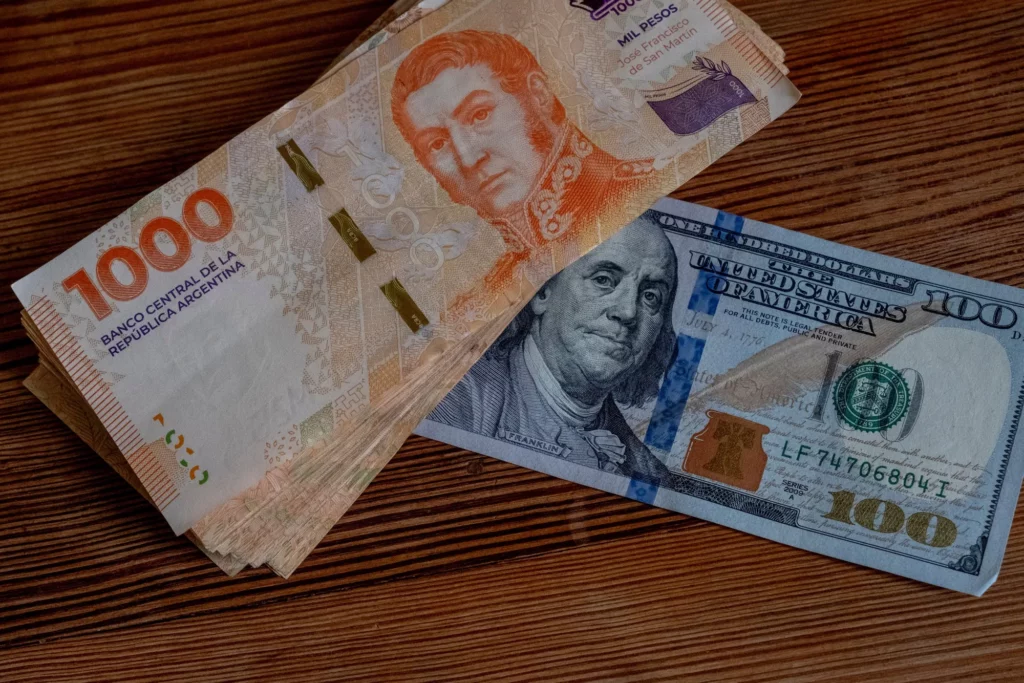
Argentine Peso Faces Pressure as Blue Dollar Rate Declines Slightly
Argentine Peso Faces Pressure as Blue Dollar Rate Declines Slightly. (Photo Internet reproduction)
One-stop reference
Company Intelligence
Every listed company in Latin America — financials, ownership and structure for 1,450+ companies across 26 exchanges, in one place.
Browse the directory →
RT
Ask Rio Times
17 years of Latin America reporting, on demand.
Open the full Ask Rio Times →

The central bank has been actively intervening in currency markets to stabilize the peso, but these efforts have strained foreign reserves further. Market sentiment remains cautious despite yesterday’s slight stabilization in informal rates.

Argentina’s Peso Under Pressure Amid Economic Challenges

Analysts warn that this dip may be temporary unless structural economic challenges are addressed. Futures markets project further depreciation of the peso, with expectations that the official rate could weaken to ARS 1,132.50 per USD by month-end.

Technical indicators highlight bearish momentum for the peso. The USD/ARS pair remains above key moving averages, signaling continued pressure on Argentina’s currency. Trading volumes in ROFEX futures markets reflect heightened hedging activity as investors prepare for potential devaluation risks.

The blue dollar rate’s decline underscores temporary relief rather than fundamental improvement in Argentina’s economic health. Capital controls and limited access to foreign currency through official channels continue driving demand in informal markets.

The widening gap between official and informal rates in recent months signals deep structural weaknesses in Argentina’s economy. Economists emphasize that without clear monetary policies or stronger reserve buffers, Argentina faces heightened risks of further currency volatility.

Inflationary pressures could worsen if the peso depreciates further, eroding purchasing power and deepening economic challenges. Argentina’s currency woes reflect broader concerns about its economic stability amid political uncertainty and strained foreign reserves.

The slight dip in the blue dollar rate offers a glimmer of hope but does little to address systemic issues requiring urgent attention. Investors and policymakers alike remain focused on IMF negotiations as a potential turning point for Argentina’s fragile economy.

This article was produced by The Rio Times’ automated newsroom system. How we use AI · Report an error

Read More from The Rio Times

The Rio Times · Power Map
See who really holds power in Latin America
Click to open the Power Map

Rotate for Best Experience

This report is optimized for landscape viewing. Rotate your phone for the full experience.