Argentina announces interest in acquiring more Hercules aircraft
The Argentine Minister of Defense, Jorge Taiana, stated that his portfolio aims to acquire more Hercules transport aircraft for the Argentine Air Force (FAA) as far as the possibilities are available.
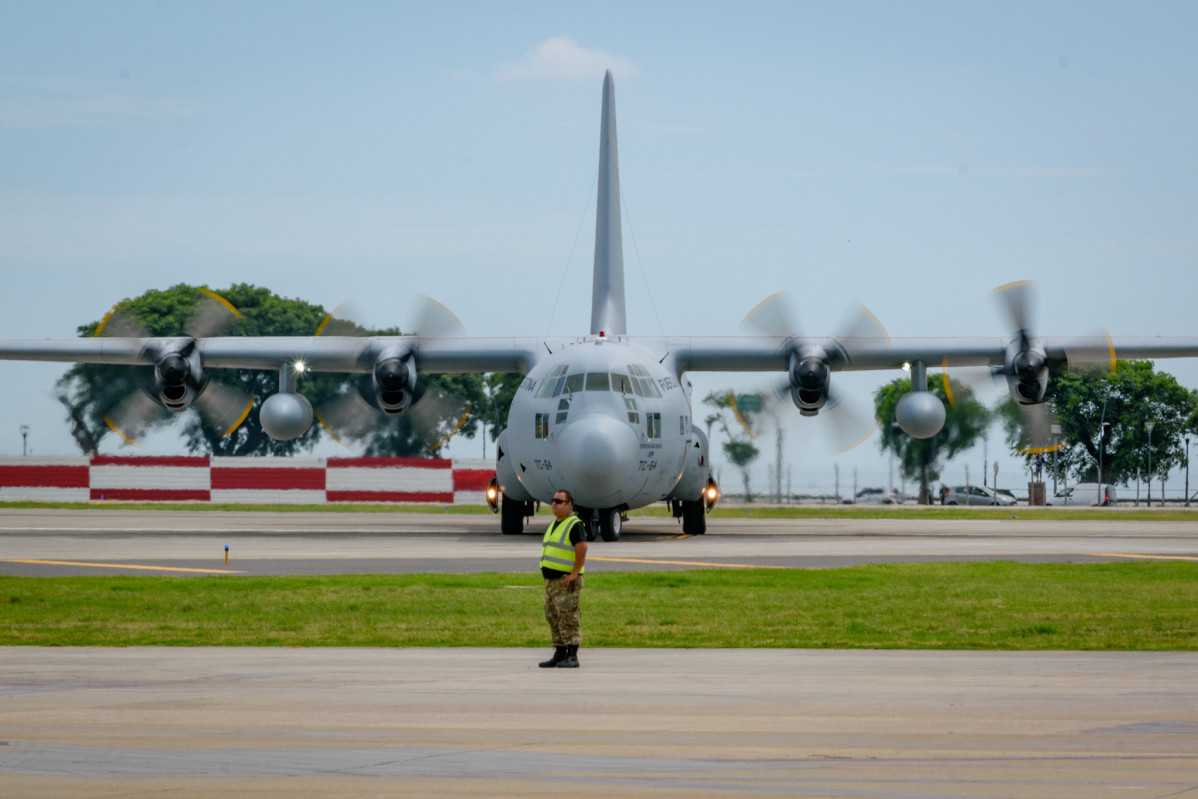
This was stated during the official presentation of the fifth Hercules C-130H, registration TC-64, modernized by the Argentine Aircraft Factory ‘Brigadier San Martín’ (Fadea), the last aircraft included in this modernization and obsolescence removal program.
“Having five Hercules available, a number we have not had for decades, is significant, but it is not the ceiling we aim for. We must have more because transport capacity is increasingly relevant in any conflict scenario”, said Taiana.

For his part, the head of the FAA, Brigadier General Xavier Julián Isaac, assured that an increase in aircraft would result in more room for the force’s actions.
“Of course, the more aircraft we have, the more comfortable we will be, but any eventual incorporation will not mean a significant increase in the force’s budget,” he said.
And he detailed: “The number depends on the mission, the planning, the number of flights we want to fly, or that we can do, and the sustainment capacity we have in the fleet. The FAA in these last 3 years has fulfilled all the missions imposed on it”.
MODERNIZATION PROGRAM
During the presentation ceremony, Taiana highlighted that this upgrade project “results from a political decision and a re-equipment strategy based on the Fondef law, which provides the resources to move in this direction”.
And he assured: “We are going to use the aircraft not only for transport but also to strengthen the deployment, control, and surveillance of our territory”.
When asked by the press, the minister assured that the Hercules L-100-30, registration TC-100, will enter the recovery process.
In 2021, an inter-administrative contract was signed with Fadea for its modernization for US$5.3 million for materials and $1.026 billion (almost US$5.5 million at the day’s official exchange rate).
For his part, Isaac explained that with these aircraft, means, and capabilities are recovered.
About the Hercules C-130H, he detailed that the modernization program started in 2015 with an American company; progress was made with joint work with Fadea until acquiring the capacity and carrying out the works with local labor.
HERCULES C-130H
The TC-64 underwent maintenance tasks that included:
- Phase Depot Maintenance (PDM) Inspection, a material maintenance or repair activity that requires an overhaul, upgrade or rebuild of parts, assemblies, or subassemblies, and testing and recovery of equipment as needed;
- Isochrony, a task of disassembling and inspecting all onboard systems, painting, and modernization.
The most relevant systems upgraded include, among others:
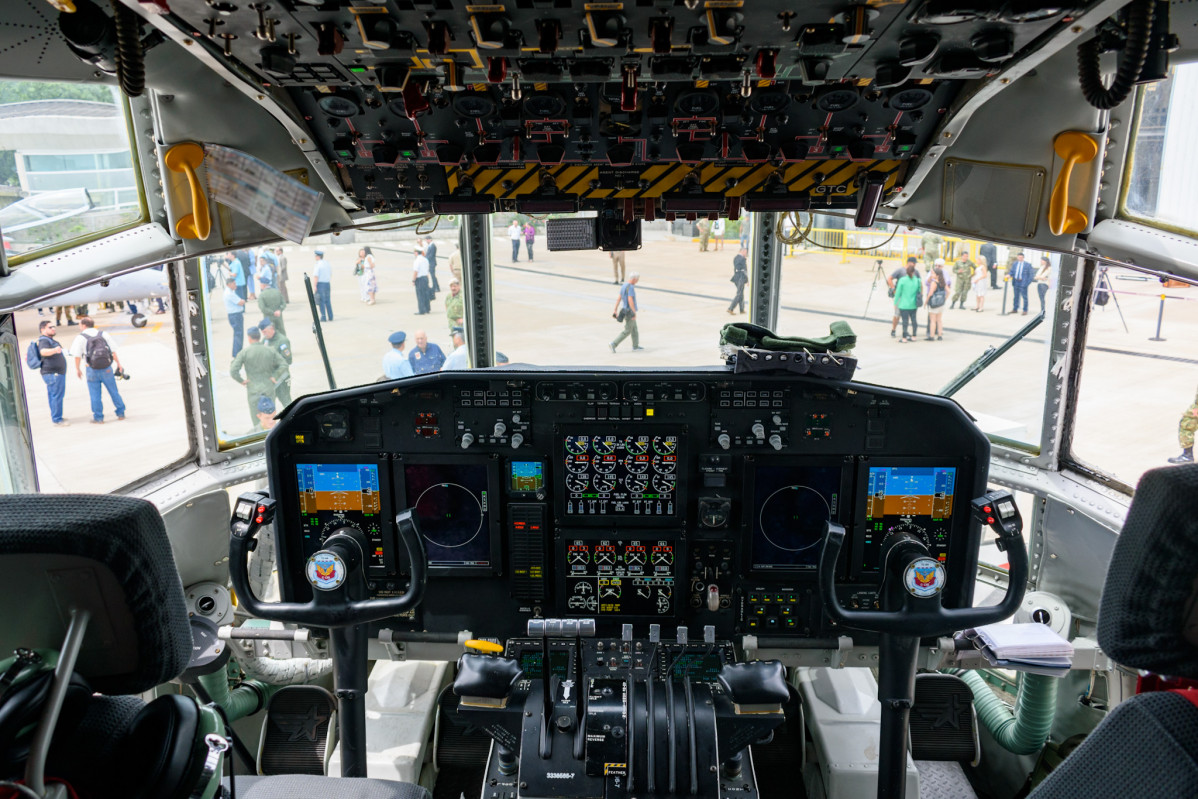
- a duplicate Flight Management System (FMS);
- Commercial Satellite Communication (SATCOM);
- Controller Pilot Data Link Communication (CPDLC – SATCOM and VHF Data Link);
- Enhanced Ground Proximity Warning System (EGPWS);
- Traffic Collision Avoidance System (TCAS);
- Color Weather Radar; and Improved Environmental Control System (ECS).
It is worth mentioning that a significant structural repair was carried out, including replacing the Raibow Fitting.
This significant task included the disassembly of its planes, the replacement of parts damaged by fatigue and corrosion, as well as the reassembly of the aircraft’s structural components and systems involved.
The company states that the changes in the different systems extend the aircraft’s useful life by at least 20 years and significantly improve its performance.
PAMPA III BLOCK II
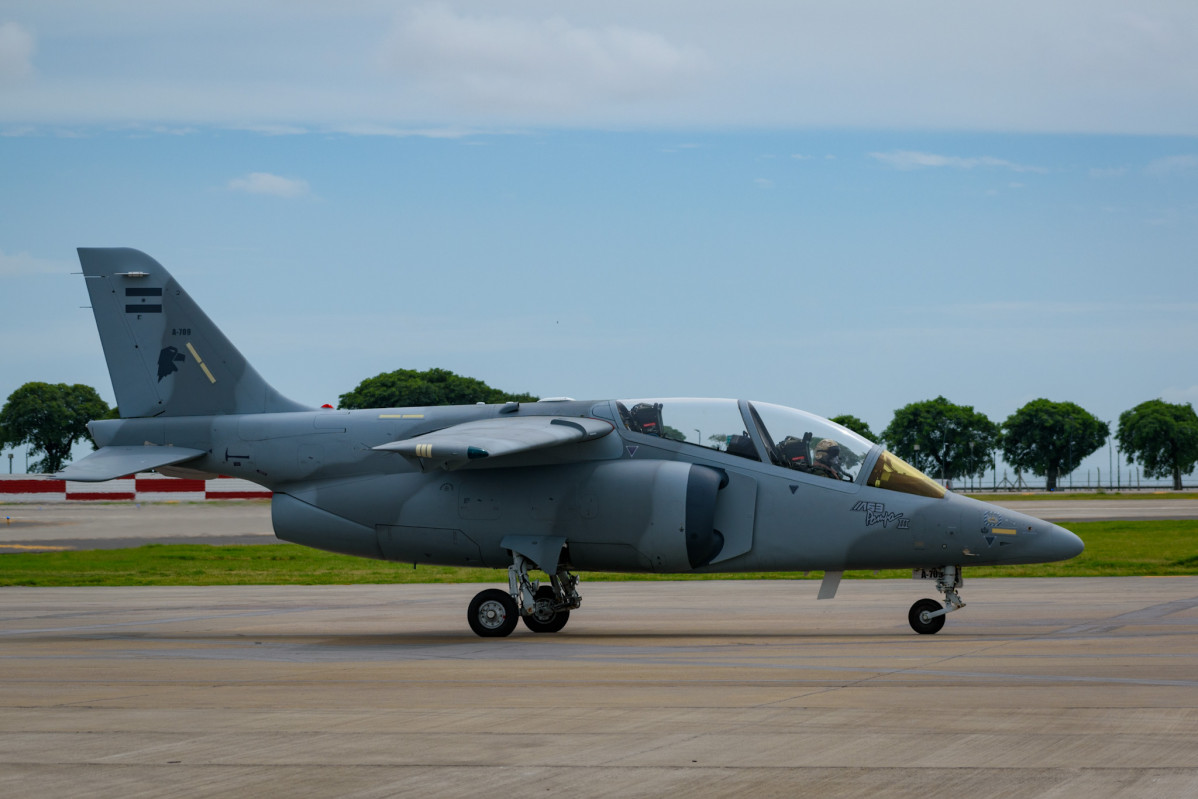
The Argentine Air Force (FAA) officially presented the Pampa III Block II aircraft, originally a Pampa II series aircraft, which had been out of service for some time.
This aircraft will be assigned to the VI Air Brigade.
In this regard, Isaac explained that it would start again to cover all the relatively favorable positions that the Air Force and the military instrument have in the country.
“Every runway and every base in the country is a possibility to project aerospace power”, he affirmed.
Its modernization required a significant inspection for 1200 hours and an eventual inspection of the electrical system, flight command, hydraulic system, anemometric system, oxygen, and structure.
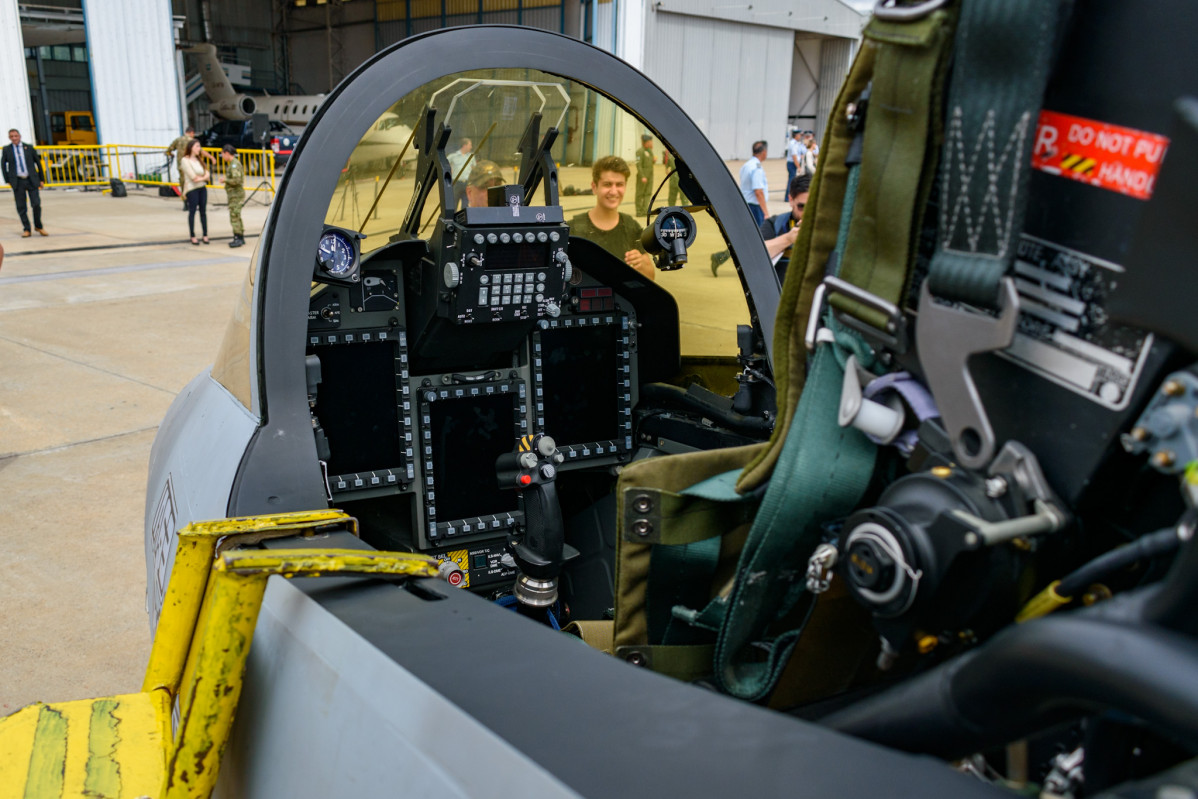
At the same time, it was re-powered and modernized from Pampa II to Pampa III Block II, with changes due to obsolescence, assembly of a new engine, digital avionics, and cabin modification.
It also received the modification of the oxygen system, the incorporation of a new Mission Computer, navigation, and firing system, and the installation of Head Up Display (HUD) and Data Link.
The new Pampa III – Block II configuration has a technological upgrade, which significantly improves flight analysis capabilities by incorporating virtual training software and a communication system between aircraft, favoring their performance and the training of pilots.
With information from Infodefensa
Editorial responsibility: Matthias Camenzind, Editor-in-Chief · Editorial standards · Report an error
Read More from The Rio Times