Antigua Prison Work Proposal Would Put Inmates on Roads and a Farm
Politics · Antigua and Barbuda
Key Facts
- —What happened Prime Minister Gaston Browne told parliament on 28 September 2026 that prisoners should work on roads and farms.
- —How crowded the prison is His Majesty’s Prison in St John’s held about 400 people in May 2023, against an official capacity of 150.
- —What the law already allows The constitution exempts labour required by a court sentence, and the Prison Act lets Cabinet set prisoners’ employment rules.
- —The catch Browne did not say whether the work would be voluntary or paid, and no start date has been announced.
- —What comes next A consultant will review the prison, and Cabinet has approved a replacement jail at the Potworks Dam prison farm.
Prisoners in Antigua and Barbuda would cut verges and grow food if the prime minister gets his way. The law already permits it; no scheme has been published.
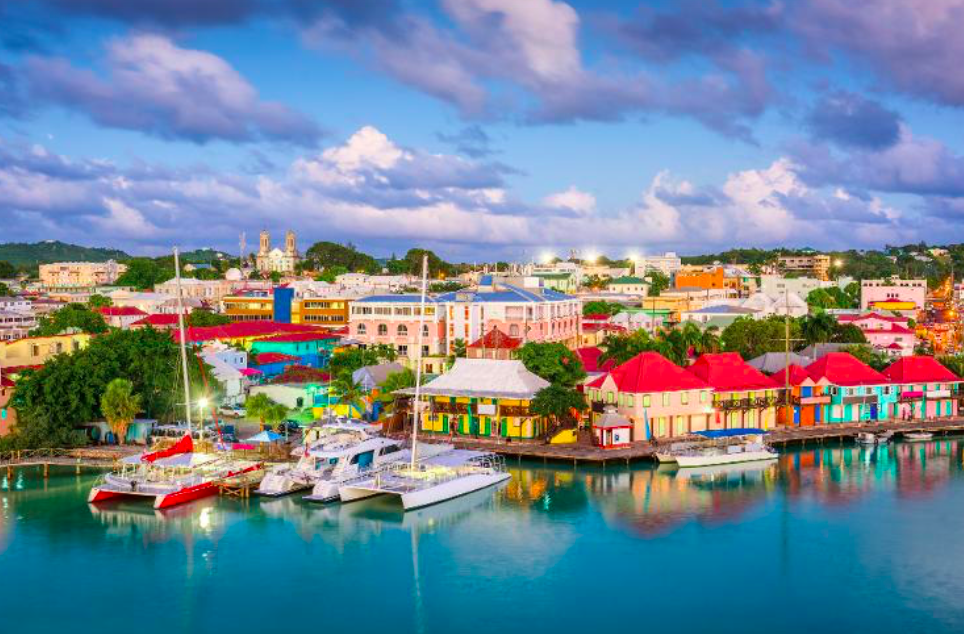
An Antigua prison work proposal from Prime Minister Gaston Browne would send inmates out to cut roadside verges and grow food. He put the idea to parliament in St John’s on Monday 28 September 2026.
Antigua and Barbuda is a two-island country in the eastern Caribbean, home to roughly 100,000 people. It has one prison, His Majesty’s Prison, known as the 1735 Prison.
The debate that day was on the Firearms (Amendment) Bill 2026, which raises penalties for gun crime. Browne tied the harsher sentences to what should happen inside the walls.
What the prime minister asked for
He wants inmates on the roadside, cutting grass and planting trees. He also wants the prison farm at Potworks Dam, inland from the capital, to grow far more food.
“Let them contribute to nation building,” Browne told the House of Representatives. “Let them beautify the side of the roads.”
On the farm he was blunt. “They must produce more food,” he said, adding that inmates should grow more of what they eat.
He also spoke of training in woodwork, metalwork and souvenir making. Prison workshops, on his account, could supply schools and other state bodies.
Browne said hard labour could not be used in the modern day. Any scheme, he said, must “respect all international norms, international conventions”.
A prison built for 150, holding far more
His Majesty’s Prison held about 400 people in May 2023, on figures the national prison service gave the World Prison Brief. Its official capacity that month was 150.
The World Prison Brief is a database kept at Birkbeck, University of London. It put occupancy at 266.7 per cent of capacity.
Warren Cassell, an Antiguan attorney, put the population above 340 in August 2026. That is more than double what the building was designed to hold, he said.
In the same month Browne called one occupied wing “practically an abandoned building”. He said it was structurally unsound and could collapse at any time.
About 150 inmates were still housed there, the Antigua Observer reported on 31 August 2026. Cabinet had approved a replacement prison at Potworks Dam on 12 August 2026.
Its first phase is designed for about 150 inmates at an estimated EC$5 million (about US$1.85 million). No completion date has been published.
The Eastern Caribbean dollar is fixed at a rate of 2.70 to the US dollar. The Eastern Caribbean Central Bank has held that peg since 7 July 1976.

Where the law stands on prison work
The constitution of Antigua and Barbuda forbids forced labour. It then says forced labour does not include “any labour required in consequence of the sentence or order of a court”.
The Prison Act, in force since 1956, goes further. It lets the Cabinet make rules on the “classification, treatment, employment, discipline and control of prisoners”.
The same Act already assumes prisoners leave the grounds. One section covers a prisoner who escapes “whilst on his way to or from any road or public work”.
International labour law sets the outer limit. The Forced Labour Convention of 1930 exempts work exacted after “a conviction in a court of law”.
The convention comes from the International Labour Organization, the United Nations agency that sets labour standards. Its exemption carries two conditions.
The work must be carried out under the supervision and control of a public authority. And the prisoner must not be “hired to or placed at the disposal of private individuals, companies or associations”.
Browne did not say who would supervise the roadside teams. Under the Prison Act, a scheme of this kind would come from Cabinet rules rather than from a new statute.
The case for it, and the case against
Supporters of the Antigua prison work idea make three arguments. Work teaches a trade, it fills an empty day, and it gives the state public works at low cost.
Cabinet has said much the same in writing. Its note of 9 September 2026 said a modern prison system must offer “rehabilitation, skills development and successful reintegration into society”.
There is already a working example. About a dozen inmates build and repair homes for poor families under a scheme called HAPI.
HAPI stands for the Home Advancement Programme for the Indigent. In June 2025 Cabinet approved pardons and full-time jobs for inmates on it, plus EC$500,000 (about US$185,000).
Critics start from the building itself. Cassell told the Antigua Observer in August 2026 that conditions breach the United Nations Nelson Mandela Rules.
Those rules are the United Nations minimum standards for the treatment of prisoners. Cassell listed plastic bags used for sanitation, and remand prisoners held alongside convicted ones.
Justice Now, a local pressure group on prison reform, is sharper still. Its spokesman Khalid Shabazz said in September 2026 that a change of prison chief would make little difference.
The group wants prisoners with mental illness moved to Clarevue Psychiatric Hospital. It has also called on the attorney general to resign.
What happens next
The prison has a new acting boss. Jermaine Anthony was named acting superintendent in September 2026, with Colonel Trevor Pennyfeather’s contract ending on 7 October 2026.
Cabinet has also ordered an outside review. Sir Steadroy Benjamin, the attorney general, said in September 2026 that a consultant would examine the prison and recommend reforms.
The Antigua prison work idea is not new either. Cabinet approved a supervised inmate work team for roadside and community beautification in September 2025.
Browne is serving a fourth consecutive term, won at the general election of 30 April 2026. His party holds 15 of the 16 seats on the Antiguan mainland.
No reply from the opposition or from the prison service has been reported. For now the proposal sits where the prime minister left it, in the record of a debate about guns.
More: Caribbean coverage, every day from The Rio Times.
Frequently Asked Questions
What is the Antigua prison work proposal?
It is an idea set out by Prime Minister Gaston Browne in the House of Representatives on Monday 28 September 2026. He wants inmates of His Majesty’s Prison to cut roadside verges, plant trees, grow food on the prison farm at Potworks Dam and learn trades such as woodwork and metalwork. He spoke during the debate on the Firearms (Amendment) Bill 2026. No rule or timetable giving effect to the idea has been published.
Would the prisoners be paid, and would the work be voluntary?
Browne did not say. His reported remarks cover what the work would be, not how it would be organised, who would supervise it or whether inmates would earn anything. He did say that any scheme must respect international norms and conventions, and that hard labour could not be used in the modern day.
Does Antigua and Barbuda need a new law to do this?
On the face of the texts, no. The constitution says forced labour does not include labour required in consequence of the sentence or order of a court. The Prison Act of 1956 lets the Cabinet make rules on the employment of prisoners, and one of its sections already refers to a prisoner on his way to or from a road or public work. The International Labour Organization’s Forced Labour Convention of 1930 allows work after a conviction, provided it is supervised and controlled by a public authority and the prisoner is not hired out to private individuals or companies.
How crowded is His Majesty’s Prison?
The national prison service reported about 400 people in custody in May 2023 against an official capacity of 150, giving an occupancy level of 266.7 per cent, according to the World Prison Brief. The attorney Warren Cassell put the figure above 340 in August 2026. It is the country’s only prison. Cabinet approved a phased replacement at Potworks Dam on 12 August 2026, with a first phase for about 150 inmates.
Sources: Antigua News Room on the prime minister’s remarks in parliament, Antigua News Room on the Firearms (Amendment) Bill 2026, Antigua News Room on the order paper for the sitting, World Prison Brief on the prison population and capacity, Antigua Observer on the unsafe prison wing and the replacement plan, Antigua Observer on Warren Cassell’s criticism of conditions, Antigua Observer on the pressure group Justice Now, Antigua Observer on the change of prison superintendent, Antigua Observer on the HAPI building scheme and inmate pardons, Cabinet notes of 9 September 2026 on rehabilitation and the prison review, Cabinet notes of 12 August 2026 on the new prison at Potworks Dam, Cabinet notes of September 2025 on a supervised inmate work team, The Constitution of Antigua and Barbuda, section 6, The Prison Act, Chapter 341 of the Laws of Antigua and Barbuda, The text of the ILO Forced Labour Convention, 1930, Eastern Caribbean Central Bank on the fixed exchange rate, Antigua News Room on the general election of 30 April 2026
This article was produced by The Rio Times’ automated newsroom system. How we use AI · Report an error
Read More from The Rio Times