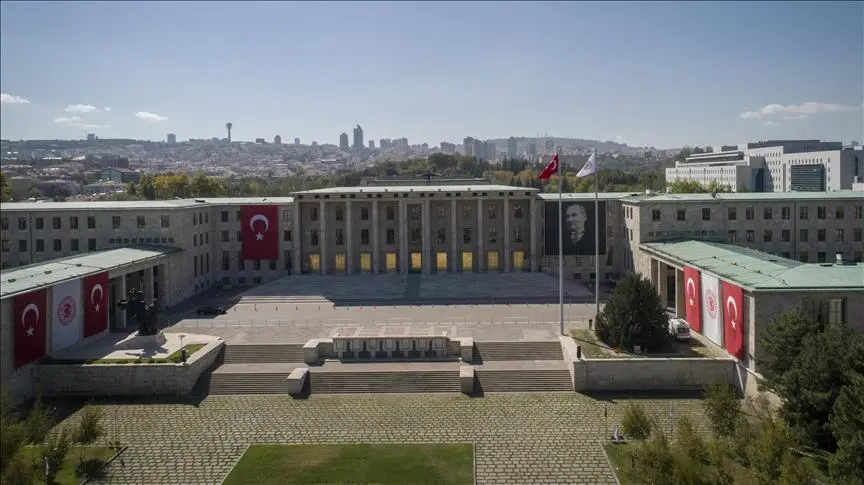
Turkey’s Parliament approved Sweden’s NATO membership bid, a pivotal step for Sweden’s inclusion in the alliance.
President Recep Tayyip Erdogan is expected to finalize this decision soon.
Hungary, however, remains the last hurdle, with Prime Minister Viktor Orbán yet to hold discussions with his Swedish counterpart, Ulf Kristersson, about the bid.
Sweden’s journey to NATO membership, initiated in May 2022, faced initial challenges from Turkey and Hungary.
Turkey’s objections were rooted in Sweden’s asylum policies for members of the Kurdistan Workers’ Party, whom the Erdogan administration labels as terrorists.
Ankara had initially endorsed Sweden’s application but withdrew support due to unmet extradition expectations.
In contrast, Hungary’s opposition arose from the Swedish government’s criticism of Orbán’s leadership.
Meanwhile, Finland successfully joined NATO as its 31st member in April 2023, following unanimous approval from existing NATO countries.
Finland’s application paralleled Sweden’s, highlighting the nordic countries’ synchronized efforts towards alliance membership.
This development reflects the complex dynamics of international diplomacy and alliance formation.
Sweden’s pending acceptance into NATO hinges on Hungary’s decision, highlighting NATO’s expanding influence and the changing political landscape in Europe.
Moreover, Sweden’s potential NATO membership carries significant geopolitical implications.
It promises enhanced defense capabilities for Sweden under NATO’s collective defense mechanism.
This move also signifies a strategic shift for the Baltic Sea region, transitioning from Sweden’s historical neutrality stance.
A response to rising global security threats
Additionally, Sweden’s NATO bid is seen as a response to rising global security threats, particularly from Russia.
Joining NATO aligns Sweden with Western defense and security policies, potentially deterring adversaries and contributing to European strategic stability.
The process also showcases the intricacies of diplomatic relations, influenced by internal political shifts and public opinion within Sweden.
Russia likely views NATO’s expansion as a threat, adding to the tension between the alliance and Russia.
Overall, Sweden’s potential NATO membership extends beyond national security, impacting regional stability, international relations, and the wider geopolitical landscape.
This article was produced by The Rio Times’ automated newsroom system. How we use AI · Report an error · Editorial responsibility: Matthias Camenzind, Editor-in-Chief
Read More from The Rio Times