Lula Warns of a “Gang Leader” on Eve of Brazil’s Vote
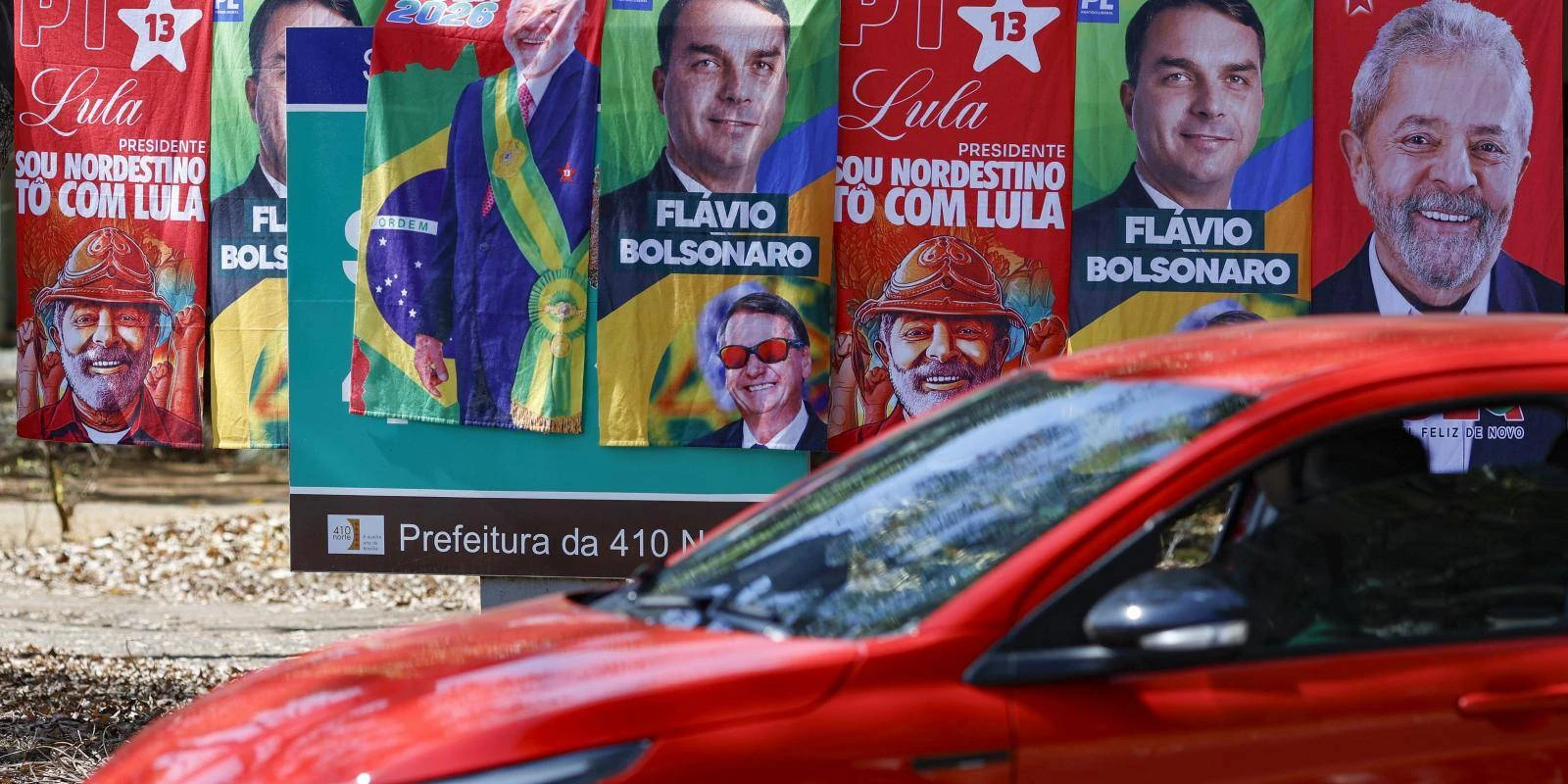
BRAZIL · POLITICS
Runoff · Sunday, 25 October
Flávio Bolsonaro vs Lula: what happens next
First-round results, how the runoff works, the key dates and who backs whom, in one guide.
Prediction markets · who wins the runoff
Implied chance of winning Brazil’s presidency on 25 October, from traders’ prices.
Polymarket
Flávio Bolsonaro 84.9% · Lula 14.5% (US$175 million traded)
Kalshi (regulated in the US by the CFTC)
Flávio Bolsonaro 84% · Lula 16%
As of 7 October, 2:20 am ET (07:20 Lisbon), updated every 20 minutes. Prices are bets, not polls, and can move fast.
Why we show this: prediction markets turn real-money bets into a live probability that moves within minutes of the news, which is why investors, campaigns and newsrooms in the United States now follow them closely. We show them next to polls and official results, never instead of them.
Key Facts
- —The country Brazil, Latin America’s largest democracy, holds a presidential first round on 4 October 2026 with 12 approved tickets.
- —What happened President Luiz Inácio Lula da Silva said on 3 October 2026 that his camp faced a “gang leader” and organised crime, without naming Flávio Bolsonaro.
- —Who is who Lula is running with Geraldo Alckmin; Flávio Bolsonaro, son of former President Jair Bolsonaro, is running with Alfredo Gaspar for the PL.
- —Why now The remarks came during Lula’s final campaign march in São Paulo, the day before voting.
- —What it means for you The rhetoric sharpened an already polarised contest, but no candidate was legally designated as an organised-crime leader in the reports.
- —Still open A runoff, if no candidate wins outright, is scheduled for 25 October 2026.
Brazilian President Luiz Inácio Lula da Silva said on Saturday, 3 October 2026, that his political camp was confronting a “gang leader” and organised crime during his final campaign event before Sunday’s presidential first round. He did not name his principal challenger, Flávio Bolsonaro of the PL.
Correio Braziliense reported that Lula framed the vote as a choice between “democracy and sovereignty” and “barbarism and corruption,” and urged supporters to seek votes through election day. The remarks came during a campaign march in São Paulo, which marked the end of Lula’s official first-round campaign.
What Lula said at the final rally
Lula did not specify whom he meant by “gang leader.” G1 reported that he associated his adversary with organised crime without naming Flávio Bolsonaro directly.
The president also claimed that his allies had helped arrest what he called a “Social Security gang” created under former President Jair Bolsonaro. He referred to the imprisonment of banker Daniel Vorcaro, linked in the speech to the Banco Master case.
The allegation was political rhetoric, not an identified criminal charge against a named presidential candidate. The reports do not establish that Flávio Bolsonaro or another candidate had been legally designated as an organised-crime leader.

The challenger’s closing message
Flávio Bolsonaro, son of former President Jair Bolsonaro, held a separate final campaign event in São Paulo state, a motorcycle caravan from Santa Bárbara d’Oeste to Americana. He predicted victory in the first round, according to G1.
The Superior Electoral Court, known as the TSE, listed 12 presidential tickets for the election. They included Lula–Geraldo Alckmin and Flávio Bolsonaro–Alfredo Gaspar.
Voting takes place on 4 October 2026, from 8:00 a.m. to 5:00 p.m. Brasília time. A runoff, if required, is scheduled for 25 October 2026.
Why the rhetoric matters
Lula’s language signalled how sharply the campaign had narrowed into a contest over legitimacy and public safety. By invoking organised crime without naming a candidate, he left room for interpretation while energising his base.
For international investors and professionals watching Brazil, the tone matters because it frames the political risk around the vote. A polarised first round can delay policy clarity, even when the electoral calendar itself is fixed.
The TSE’s published calendar kept the process predictable. That institutional continuity is what markets tend to watch most closely in Brazil’s elections.
What comes next
Brazilians vote on 4 October 2026. If no candidate secures enough support to win outright, the top two face a runoff on 25 October 2026.
The final campaign events in São Paulo city and state closed a first round that both major camps framed as existential. The next phase will test whether that rhetoric translates into turnout or legal challenges.
For now, the electoral authorities have set the rules and the dates. The contest itself remains open.
Frequently Asked Questions
Did Lula name Flávio Bolsonaro as a gang leader?
No. Lula used the term “gang leader” on 3 October 2026 but did not name Flávio Bolsonaro or any other candidate.
When is Brazil’s presidential first round?
Voting takes place on 4 October 2026, from 8:00 a.m. to 5:00 p.m. Brasília time.
How many presidential tickets were registered?
The Superior Electoral Court listed 12 presidential tickets for the 2026 election.
When is a runoff, if needed?
A runoff, if required, is scheduled for 25 October 2026.
Sources: correiobraziliense.com.br, g1.globo.com, veja.abril.com.br, osul.com.br, metro1.com.br. Retrieved 4 October 2026.
Correction — 5 October 2026: An earlier version said Flávio Bolsonaro held his final event in São Paulo; it was a motorcycle caravan from Santa Bárbara d’Oeste to Americana, in São Paulo state (G1, A Tarde, 3 October 2026).
This article was drafted with automated assistance and reviewed before publication. How we use AI · Report an error · Editorial responsibility: Matthias Camenzind, Editor-in-Chief