Energy · Guyana, 3 August 2026
Key Facts
—What. ExxonMobil says artificial intelligence has identified four new exploration opportunities in the Stabroek Block off Guyana.
—Source. the disclosure came from chief financial officer Neil Hansen on the second-quarter 2026 earnings call on 31 July.
—Method. models were trained on prior discoveries, drilling results and subsurface work, then applied across the rest of the block.
—Caveat. the company has not confirmed the prospects hold commercial volumes and gave no locations, sizes or drilling timeline.
—Output. Stabroek produced more than 900,000 barrels per day gross in the second quarter of 2026.
—Track record. ExxonMobil has made more than 30 discoveries in Guyana since 2015; four developments are producing.
—Constraint. a large part of the block is under force majeure pending the ICJ ruling on the Guyana-Venezuela border controversy.
ExxonMobil’s AI-driven exploration push in Guyana has produced four new prospects, with the US oil major saying models trained on its Stabroek Block data have flagged additional places to drill beyond those it had already mapped.
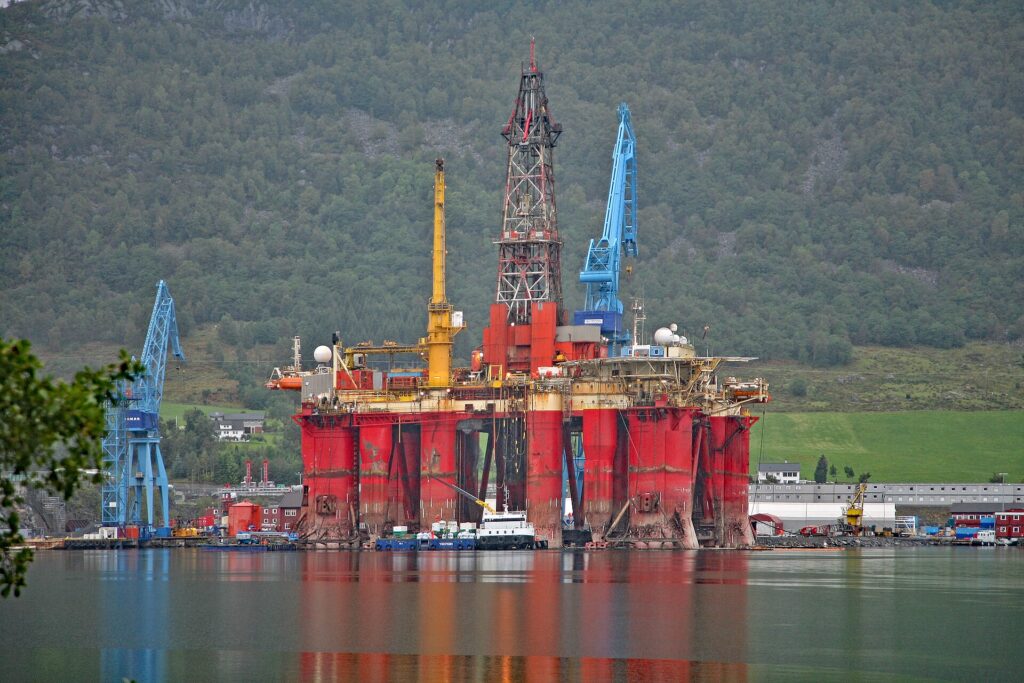
AI Turns Old Data Into New Targets
ExxonMobil says it has used artificial intelligence to draw fresh exploration ideas out of data it already owns in the Stabroek Block, the giant offshore concession that has turned Guyana into one of the world’s fastest-growing oil producers.
The company trained AI models on what it had learned from previous discoveries, from years of drilling and from its detailed picture of the block’s subsurface, then set those models loose on the rest of the acreage.
The result, executives say, was four exploration opportunities that had not been on the map before, an outcome ExxonMobil presents as evidence that the block still holds more than its earlier work suggested.
The approach reflects a broader shift across the oil industry, where companies are using machine learning to reinterpret seismic and well data that already exists rather than relying solely on fresh surveys. For ExxonMobil, the block’s dense record of drilling makes it fertile ground for that kind of analysis.
Seismic reprocessing has long been part of the explorer’s toolkit, but the scale of computing now applied lets teams test many more scenarios than before. The novelty is less the idea than the speed and breadth with which the models can be run.
What the Company Actually Said
The disclosure came from chief financial officer Neil Hansen on ExxonMobil’s second-quarter 2026 earnings call on 31 July. He described a heavy investment in artificial intelligence and in training models on the company’s own Guyana record.
Hansen said the work produced four new discovery opportunities above and beyond what the company had previously considered prospects. Chief executive Darren Woods framed the findings as confirmation that the company is, in his words, not done yet in Guyana.
The comments landed alongside a record quarter for output, and served a clear investor purpose: to argue that Guyana’s growth story has further to run even after more than 30 discoveries.
Guyana has become central to ExxonMobil’s growth pitch, and management used the call to stress that the country’s potential is not exhausted. The four opportunities were offered as concrete evidence rather than a general expression of confidence, though the company stopped well short of quantifying them.
Investors have learned to treat such statements with care. ExxonMobil has a strong record in Guyana, but a disclosed opportunity is a hypothesis, and the market tends to reward barrels booked rather than leads described.
Still, the disclosure carries weight because of who is making it. A major with ExxonMobil’s Guyana record does not float exploration ideas lightly, and even unquantified leads can influence how analysts model the block’s future.
The Caveats Behind the Headline
The four opportunities are leads, not finds. ExxonMobil has not confirmed that any of them hold commercial quantities of oil or gas, and Hansen was explicit that a great deal of work remains to test them.
The company did not disclose where the prospects sit, how much resource they might hold or when it might drill them. Those are the details that turn a modelled target into a bookable discovery, and none were provided.
For readers weighing the news, the distinction matters. AI has widened the list of places worth studying; it has not yet added a barrel to Guyana’s reserves.
Exploration leads routinely fail to convert into commercial finds, and even successful ones can take years to appraise and develop. Presenting four modelled opportunities is a low-cost way to keep the growth narrative alive between the expensive milestones of drilling and sanctioning new projects.
Key Facts
— Exploration Snapshot
—The claim. Four new exploration opportunities identified by AI in the Stabroek Block.
—The source. CFO Neil Hansen, ExxonMobil Q2 2026 earnings call, 31 July.
—The method. Models trained on prior discoveries, drilling and subsurface data, applied across the block.
—The status. No confirmed commercial volumes, locations, sizes or drilling timeline disclosed.
—The backdrop. Gross Stabroek output above 900,000 barrels per day in Q2 2026.
— Figures and statements reflect ExxonMobil disclosures reported as of 3 August 2026.
A Block Still Being Mapped
The Stabroek Block sits about 120 miles off Guyana’s coast and has anchored the country’s oil boom since first production in 2019. Gross output there topped 900,000 barrels per day in the second quarter of 2026.
Four developments are already producing: Liza 1, Liza 2, Payara and Yellowtail. A fifth vessel, the Errea Wittu, has sailed for the block and is due to start up later in 2026, adding roughly 250,000 barrels per day of capacity.
Against that backdrop, the AI work is less a departure than an extension of a method ExxonMobil has used to bring projects online quickly. The company has repeatedly credited proprietary data and technology for its record in Guyana.
The pace has been unusual by industry standards. Where many deepwater projects run late and over budget, ExxonMobil has brought its Guyana developments online quickly, a track record it leans on when arguing that further prospects can be turned into production.
The Errea Wittu, whose name means abundance in the local Warrau language, will be the fifth vessel on the block. Once it ramps up, installed capacity is set to climb well above one million barrels per day, giving the country one of the fastest production build-ups anywhere.
Each vessel is a floating factory that separates, stores and offloads crude at sea, allowing production far from shore. Adding them in sequence has let Guyana scale output without waiting for fixed platforms or pipelines to land.
The Venezuela Overhang
Not all of the block can be assessed. Woods noted that a large area remains under force majeure because of the border controversy between Guyana and Venezuela, which is before the International Court of Justice.
Until that ruling, ExxonMobil says it cannot fully evaluate the disputed acreage, though it sees an opportunity to shoot seismic and understand what the ground might hold once the legal position is clear.
The company did not say whether any of the four AI-generated opportunities fall inside the area affected by force majeure, leaving a question mark over part of the upside it is describing.
The dispute dates back generations and centres on the Essequibo region, which Venezuela claims. Guyana has asked the International Court of Justice to affirm the existing boundary, and until a ruling arrives, part of the acreage stays off-limits to full evaluation.
The uncertainty is a reminder that geology is not the only variable in Guyana’s oil story. Legal and diplomatic questions sit alongside the technical ones, and both will shape how much of the block is ultimately developed.
Guyana, for its part, has pressed for a swift resolution while continuing to license and develop the undisputed acreage. The government has been careful to keep production growth on track even as the legal case proceeds in The Hague.
The result is a country moving on two tracks at once: pushing ahead where its rights are clear, while waiting on the court where they are contested. ExxonMobil’s exploration talk fits the first track, and its force majeure acreage the second.
Why It Matters for Guyana
For Guyana, every credible new prospect feeds a fiscal machine that has rewritten the country’s finances, funding roads, hospitals, schools and a deep-water port through royalties and profit oil.
Low production costs are the block’s real moat: barrels from Stabroek are among the cheapest in the world, which keeps cash flowing even if oil prices soften. More prospects, if they prove up, extend that advantage.
The immediate takeaway is measured optimism. ExxonMobil has signalled that the block’s exploration life is far from over, while making clear that confirmation, locations and timing all lie ahead.
For a country of fewer than a million people, the stakes are extraordinary. Oil revenue has already reshaped the national budget, and the government must balance rapid spending against the risk of overheating an economy transformed in barely half a decade.
The AI disclosure will not change those calculations on its own, but it feeds an expectation that the boom has further to run. For investors and Guyanese alike, the message is that the block’s map is still being drawn.
This is reporting, not investment advice. Confirm current figures with official sources before acting.
Frequently Asked Questions
What did ExxonMobil announce about Guyana?
On its Q2 2026 earnings call, it said AI models trained on Stabroek Block data had identified four new exploration opportunities beyond those it had already mapped.
Are the four opportunities confirmed discoveries?
No. The company has not confirmed they hold commercial volumes and disclosed no locations, resource sizes or drilling schedule.
How was the AI used?
Models were trained on prior discoveries, drilling results and subsurface characterisation, then applied to other parts of the block.
How much oil does the Stabroek Block produce?
Gross output reached more than 900,000 barrels per day in the second quarter of 2026, with a fifth vessel due to add about 250,000 barrels per day.
What is the Venezuela issue?
Part of the block is under force majeure because of a border controversy with Venezuela now before the International Court of Justice, limiting work there.
Related reading
- ExxonMobil Guyana Drives Record Q2 Output as Profit Slips
- Guyana FPSO Errea Wittu Sails Toward 250,000 Bpd Target
- Oil and Energy in Latin America 2026: The Complete Guide
This article was produced by The Rio Times’ automated newsroom system. How we use AI · Report an error
Read More from The Rio Times