100-Member Rebel Faction Demobilizes in Colombia’s Total Peace Initiative
The Colombian rebel group Comuneros del Sur, a splinter faction of the National Liberation Army (ELN), disarmed and signed a peace agreement with the government.
During a ceremony in Pasto, Nariño, the group handed over one ton of weapons, including explosives. President Gustavo Petro and Nariño Governor Luis Alfonso Escobar led the event, presenting it as a milestone for Petro’s “Total Peace” initiative.
Petro highlighted a 41% drop in homicide rates in Nariño during nine months of negotiations with the group. The agreement includes plans to transform 5,000 hectares of coca plantations into legal crops.
Defense Minister Pedro Sánchez praised the disarmament, while Governor Escobar reaffirmed support for Petro’s peace agenda. Comuneros del Sur, consisting of about 100 members, broke away from the ELN in 2024 due to dissatisfaction with its leadership.
Unlike the ELN, which continues violent operations, including attacks in Catatumbo that left over 80 dead and displaced more than 50,000 people earlier this year, Comuneros del Sur chose dialogue.
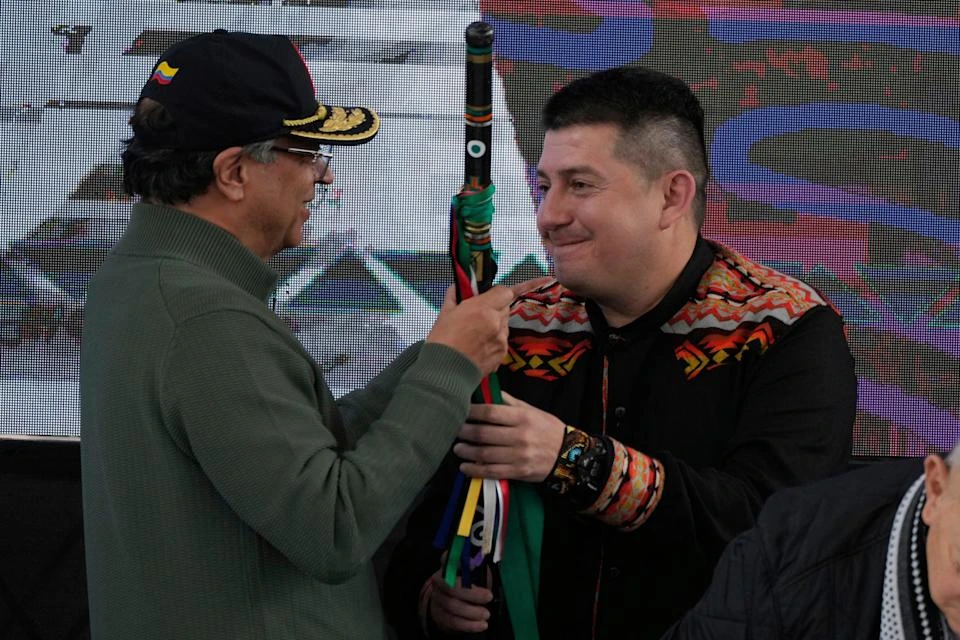
The disarmament marks a rare success for Petro’s Total Peace strategy, which has faced challenges negotiating with multiple armed groups. Critics argue that agreements with smaller factions may be symbolic rather than transformative.
Supporters see potential for reducing localized violence and fostering development in conflict-affected regions. This achievement underscores the complexity of Colombia’s decades-long conflict involving fragmented insurgencies and criminal economies.
Its success depends on sustained government efforts to prevent other groups from exploiting power vacuums and to implement promised reforms. Whether this signals real progress or political optics remains uncertain, but it offers hope for stability in vulnerable areas.
More: Colombia news in English, every day from The Rio Times.
This article was produced by The Rio Times’ automated newsroom system. How we use AI · Report an error · Editorial responsibility: Matthias Camenzind, Editor-in-Chief