
MEXICO · ECONOMY
Key Facts
- —The country Mexico is one of Latin America’s two largest economies; the US bought US$419.3 billion of its goods in January–August 2026.
- —What happened On Tuesday 6 October, the World Bank raised its Mexico growth forecast for 2026 to 1.4%, from 1.3% in April.
- —The numbers The bank now expects 1.8% growth in 2027 and 2.2% in 2028, after an estimated 0.5% in 2025.
- —Why it matters to the US The bank says domestic and external policy uncertainty is holding back private investment, as talks on the North American trade pact run into 2027.
- —Prediction markets Polymarket’s most-backed range for Mexico’s third-quarter growth, 2.0% to 2.5% year on year, stands at 29.5% (6 October, 4:46 p.m. ET).
- —Still open How the 2027 review of the USMCA trade pact ends, and whether US tariffs on Mexican cars, steel and aluminium are cut.
The World Bank raised its Mexico growth forecast on Tuesday 6 October and now expects the economy to expand 1.4% in 2026, up from 1.3%. Even so, Mexico is the second-slowest of the six large Latin American economies the bank groups together.
The Mexico growth forecast matters to Americans: the US bought US$419.3 billion of Mexican goods from January to August 2026, Census Bureau data show. The bank says trade policy friction and uncertainty are still holding back private investment in Mexico.
What the World Bank Said About Mexico
The World Bank is a Washington-based development lender owned by its member governments. Its Latin America and the Caribbean Economic Update, published in April and October, sets out growth forecasts for most countries in the region.
In the October edition, the Mexico growth forecast is 1.4% for 2026, 1.8% for 2027 and 2.2% for 2028. In April it had expected 1.3% for 2026 and 1.7% for 2027.
The bank also trimmed its estimate for 2025 to 0.5%, from 0.6% in April. Its figures use data available up to Wednesday 23 September 2026.
“In Mexico, growth remains modest, with private investment constrained by both domestic and external policy uncertainty,” the report says. It adds that large public infrastructure projects are giving the economy less of a lift than before.
How Mexico Compares in Latin America
The bank expects Latin America and the Caribbean to grow 2.2% in 2026, broadly in line with 2.4% in 2025. Among the six biggest economies, it sees Peru growing 3.2%, Colombia 2.3%, and Argentina and Brazil 2.1% each.
Only Chile, at 0.8%, has a weaker 2026 outlook in that group, so the Mexico growth forecast ranks second-lowest. The bank says Brazil and Mexico are growing at or below the regional average.
It blames “tight monetary conditions needed to continue disinflation, policy uncertainty, and fading public investment impulses.” In plain terms, high interest rates, uncertainty over policy and smaller government building programmes are all slowing growth.
The region “has the potential to achieve stronger and more ambitious growth,” said Susana Cordeiro Guerra, the World Bank’s vice president for the region. She urged “consistent policies and investment” to raise productivity and incomes.
Why Trade With the US Weighs on Mexico
The bank says trade policy friction is damping confidence in Mexico, where domestic demand remains constrained. Mexico’s trade with the US runs under the USMCA, the pact linking the US, Mexico and Canada.
On Monday 5 October, the US Trade Representative’s office, the White House trade agency, opened public comments ahead of the pact’s 2027 joint review. At the first review in July 2026, the US did not agree to extend the deal for another 16 years, Proceso reported.
Economy minister Marcelo Ebrard said in a radio interview Mexico’s main goal is cutting US tariffs on cars, steel and aluminium, La Jornada reported. He said Mexico cannot accept higher tariffs or stricter origin rules than rivals such as Japan, Korea and the European Union.
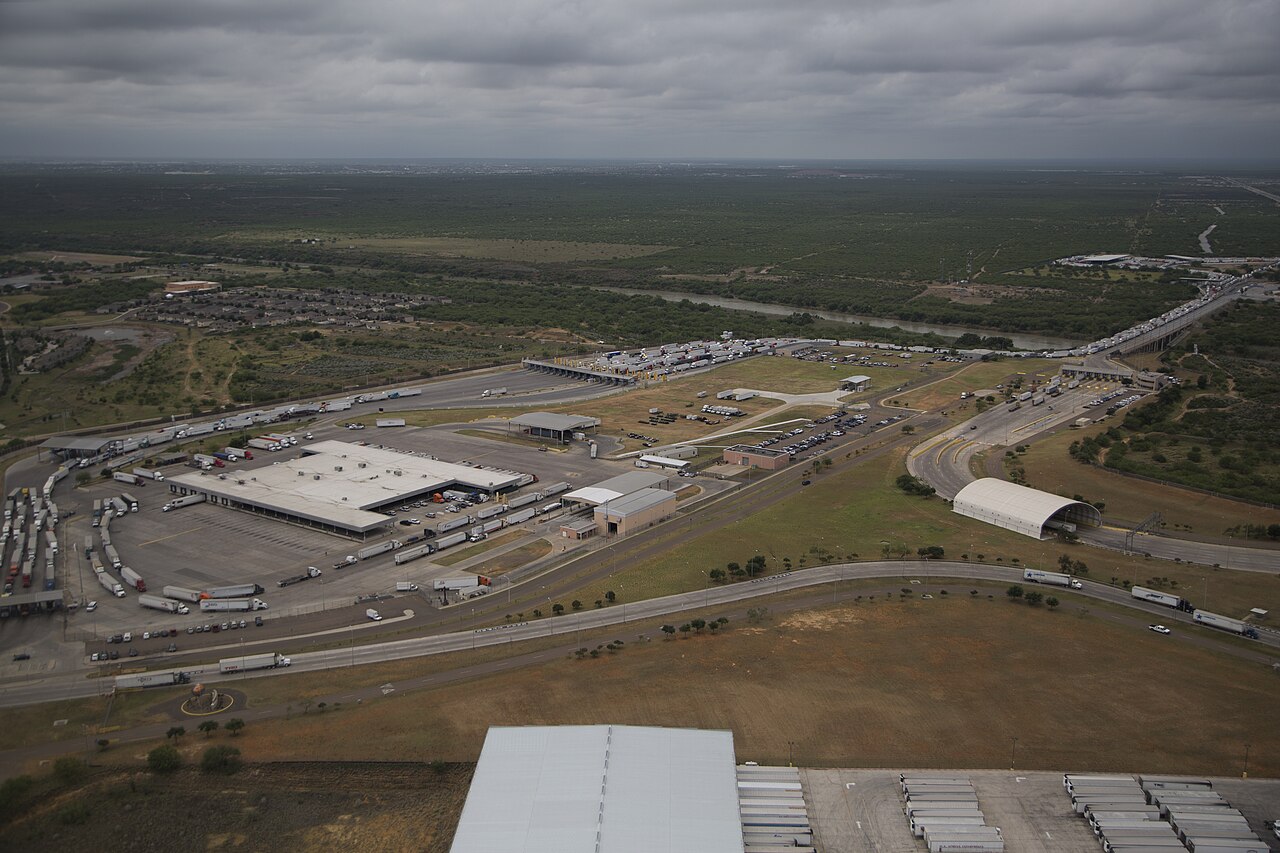
Trade has held up despite the friction: Mexico’s exports to the US hit a record in August. The bank also notes that Mexico’s proximity to the US makes it a natural hub for data centres serving US customers.
What Prediction Markets Say
Bettors on Polymarket are pricing Mexico’s third-quarter growth, a separate measure from the World Bank’s yearly Mexico growth forecast. The most-backed range for Mexico’s third-quarter growth, 2.0% to 2.5% from a year earlier, stood at 29.5% at 4:46 p.m. ET on 6 October.
The 2.5% to 3.0% and 3.0% to 3.5% ranges were close behind at 27.5% each. The 3.0% to 3.5% range jumped 15.5 points in 24 hours.
About US$43,600 has been bet on the market. It settles on the quick estimate from INEGI, Mexico’s statistics institute, which the market’s rules date to Friday 30 October.
Why we show this: prediction markets turn real-money bets into a live probability that moves within minutes of the news, which is why investors, campaigns and newsrooms in the United States now follow them closely. We show them next to polls and official results, never instead of them.
What It Means for You
For US investors and companies with plants in Mexico, the higher Mexico growth forecast signals steady but slow growth, not a slump. The upgrade is small, though, and the bank still places Mexico near the bottom of the region’s big economies.
The catch is private investment, which pays for new factories and jobs. The bank links weak private investment to policy uncertainty at home and abroad, so the trade talks with Washington remain the main thing to watch.
What Is Not Known
The bank does not say how its Mexico growth forecast would change if the USMCA review fails or if US tariffs rise again. Its numbers include only data up to 23 September, so later news is not reflected.
No deal to cut the US tariffs on Mexican cars, steel and aluminium has been announced. The next official growth figure is INEGI’s quick estimate for the third quarter, which the betting market expects on 30 October.
More: Mexico news in English, every day from The Rio Times.
Frequently Asked Questions
What is the World Bank’s Mexico growth forecast for 2026?
The World Bank’s Mexico growth forecast for 2026 is 1.4%, up from the 1.3% it expected in April. It sees 1.8% growth in 2027 and 2.2% in 2028.
Why is Mexico’s economy growing slowly?
The World Bank cites policy uncertainty at home and abroad, trade friction and high interest rates. It also says large public infrastructure projects are giving less of a lift than before.
How does Mexico’s outlook affect the United States?
The US bought US$419.3 billion of Mexican goods from January to August 2026, so Mexican demand and supply chains matter to US firms. The 2027 review of the USMCA trade pact will shape that trade.
Sources: World Bank: Latin America and the Caribbean Economic Update, October 2026, 6 October 2026; World Bank press release: Latin America and the Caribbean economic update, 6 October 2026; World Bank: Latin America and the Caribbean Economic Update, April 2026, 8 April 2026; US Census Bureau: US trade in goods with Mexico, 6 October 2026; Federal Register: USTR request for public comments on the USMCA joint review, 5 October 2026; La Jornada: El Banco Mundial eleva pronóstico de crecimiento para México, 6 October 2026; La Jornada: Negociación del T-MEC, libre de temas políticos, asegura Marcelo Ebrard, 5 October 2026; Proceso: EU cierra la puerta a extender por 16 años más el T-MEC en 2026, 5 October 2026.
Editorial responsibility: Matthias Camenzind, Editor-in-Chief · Editorial standards · Report an error