Venezuela Cash: A Country of 28 Million Is Running Out of Banknotes
VENEZUELA · ECONOMY
Key Facts
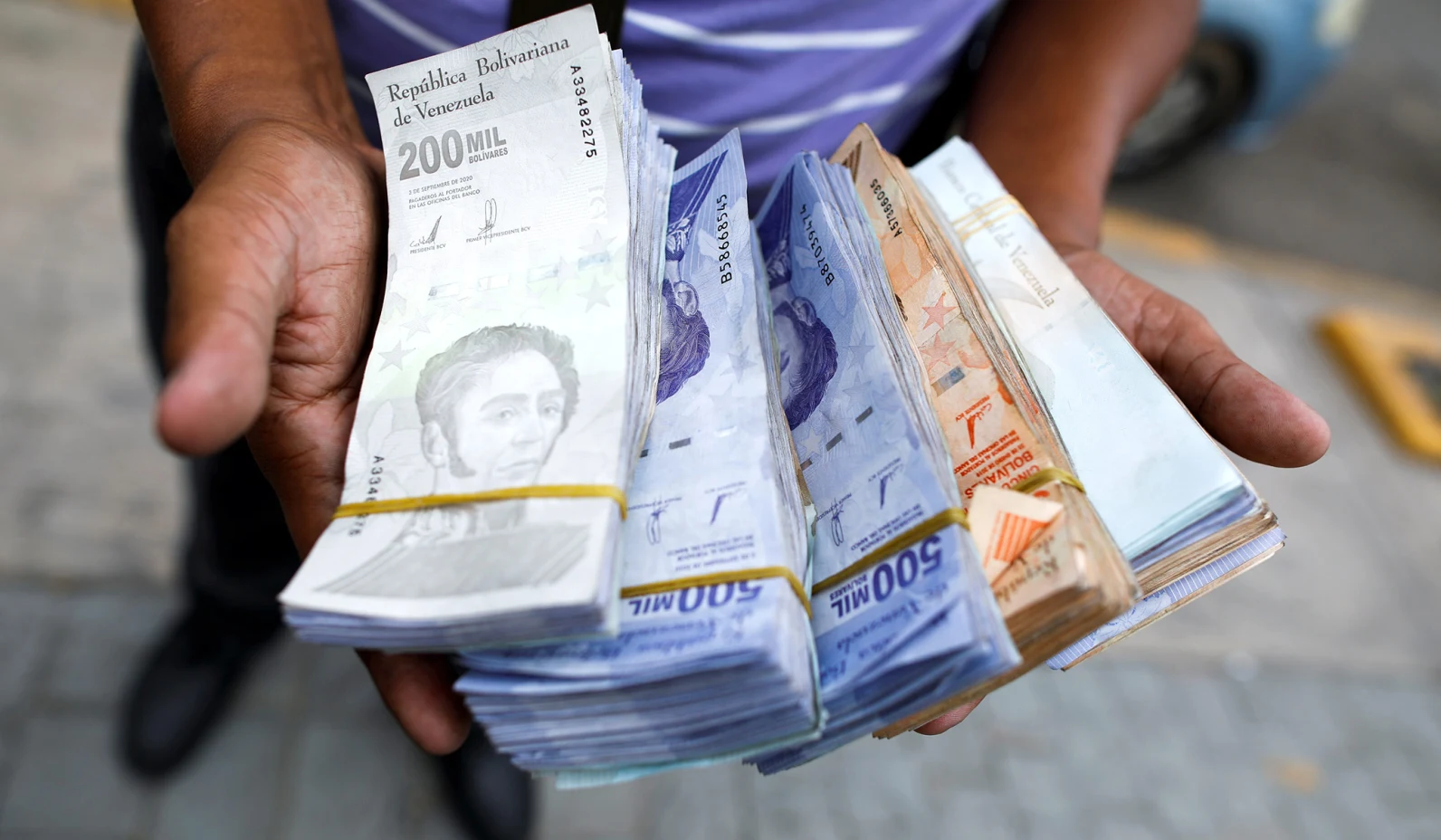
Cash per person: Venezuela’s physical bolívar cash is worth roughly US$3 to US$5 per inhabitant. Brazil holds about US$300 per person in notes and coins, Mexico about US$1,500.
Highest note: The largest banknote in circulation, 500 bolívares, is worth about US$0.63 at the official rate of 798.33 per dollar on 1 September 2026.
Vault claim: A July research memorandum says some 750 million unused banknotes printed in 2016–2018 sit in central bank vaults. The Rio Times could not verify that figure independently.
The law: The old note families were formally demonetized in 2018 and 2024. Reviving them would require an affirmative central bank decision with almost no international precedent.
Expired forecast: The memorandum predicted a “recirculation” of old notes by 22 July, later “early August.” No announcement came. Its author told The Rio Times the dates “were mine, and they failed.”
Disclosure: The memorandum is published by MIGP Capital Corporation, which says it facilitated purchases of legacy Venezuelan banknotes for speculative investors between 2022 and 2024.
Venezuela cash has nearly vanished: a country of roughly 28 million people runs on about US$3 to US$5 of physical bolívares per person — and a much-circulated theory that the central bank would simply reissue its old banknotes has now failed its own deadline.
Five US Dollars of Cash per Person
The Central Bank of Venezuela (BCV) reported total monetary liquidity of 2.59 trillion bolívares (about US$3.3 billion) for the week of 28 August 2026, at that day’s official rate of 791.67 per dollar. Physical notes and coins are a sliver of that stock: the BCV’s last published breakdown, from August 2024, put 96.5 percent of all bolívares in digital form; in April 2021 the cash share was 1.68 percent.
Applying a 2 to 3.5 percent cash share to today’s money stock yields roughly US$70 million to US$115 million in physical bolívares — about US$3 to US$4 per inhabitant. A private research memorandum published in July, using a BCV file dated 30 June 2026, arrives at US$136 million, or US$4.85 per person. Either way: a cup of coffee’s worth of national currency per citizen, in paper.
For scale, consider the neighborhood:
| Country | Physical cash in circulation | Approx. per person |
|---|---|---|
| Venezuela (bolívares only, 2026) | US$70–136 million (estimates) | US$3–5 |
| Brazil (January 2024, central bank) | R$334 billion (about US$64 billion) | about US$300 |
| Mexico (2025, Banco de México) | 3.4 trillion pesos (about US$200 billion) | about US$1,500 |
| Venezuela, pre-2016 norm (UCAB) | cash was about 11 percent of the money stock | today: 2–3.5 percent |
The real cash economy of Venezuela is not bolívares at all. The stock of physical US-dollar bills circulating in Venezuela stood at US$4.94 billion in April 2025, down 37 percent from about US$8 billion in November 2024, according to the Caracas consultancy Ecoanalítica, whose director Asdrúbal Oliveros called it the first such fall in six years — still roughly forty times the entire bolívar note supply. Along the Colombian border, pesos fill the same role. The bolívar survives as the state’s unit of account and as electronic small change, not as something you can hold.

How a Country Pays Without Banknotes
Pago móvil, the phone-to-phone transfer system built in 2017 precisely because cash had run out, carried 63 percent of all electronic transactions in the first half of 2026, peaking above 8,500 operations per minute, according to the e-commerce chamber Cavecom-e. Card terminals handle most of the rest; BCV statistics show pago móvil overtook them in transaction count in mid-2025.
The system is not free, and it is getting more expensive for the poor. On 31 July 2026, a resolution in Gaceta Oficial N° 43.427 raised the minimum pago móvil fee from 2 bolívares to 14 bolívares (about 2 US cents) per transaction — a 600 percent jump that lands hardest on small daily payments, economist Hermes Pérez warned in El Nacional: a regressive tax on the people least able to route around it. The minimum wage, frozen for years, stands at 130 bolívares (about 16 US cents) per month.
And the whole arrangement has a single point of failure: electricity. Pago móvil, card terminals and bank apps all die when the grid does. As we reported last week, a new round of power rationing is already slowing commerce — read our coverage of the power cuts and the blocked dollarization push. A country with almost no cash and an unreliable grid is a country where, for hours at a time, in whole neighborhoods, nothing can be paid for at all. That connection — cashlessness plus blackouts — is the quiet emergency underneath the exchange-rate headlines.
What May Sit in the Vaults
This is where the July memorandum enters. Its author, Daemon Jacques-Palmer, published by MIGP Capital Corporation in Dublin and Montréal under a Creative Commons license, argues that the BCV holds roughly 753 million never-issued banknotes printed in 2016–2018 by the European security printers De La Rue, Giesecke+Devrient and Oberthur Fiduciaire — high-denomination notes of the old bolívar families, bought for about US$53 million and, in the memorandum’s opening proposition, paid for.
What can be checked checks out only in part. De La Rue’s 2019 annual results recorded an unpaid Venezuelan bill of £18.1 million (about US$23 million) — an exceptional charge that contributed to its chief executive’s resignation — and said the BCV was “unable to transfer funds due to non-UK related sanctions.” Whether the printers were eventually paid in full is not confirmed by any public filing we could find. And the vault inventory itself — the 753 million notes — rests on the memorandum’s reading of BCV documents that are not public. It is an unverified claim, not a fact.
The Law Closed the Door — a Board Could Reopen It
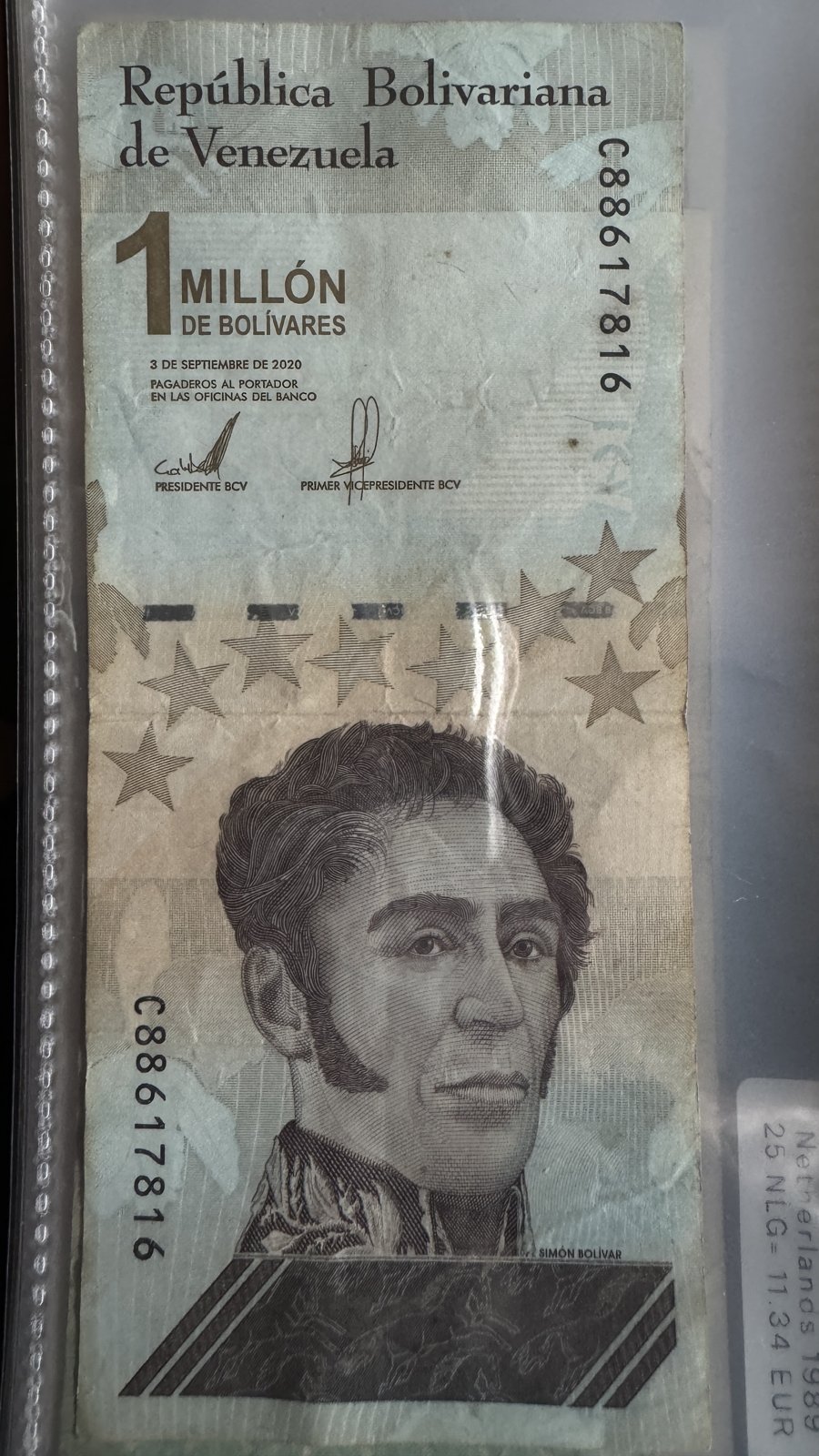
The memorandum’s sharpest legal point is half right. Venezuela never adopted a new currency; it only rescaled the old one, cutting five zeros in 2018 and six more in 2021. The notes print no series name — just “Bolívares.” The central bank law puts the power to issue and withdraw notes with the BCV’s board; no act of the National Assembly would be needed.
But the other half of the record matters more. The old families were not merely retired — they were formally demonetized. The bolívar fuerte notes ceased to be legal tender on 5 December 2018. The high denominations of the bolívar soberano — the 10,000, 20,000, 50,000 and 200,000 notes — lost legal-tender power on 25 September 2024 under board resolution 24-08-01, published in Gaceta Oficial N° 42.952. Dead paper does not come back by silence; as the memorandum itself concedes, re-monetizing it would require an affirmative act of the board. We could find no modern case of a central bank restoring demonetized notes to legal tender; redenominations such as Sierra Leone’s in 2022 retired the old notes for good.
Why Economists Doubt It Would Work
Even if the vaults are full and the board willing, three objections stand. The first is trust. Venezuelans do not save in bolívares; bolívar holdings are float measured in hours; the whole economy reprices to the dollar daily. Dumping hundreds of millions of old notes into that psychology would not rebuild a cash layer — it would be read as the state printing its way out, again.
The second is the notes themselves: designs printed a decade ago have had ten years to be studied by counterfeiters, and detection in Venezuelan retail is a shopkeeper’s eye, not a machine. The third is timing. The central bank has a new president, Luis Pérez, installed in April when Washington eased — but did not lift — sanctions on the BCV. The IMF and the World Bank announced the resumption of dealings with Venezuela on 16 April 2026, opening the way to the first Article IV review since September 2004. In May the government named Centerview Partners to advise on the restructuring of roughly US$219 billion of public debt — an appointment made without a competitive tender, and one for which Bloomberg reported a discussed fee of US$150 million. A nostalgic reissue of hyperinflation-era paper would be a strange way to open that conversation. Researchers at Caracas’s UCAB put it bluntly: the cash shortage is a supply decision of the central bank, not an accident of arithmetic.
A Dated Prediction That Did Not Happen
The memorandum did something rare among market theses: it named a date. The recirculation, it said, would be announced while the official rate sat inside a 600–800 bolívares per dollar window, which at the observed pace of depreciation closed “on or about 22 July 2026” — a deadline later softened to “early August.” It even listed what would prove it wrong: the rate exiting 800 with no announcement and no visible defense.
Today is 4 September. No recirculation has been announced, in the Gaceta Oficial or anywhere else. The official rate printed 798.33 on 1 September and broke through 800 two days later, reaching 804.81 on 3 September, leaving the window the memorandum drew. The bolívar has lost about 81 percent of its value against the dollar in twelve months — the official rate stood at 150.79 a year ago — and inflation reached 175.5 percent over the first seven months of 2026 on the central bank’s own figures, with July alone at 19.9 percent, a jump the BCV attributed to the double earthquake of 24 June and its effect on distribution.
What the Memorandum’s Author Says
In written answers to The Rio Times, Daemon Jacques-Palmer concedes the forecast. “The dates were wrong,” he says. “I named 22 July, then early August. Nothing issued. Those were projections from the velocity of the crawl, they were mine, and they failed.”
He asks that the dates and the price window be judged separately. The window, he argues, has only now been reached rather than long passed: by his measurement the official rate crossed 801 on the evening of 1 September and printed 804.8 on 2 September, and he is watching the central bank until 15 September, when a second technical round and the National Assembly’s ordinary period both resume. Depreciation, he adds, has pushed the smallest circulating notes out of usefulness while pulling the largest legacy notes into it: at today’s rate a 500-bolívar fuerte note would be worth 62 US cents and a 20,000 note about US$24.85.
He does not dispute that the vault inventory is unverified. The underlying central bank documents are no longer published on the BCV website; he says he has rebuilt the series from archived copies, and offers them for independent checking.
On the law he accepts that the bolívar fuerte was demonetised cleanly in December 2018, and calls publicly held fuerte notes the harder case. His argument rests on a narrower point: the never-issued vault stock was never in circulation, so it could be brought in by a fresh issuance resolution rather than by reversing a demonetisation. On the 2024 resolution he contends that the operative wording extinguishing legal tender was omitted. That reading is his, and it is contested.
He also corrects his own text: the memorandum says the notes were “paid for” in its opening proposition but “mostly paid for” in the body, and the body is the accurate version — which fits De La Rue’s unpaid £18.1 million.
MIGP Capital Corporation states its interest as follows: “MIGP Capital Corporation researches highly distressed monetary systems. Between 2022 and 2024 it facilitated the acquisition of legacy Venezuelan banknotes for speculative investors in Canada and the United Kingdom. It therefore has a commercial interest in the questions the memorandum examines.” The firm, in other words, bought the class of notes whose return to circulation its research anticipates.
The larger fact needs no memorandum. Whether or not old notes ever leave the vaults, Venezuela today is a country that has stopped having usable cash in its own currency — and patched the hole with phone apps, dollar bills and, at the border, someone else’s money. For readers with business, staff or family there, the practical points are unchanged: prices are set in dollars and settled at the official rate; remittances move by transfer, not envelope; and when the power goes out, commerce simply waits.
Background: read how the dollarization bill drafted by US economist Steve Hanke reached the assembly, how a deputy now faces a probe for sponsoring it, and how consumer lender Cashea raised US$100 million to rebuild credit in a cashless economy.
More: Venezuela news in English, every day from The Rio Times.
Frequently Asked Questions
How much physical cash does Venezuela have per person?
Estimates based on BCV monetary data and the last published cash share put physical bolívar notes and coins at roughly US$70 million to US$136 million in total — about US$3 to US$5 per inhabitant. Brazil, for comparison, holds about US$300 per person in cash.
What is the largest Venezuelan banknote worth?
The highest denomination in circulation is 500 bolívares, worth about US$0.63 at the official rate of 798.33 bolívares per dollar on 1 September 2026.
How do Venezuelans pay for things without cash?
Mostly by pago móvil phone transfers, which carried 63 percent of electronic transactions in the first half of 2026, and by card terminals; many prices are set in US dollars and paid in bolívares at the official rate, while physical US-dollar bills — about US$5 billion of them — serve as the real cash economy.
Did the central bank announce it would reissue old banknotes?
No. A July 2026 private memorandum predicted such a “recirculation” by 22 July or early August, but no announcement has appeared. The old note families were formally demonetized in 2018 and 2024, and the memorandum’s publisher has a commercial interest in Venezuelan foreign exchange.
Connected Coverage
The cash question sits inside Venezuela’s wider monetary battle. Read our reports on Chavismo blocking the dollarization push as power cuts bite, on the Hanke-drafted dollarization bill, and on the Caracas stock exchange’s 146 percent surge.
Sources
Banca y Negocios · El Nacional · Acceso a la Justicia — Gaceta 42.952 · France 24 / AFP · JD Supra — OFAC GL 56/57 · Central Banking — De La Rue · MPPEF — 200/500 notes · UCAB — Después de la hiperinflación · Jacques-Palmer memorandum (MIGP Capital Corporation) · Finanzas Digital — BCV rate · Ecoanalítica — dólares en efectivo · BCV — inflación julio 2026 · IMF PR 26/123 · Venezuela — debt restructuring announcement · Infobae — dólar sobre 800 · BCV — presidencia
Exchange-rate reference: 798.33 bolívares per US dollar (official BCV rate for 1 September 2026, published by the Central Bank of Venezuela).
This article was produced by The Rio Times’ automated newsroom system. How we use AI · Report an error · Editorial responsibility: Matthias Camenzind, Editor-in-Chief
In depth