Unprecedented in Brazil: cancer destroyed in one minute and with only local anesthesia
RIO DE JANEIRO, BRAZIL – The story of one can open new possibilities for the story of many. Therefore, it is worth paying close attention to what happened last weekend in São Paulo to a 68-year-old man who underwent a minimally invasive procedure to get rid of lung cancer in just over a minute.
And an unprecedented detail in this country: the procedure on the lung was performed under local anesthesia.
This isn’t just any detail, by the way, because it can give hope to other people with other tumors who also wouldn’t be able to undergo surgery to treat the disease – either because of very advanced age or because they have a health problem that prevents them from getting to the surgical center.
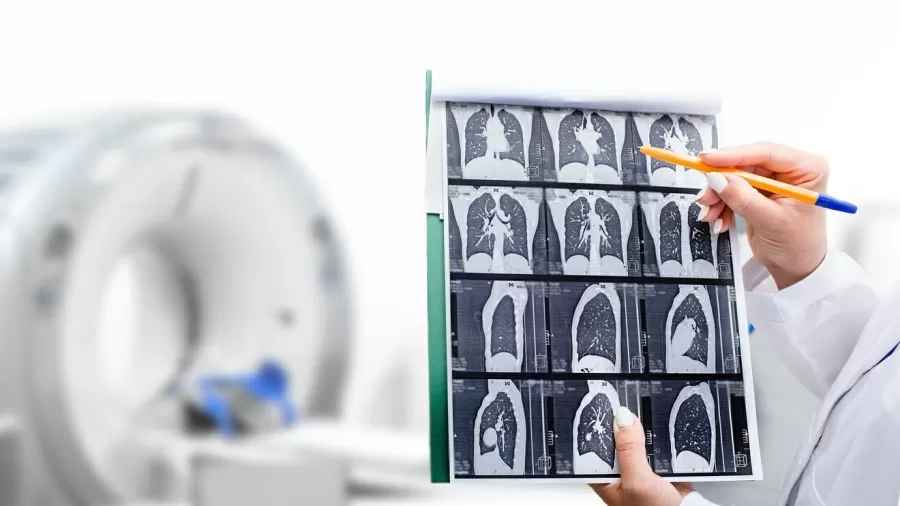
In this case, the patient had already bravely faced a colon tumor, and examinations revealed that the abdomen presented a clean picture and was free of cancer.
He also nearly suffered a heart attack some time ago, but survived. That is, things were going relatively well until they found a strange lump in his lung.
That’s right, cancer that had washed away from other parts of his body had not dissipated right there. And at that moment, everything seemed to get even more complicated.
Such a small tumor – it was only 0.8 centimeters in diameter – could very well be removed with a scalpel. The problem was the heart, which after the heart attack never had the same strength to pump blood as before.
This severe heart failure prompted the medical team to issue a warning: If this man were to receive general anesthesia, the risk would be enormous. So the idea of operating was discarded.
There was only the alternative of chemotherapy: “The issue is that it would not be curative in this case. It would only control the tumor for a while,” says interventional radiologist Luiz Tenório Siqueira of Vila Nova Star Hospital in São Paulo.
As a result, they decided to seek him out to see if he could do something about it by doing what doctors call ablation – but, say, challenging the doctor to do it in a different way.
MICROWAVES
The idea of killing cancer with cold or heat, so to speak, is not new. Thermal tumor ablation has been performed in this country for about twenty years.
When doctors freeze malignant cells until they are razed to the ground, they refer to it as cryoblation. When they opt for heat, the best-known method is still radiofrequency.
Radiofrequency ablation came into use here in 2002. In this procedure, specialists place two electrode plates on the patient’s legs that deliver an electric current.
“The difficulty is that this current causes a shock sensation in the body, and we have to wait about 12 minutes for it to heat up the malignant cells enough to destroy them,” Dr. Tenório explains. “No one could stand 12 minutes of shock with only local anesthesia.
Three years ago, however, doctors began using the same principle – heating the tumor – with microwaves instead of electric current to treat liver, kidney, breast, and, of course, lung cancer.
Luiz Tenório makes a comparison to simplify understanding: “Everyone knows from experience with the microwave oven at home that it is radiation that heats up very quickly. You put a cup of water in the device, turn it on, and in 30 seconds the liquid is heated.
It is precisely the water molecules in the cells that are the target of the treatment: the microwaves are able to move and rub them.
And this kind of molecular friction generates – for those who still remember physics lessons from their school days – a large amount of heat. In this case, the temperature rises so much that the cell dies in its own boiling.
However, this also happened in sedated patients. But the interventional radiologist of Vila Nova Star thought and thought.
Then he dared to make a suggestion to the patient: Since the procedure would be very quick and you wouldn’t even feel the heat during most of the very short duration, would he agree to perform it with only local anesthesia? He said yes. And they scheduled it for last Saturday, the 19th.
How did the procedure go?
“Ablation like this is not for everyone,” admits Doctor Tenório. “Another patient might have a profile where he feels more distressed and stays conscious the whole time.” But fortunately, the gentleman agreed with the idea – and it wouldn’t be as much of an ordeal as one might imagine.
“You’d expect something like a hot water shower, which you’d endure at first, but after a while, your skin would feel burning,” he compares. “So if he felt pain, he should ask us to stop.
This warning was reinforced to the patient when the local anesthetic was applied to the skin. Thus, she ignored the stinging when she was pierced by a long needle, such as those used for breast biopsies, but with a microwave antenna at the tip.
But before that, Dr. Tenório used another needle to reach the pleura, the thin tissue that lines the lungs, to inject the anesthetic there as well. That’s because the tremendous blood flow could cause it to burn with pain.
As with all ablations of this type, the microwave needle was then inserted deep into the tiny tumor, guided by ultrasound and CT scan. “This gives us incredible precision,” the doctor says enthusiastically.
The patient left the hospital the next day. “He could have even been discharged the same day,” says Luiz Tenório. “We left him here a little longer for safety reasons because he had a cardiology problem,” that is, not because of cancer. This had already sent the microwave into space.
With information from VivaBem
More: Brazil news in English, every day from The Rio Times.
This article was produced by The Rio Times’ automated newsroom system. How we use AI · Report an error · Editorial responsibility: Matthias Camenzind, Editor-in-Chief