U.S. Secretary of State Blames Migration Crisis on Cuba, Nicaragua, and Venezuela
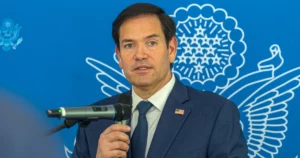
U.S. Secretary of State Marco Rubio pointed the finger at Cuba, Nicaragua, and Venezuela for the migration crisis during a press conference in Costa Rica.
Rubio, on a tour through Central America, labeled these countries as “enemies of humanity.” He argued that the crisis would not exist without their failed governance.
Rubio spoke in San José with Costa Rican President Rodrigo Chaves by his side. His comments focus on the political and economic systems of these nations which he claims drive citizens away.
The U.S. official’s tour included discussions on migration, security, trade, and China’s influence. Nicaragua, under Daniel Ortega since 2007, has seen his wife Rosario Murillo rise to “co-president.” Rubio criticizes this setup as a family dynasty.
He notes the regime’s suppression of opposition, including the Catholic Church, as reasons for Nicaraguan migration. Venezuela’s crisis under Maduro has led to an exodus of nearly 7 million people since 2015.
Economic collapse and political repression push Venezuelans out. Rubio’s stance reflects U.S. policy to isolate and sanction these regimes to push for change. Cuba’s migration surge relates to the long-standing U.S. embargo and restricted freedoms.
Rubio’s Regional Tour
Rubio highlights Cuba‘s role in regional instability due to its political and economic policies. Rubio’s narrative contrasts these countries with Costa Rica, where stability attracts Americans, showing what good governance can achieve.
His tour aims to strengthen U.S. ties in the region amidst geopolitical tensions, particularly with China’s growing presence. This tour marks Rubio’s first as Secretary of State, starting in Panama, moving through El Salvador, and concluding in the Dominican Republic.
His agenda includes reinforcing U.S. influence while addressing the causes of migration. The migration crisis not only strains neighboring countries but also tests U.S. diplomacy.
Rubio’s comments reflect a policy of holding these governments accountable for their actions’ regional impact. However, his approach also underscores the complex dynamics of U.S. foreign policy in Latin America.
More: Latin America news in English, every day from The Rio Times.
This article was produced by The Rio Times’ automated newsroom system. How we use AI · Report an error · Editorial responsibility: Matthias Camenzind, Editor-in-Chief
In depth