Russia Executes Largest Air Offensive in Ukraine Conflict Amid Failed Ceasefire Talks
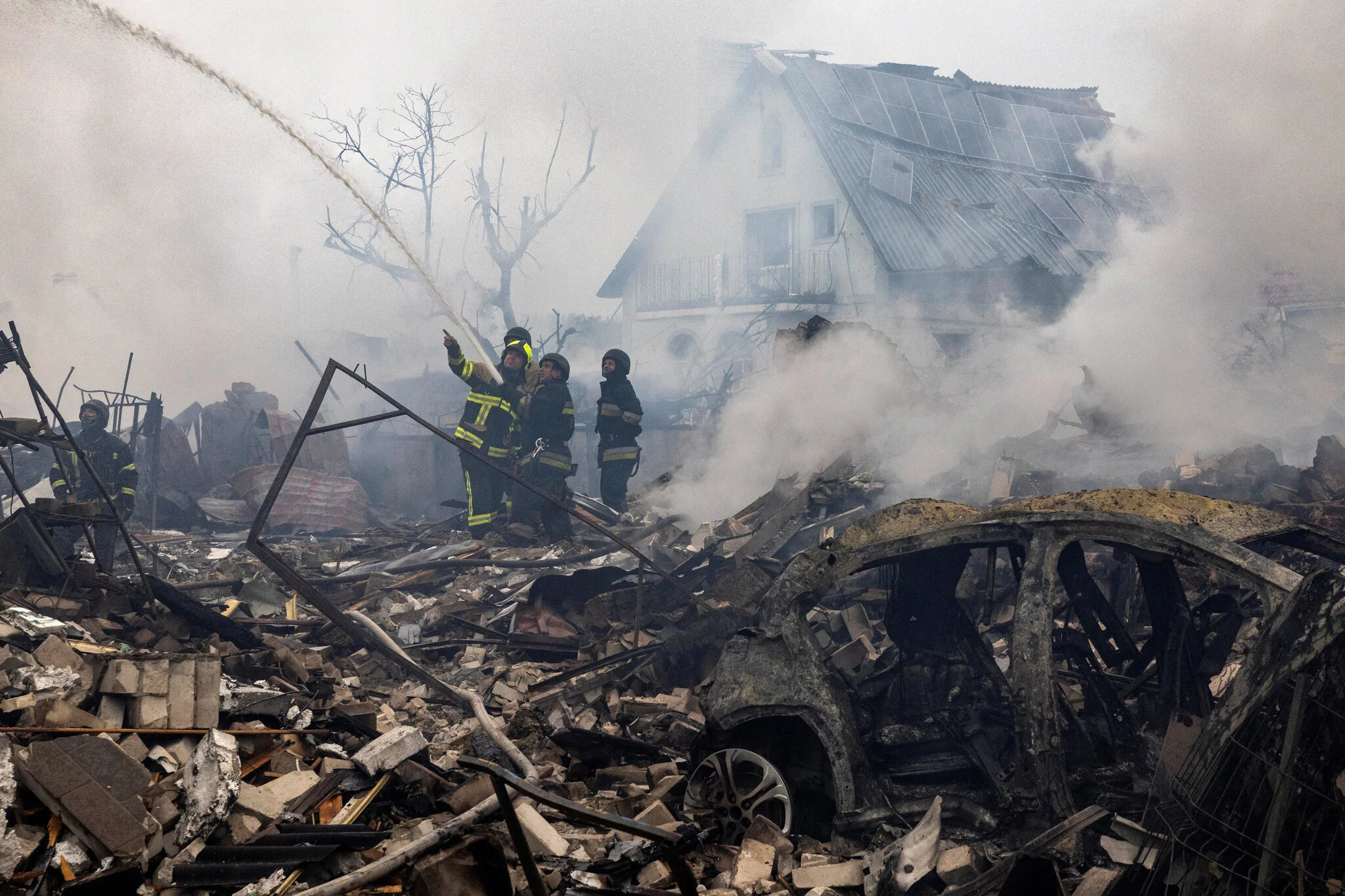
Russian forces launched 367 missiles and drones across Ukraine overnight on May 25–26, 2025, killing 12 civilians and injuring over 60. The assault, confirmed by Ukraine’s Air Force as the war’s largest aerial barrage, targeted 13 regions, including Kyiv, Zhytomyr, and Mykolaiv.
Three siblings aged 8, 12, and 17 died in Zhytomyr when strikes collapsed their home, while emergency crews battled fires in 27 locations and assessed damage to 80 residential buildings.
President Volodymyr Zelensky accused Russia of deliberately attacking civilian areas, stating, “Silence from the U.S. and others encourages Putin.” The strikes occurred hours after Russia and Ukraine completed their largest prisoner exchange, swapping 307 soldiers each.
Despite U.S.-led ceasefire negotiations, Russian demands—including Ukrainian withdrawal from four annexed regions and a halt to Western arms supplies—remain unresolved.
The attack involved 69 missiles (Iskander, Kalibr, Kh-101/22/59/69 variants) and 298 Iranian-designed Shahed drones. Ukrainian defenses intercepted 45 missiles and 266 drones, but surviving projectiles struck power grids, apartment blocks, and a student dormitory.
The UN reported civilian deaths in Ukraine have risen monthly since February, reaching 209 in April. Russia’s Defense Ministry claimed it intercepted 110 Ukrainian drones during the same period, temporarily closing Moscow airports.
Both nations have escalated drone production, enabling swarm tactics to overwhelm air defenses. While Ukraine’s strikes on Russian soil have increased, they remain smaller in scale and less lethal.
U.S. President Donald Trump described Putin as “absolutely crazy” on social media but criticized Zelensky’s leadership, stating he was “doing his country no favors.” Trump’s proposed 30-day ceasefire, accepted by Ukraine, lacks Russian endorsement.
Analysts suggest Moscow aims to degrade infrastructure and morale ahead of potential summer offensives. The offensive underscores a strategic pattern: diplomatic gestures like prisoner swaps coincide with intensified bombardments.
With neither side conceding core demands, civilians endure escalating violence as military innovations stretch the conflict’s human and economic toll.
This article was produced by The Rio Times’ automated newsroom system. How we use AI · Report an error · Editorial responsibility: Matthias Camenzind, Editor-in-Chief
Read More from The Rio Times