IBOV 205,835.29 ▼ 0.52% IPSA 11,164.13 ▲ 0.35% IPC MEX 64,975.08 ▲ 0.69% MERVAL 2,896,853 ▲ 0.95% COLCAP 2,589.04 ▲ 0.25% BVL PERÚ 60,220.93 ▲ 0.91% USD/BRL4.97▼ 0.47% USD/MXN17.97▼ 0.63% USD/CLP971.85▼ 0.08% USD/COP3,228▲ 1.07% USD/PEN3.44▼ 0.17% USD/ARS1,520— 0.00% USD/UYU40.09▲ 2.87% USD/PYG5,835▲ 3.25% USD/BOB11.90▲ 2.31% USD/DOP60.36▲ 4.52% USD/CRC454.50▲ 2.57% USD/GTQ7.64▲ 3.36% USD/HNL26.86▲ 3.49% USD/NIO36.62▲ 2.96% USD/VES871.68▲ 0.04% USD/PAB1.00— 0.00% USD/BZD2.00— 0.00% USD/JMD 157.28 — 0.00% USD/TTD6.68▲ 1.99% EUR/BRL5.60▼ 4.56% BRENT 88.88 ▼ 0.03% WTI 83.11 ▼ 0.11% IRON ORE 161.91 — — COPPER 6.61 ▲ 0.03% GOLD 4,461 ▲ 1.78% SILVER 65.59 ▲ 1.26% SOY 1,184 ▲ 3.20% CORN 480.50 ▲ 10.02% WHEAT 655.00 ▲ 3.93% COFFEE 317.25 ▼ 5.51% SUGAR 16.43 ▼ 1.79% ORANGE JUICE 138.55 ▼ 0.47% COTTON 85.03 ▲ 2.33% COCOA 5,719 ▲ 3.18% BEEF 223.60 ▼ 3.93% CATTLE 339.10 ▼ 3.16% LITHIUM 75.20 ▲ 1.47% PETR4 41.64 ▼ 0.05% VALE3 72.97 ▲ 0.83% ITUB4 38.60 ▼ 1.03% BBDC4 16.85 ▲ 0.36% ABEV3 14.89 ▼ 0.80% BBAS3 19.37 ▲ 0.47% B3SA3 14.26 ▼ 0.21% WEGE3 47.59 ▲ 0.49% PRIO3 59.14 ▼ 0.19% SUZB3 41.33 ▲ 2.35% RENT3 34.68 ▼ 0.09% AZZA3 15.89 ▼ 2.63% CSAN3 3.22 ▼ 1.83% RAIZ4 0.25 — 0.00% PCAR3 2.75 ▼ 0.36% GMAT3 3.65 ▼ 1.08% PSSA3 48.13 ▼ 0.54% CVCB3 1.33 ▼ 2.92% POSI3 3.36 ▲ 2.44% SLCE3 13.34 ▲ 0.30% NATU3 8.14 ▼ 0.73% IBOV 205,835.29 ▼ 0.52% IPSA 11,164.13 ▲ 0.35% IPC MEX 64,975.08 ▲ 0.69% MERVAL 2,896,853 ▲ 0.95% COLCAP 2,589.04 ▲ 0.25% BVL PERÚ 60,220.93 ▲ 0.91% USD/BRL 5.16 ▲ 0.01% USD/MXN 17.06 ▼ 0.24% USD/CLP 913.98 ▲ 0.04% USD/COP 3,140 ▲ 0.03% USD/PEN 3.36 ▼ 0.66% USD/ARS 1,493 ▲ 0.10% USD/UYU 40.27 ▲ 1.24% USD/PYG 5,939 ▲ 1.68% USD/BOB 11.64 ▼ 0.76% USD/DOP 58.34 ▲ 1.25% USD/CRC 445.92 ▲ 0.89% USD/GTQ 7.62 ▲ 2.21% USD/HNL 26.79 ▲ 1.57% USD/NIO 36.62 ▲ 0.69% USD/VES 762.44 ▼ 0.13% USD/PAB 1.00 — 0.00% USD/BZD 2.00 — 0.00% USD/JMD 157.28 — 0.00% USD/TTD 6.70 ▲ 0.61% EUR/BRL 5.95 ▲ 1.01% BRENT 88.88 ▼ 0.03% WTI 83.11 ▼ 0.11% IRON ORE 161.91 — — COPPER 6.61 ▲ 0.03% GOLD 4,461 ▲ 1.78% SILVER 65.59 ▲ 1.26% SOY 1,184 ▲ 3.20% CORN 480.50 ▲ 10.02% WHEAT 655.00 ▲ 3.93% COFFEE 317.25 ▼ 5.51% SUGAR 16.43 ▼ 1.79% ORANGE JUICE 138.55 ▼ 0.47% COTTON 85.03 ▲ 2.33% COCOA 5,719 ▲ 3.18% BEEF 223.60 ▼ 3.93% CATTLE 339.10 ▼ 3.16% LITHIUM 75.20 ▲ 1.47% PETR4 41.64 ▼ 0.05% VALE3 72.97 ▲ 0.83% ITUB4 38.60 ▼ 1.03% BBDC4 16.85 ▲ 0.36% ABEV3 14.89 ▼ 0.80% BBAS3 19.37 ▲ 0.47% B3SA3 14.26 ▼ 0.21% WEGE3 47.59 ▲ 0.49% PRIO3 59.14 ▼ 0.19% SUZB3 41.33 ▲ 2.35% RENT3 34.68 ▼ 0.09% AZZA3 15.89 ▼ 2.63% CSAN3 3.22 ▼ 1.83% RAIZ4 0.25 — 0.00% PCAR3 2.75 ▼ 0.36% GMAT3 3.65 ▼ 1.08% PSSA3 48.13 ▼ 0.54% CVCB3 1.33 ▼ 2.92% POSI3 3.36 ▲ 2.44% SLCE3 13.34 ▲ 0.30% NATU3 8.14 ▼ 0.73%
since 2009
Tuesday, October 6, 2026

Brazil Analysis

Political Landscape Shifts: Winners and Losers in Brazil’s 2024 Municipal Elections

By · October 28, 2024 · 3 min read

(Analysis) The 2024 Brazilian municipal elections have reshaped the country’s political scene. These local polls did more than just select mayors and council members.

They also provided insights into potential scenarios for the 2026 national elections. The results highlighted the growing strength of centrist parties, particularly the PSD led by Gilberto Kassab.

The elections saw the rise of some political figures and the decline of others. São Paulo Governor Tarcísio de Freitas and former life coach Pablo Marçal gained prominence.

Meanwhile, traditional leftist parties and established political figures lost ground. The polarization between President Luiz Inácio Lula da Silva and former President Jair Bolsonaro also seemed to weaken.

Centrist parties emerged as the big winners. The PSD, MDB, União Brasil, and PP secured control of 3,500 municipalities. This represents 62% of Brazilian cities, including many with over 200,000 voters.
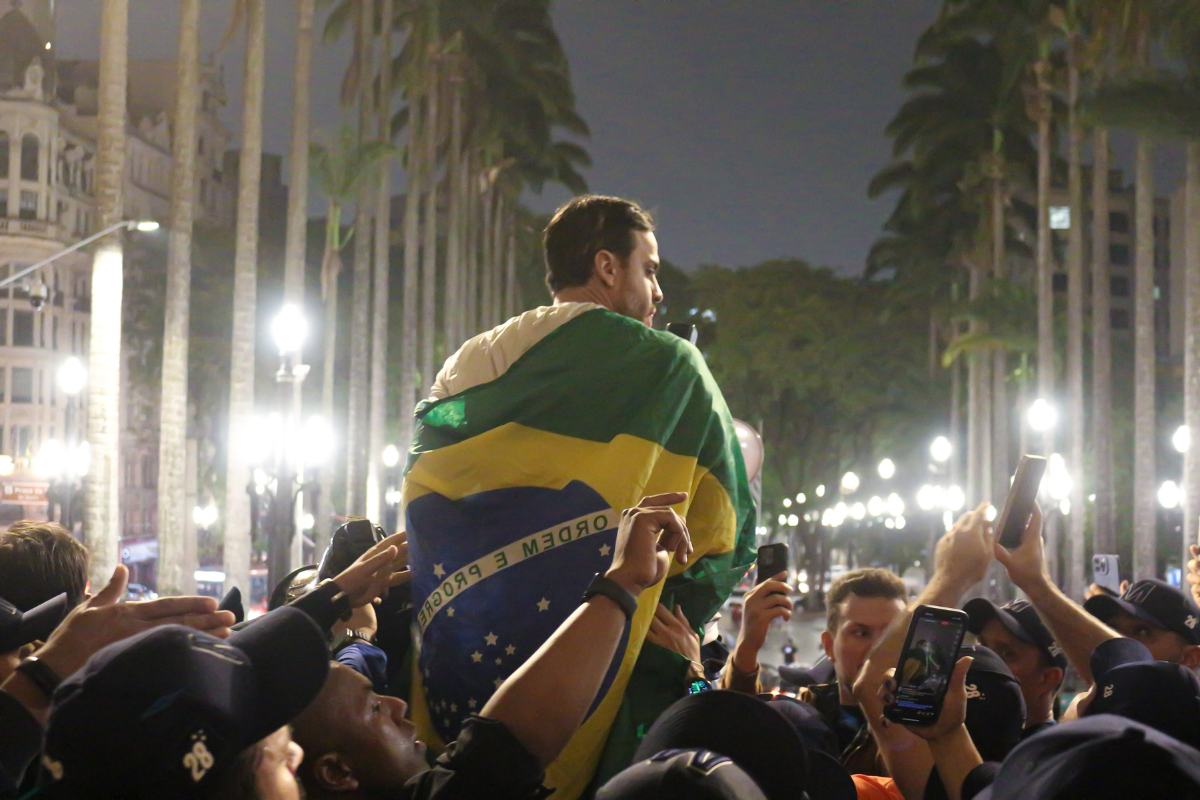
Political Landscape Shifts: Winners and Losers in Brazil's 2024 Municipal Elections
Political Landscape Shifts: Winners and Losers in Brazil’s 2024 Municipal Elections.
RT
Ask Rio Times
This story and the bigger picture.
Open the full Ask Rio Times →

These results demonstrate the resilience and competitiveness of these parties across the country. The PSD, led by Gilberto Kassab, stood out by winning 887 municipalities.

The LatAm Brief

One email, every weekday morning. What moved in Latin American markets, politics and expat life.

Yesterday’s subject line: “Brazil stocks jump 7.7%, real up 4%, after the vote”

Free. We send a confirmation link first — nothing arrives until you click it. Unsubscribe with one click in any edition. If you stop opening us for 30 days we stop sending by ourselves, as we assume the interest is no longer there. See our privacy policy. We never share your email.

This success strengthens the party’s position for future political negotiations. It also positions the PSD as a potential bridge between left and right-leaning groups, similar to the MDB’s historical role.

Municipal Elections Insights

Antonio de Freitas boosted his political capital by supporting Ricardo Nunes in São Paulo. This move paid off, even when Bolsonaro hesitated to endorse Nunes.

Pablo Marçal also emerged as a rising star on the right. Despite not reaching the runoff, he showed unexpected competitiveness. On the left, Eduardo Paes and João Campos secured re-election in Rio de Janeiro and Recife, respectively.

These victories were notable exceptions to the overall poor performance of leftist parties. Many traditional leftist strongholds, including working-class areas, shifted away from these parties.

The elections dealt blows to both Lula and Bolsonaro. Lula’s endorsements failed to secure key victories, including in São Paulo. Bolsonaro’s influence on the right seemed to wane, despite his party’s overall good performance.

The polarization between these two figures, once dominant, lost ground to centrist forces. Political analysts suggest that leftist parties need to reassess their communication strategies.

They must find ways to reconnect with potential allies who don’t fully align with traditional left-wing agendas. This reassessment is crucial for their future electoral prospects.

These municipal elections have set the stage for the 2026 national elections. They’ve highlighted the need for political adaptation and the growing importance of centrist alliances.

In short, as Brazil moves forward the political landscape continues to evolve, shaped by local choices with national implications.

This article was produced by The Rio Times’ automated newsroom system. How we use AI · Report an error · Editorial responsibility: Matthias Camenzind, Editor-in-Chief

The Rio Times · Power Map
See who really holds power in Latin America
Click to open the Power Map →

Rotate for Best Experience

This report is optimized for landscape viewing. Rotate your phone for the full experience.