Mexico’s Sealed Tomb Find: The Rare Proof That Makes Ancient History Real
Key Points
- Mexico says it found an untouched tomb from around 600 CE, with murals still on the walls.
- Carved calendrical names and a painted funeral scene show how elites signaled identity, rank, and belief.
- Conservators are racing to stabilize fragile paint before roots, insects, and air shifts erase it.
Imagine finding an old phone that still has the messages open, the calendar intact, and the photos in order. That is why this discovery matters.
Archaeology usually finds the “phone” smashed. Looting, time, and bad luck scramble the story. This time, Mexico says the story stayed readable.
Mexico’s National Institute of Anthropology and History, INAH, says archaeologists uncovered a sealed tomb near San Pablo Huitzo, on Cerro de la Cantera, in Oaxaca’s central valleys.
INAH dates it to roughly 600 CE and links it to the Zapotec world. The discovery was presented publicly on January 23, 2026.
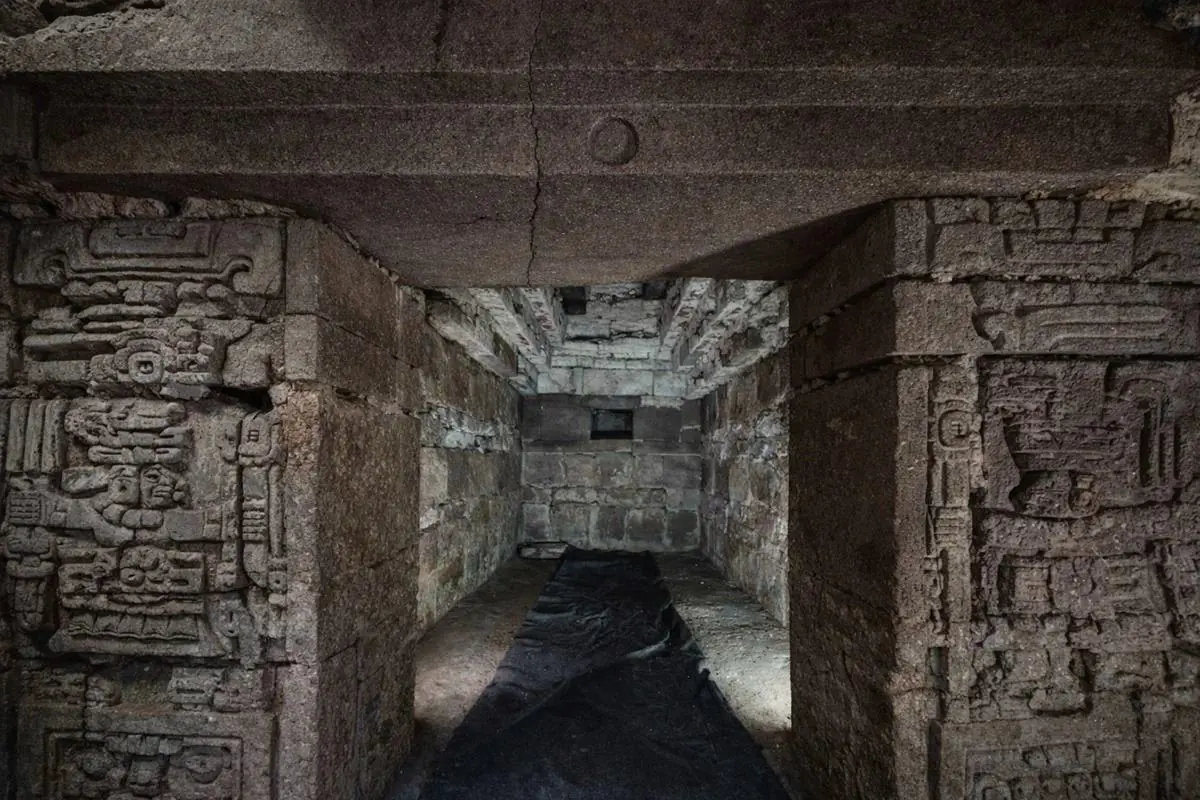
The tomb includes an antechamber and a burial chamber. At the entrance, an owl dominates the façade. INAH links the owl to night and death in local belief.
Ancient Tomb Signals Identity And Power
The owl’s beak partly covers a painted, stuccoed face. Researchers think the face may represent an ancestor tied to the burial.
Above the doorway, a lintel holds a frieze made from carved stone slabs bearing calendrical names. In modern terms, it’s a visible “username and timestamp” system.
It signals identity and status to anyone who approached. On the side jambs, carvings show a man and a woman with headdresses and objects in their hands. INAH suggests they may have served as guardians.
Inside, surviving mural sections keep the scene connected to the place. INAH describes pigments in ochre, white, green, red, and blue.
The mural shows a procession moving toward the entrance. Figures carry bags of copal, a resin burned as incense. It reads like a visual script for a funeral, and a public claim about legitimacy.
The story behind the story is urgency. INAH warns roots, insects, and abrupt environmental changes threaten the murals. Stabilization comes before tourism.
Specialists are running ceramic, iconographic, epigraphic, and physical anthropology studies. Some reporting links the tomb to an ancient polity called Huijazoo and the wider Monte Albán sphere.
Related coverage: Brazil’s Morning Call | Mexico’s Startup Funding Fell in 2025, but Foreign Money Kep This is part of The Rio Times’ daily coverage of Mexico affairs and Latin American financial news.
This article was drafted with automated assistance and reviewed before publication. How we use AI · Report an error · Editorial responsibility: Matthias Camenzind, Editor-in-Chief
Read More from The Rio Times