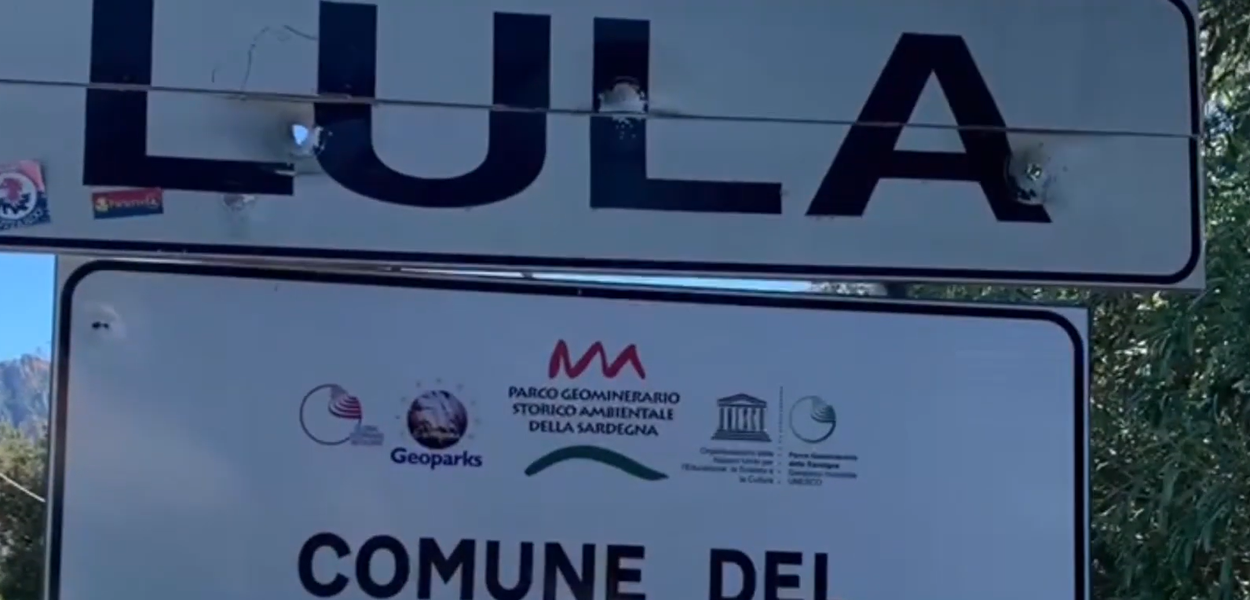
Anyone traveling through the interior of Sardinia, an Italian island paradise in the Mediterranean Sea, may come across not one, but several signs that read “Lula 13”.
But this is not about the campaign of the former Brazilian president and candidate for election in 2022 in the Sardinian island, but about the signs that point the way to reach the town with an undeniable left-wing tradition, with symbols everywhere.

With about 1,300 inhabitants, the municipality of Lula, in the province of Nuoro, in the autonomous region of Sardinia, draws attention to two aspects: the friendliness of its people, the Lulesi, and the references to personalities of the world left on each of the few streets of the commune.
When the RFI reporter was in Lula, right after the first round of the Brazilian elections, the town was decorated with banners because of St. Francis’s festivities, celebrated on Oct. 4.
Leaving the main church, with holy cards that read “São Francisco de Assis – Lula”, we followed the Antonio Gramsci Corsus.
The public road honors the Sardinian philosopher and writer, a founding member of the Italian Communist Party, who was imprisoned by the regime of former dictator Benito Mussolini and wrote the famous Prison Notebooks.
Gramsci is, to this day, a theorist and intellectual who influences the world left, mainly for having formulated the concept of “cultural hegemony”, to describe the type of ideological domination of one social class over another.
Further on, Rosa Luxemburg square recalls the Polish-German Marxist philosopher and economist.
She became known worldwide for her revolutionary militancy linked to the Social Democracy of Poland, the Social Democratic Party of Germany, and the Independent Social Democratic Party of Germany.
It is in this square that the Lula Diffuse Museum of Contemporary Art (MAC Lula) is located.
The MAC Lula is one of the city’s highlights, but the most interesting thing is to walk the streets around the center and see the numerous works in the open air.
The best way to get to know Lula is on foot since the city is small.
On the walk, you can appreciate, besides some sculptures, dozens of murals painted in practically every street and alley, with themes of workers, laborers, and the proletariat that the German philosopher Karl Marx talked about.
The Russian communist revolutionary Vladimir Ilich Ulianov Lenin has his mural in Lula.
Lenin is also a street name, as is German theorist Karl Marx, author of classics such as “Capital” and the “Communist Manifesto,” which have influenced generations of thinkers from the 19th century until today, including the personalities mentioned above.
When asked how they felt about Georgia Meloni, leader of the extreme right-wing party Brothers of Italy (Fratelli di Italia) and winner of the recent legislative elections held in the country, the Lulesi preferred not to talk about her.
Sardinians, born on an island and autonomous region, seem to see themselves as little or not represented by whoever occupies the prime ministerial seat in Rome.
But after some insistence, one of the Lulesi soon retorted, “This is “Bakunin!”
Marx’s rival in the First Socialist International, Russian anarchist Mikhail Bakunin is not a street name in Lula, but he is remembered by its inhabitants, who are familiar with the socialist theories of the second half of the 19th century.
Marx and Bakunin had conflicts between 1868 and 1872 when the Russian was expelled from the International.
But when asked whether they preferred Lula or Bolsonaro in Brazil, they did not hesitate to answer: “Lula!”.
Other streets in the city are named after Italian revolutionaries Giuseppe Garibaldi – the “hero of the old and the new world,” as described by French writer Alexandre Dumas – and Giuseppe Mazzini, as well as Argentine guerrilla Che Guevara, who took part in the 1959 Cuban Revolution alongside Fidel Castro.
HISTORY OF WORKERS’ STRUGGLES
With a long history, Lula holds traces of the Neolithic period, which spanned from 10,000 B.C. to 3,000 B.C., until the recent past, linked to the exploitation of the silver and lead mines of Sos Enathos and Guzurra-Argentaria, now included in the geomineral park of Sardinia.
Mining activity dates back at least to Roman times when condemned mining slaves worked there. Production peaked at the turn of the 19th and 20th centuries; it then went into a slow decline, until it closed in the 1990s.
One of the first miners’ strikes occurred in Lula in 1899 and ended tragically.
The Lulesi were producers of coal, a product that was in great demand, and also of lime.
The mining sites are located in spectacular landscapes in the Albo mountain range, an imposing natural monument with hills, canyons, caves, and peaks over a thousand meters high. The cliffs offer dozens of trails for climbing enthusiasts.
TRADITIONS AND POPULAR FESTIVALS
Lula has three typical festivals in September: Madonna del Miracolo, San Nicola, and San Matteo, with dinners based on cooked sheep and black pudding.
Inland, two kilometers from the center is the rural sanctuary of St. Francis of Assisi, a destination for pilgrimages and two popular festivals, which occur at the beginning of May and October.
The pilgrimage is described by the Sardinian writer Grazia Deledda, in her book “Elias Portolu”, and is linked to the preparation of a typical dish, su filindeu, made of pasta with cheese.
Numerous quotes from Deledda also appear on Lula’s walls, as she won the Nobel Prize for Literature in 1926.
A sculpture in honor of the author, who was born in Nuoro, 40 km from Lula, is displayed in Rosa Luxemburg Square, in front of the MAC Lula.
Another tradition rooted in the region is the Carrasecare luvulesu, one of the most particular carnivals in Sardinia.
The protagonist of the celebration is the mask of su battiledhu (‘victim’), with a face soiled with soot and blood and a horned headdress, held together by a women’s scarf.
The celebration’s origin lies in archaic rites of fertilizing the earth with blood.
To kick off the carnival in mid-January, the Lulesi light bonfires for St. Anthony, sing songs, drink wine and eat local specialties like s’aranzada cake and sos vuvusones, a Sardinian sweet.
One of the Lulesi who made a point of opening his home to receive the RFI report, Giovanni Marras, showed photos of this celebration, which he classifies as a tribute to Bacchus (Dionysus, for the Greeks), the god of wine and nature.
In addition to Sardinian, the inhabitants of Lula speak a dialect of the region, Nuorese.
But with a little Italian, and even our Brazilian Portuguese, communication is fluid, as the Lulesi are very receptive to tourists.
ORIGIN OF THE NAME
But where does the name Lula come from?
The explanation is not exact, but it is believed to come from the Latin name Julia, frequent in Roman villages, and which, according to some studies, would mean “Sacred to the God of the woods”.
The Romans certainly inhabited the town: the mines of Argentaria, Guzurra, and Sos Enathos, which were active until a decade ago, attest to this.
HOW TO GET THERE
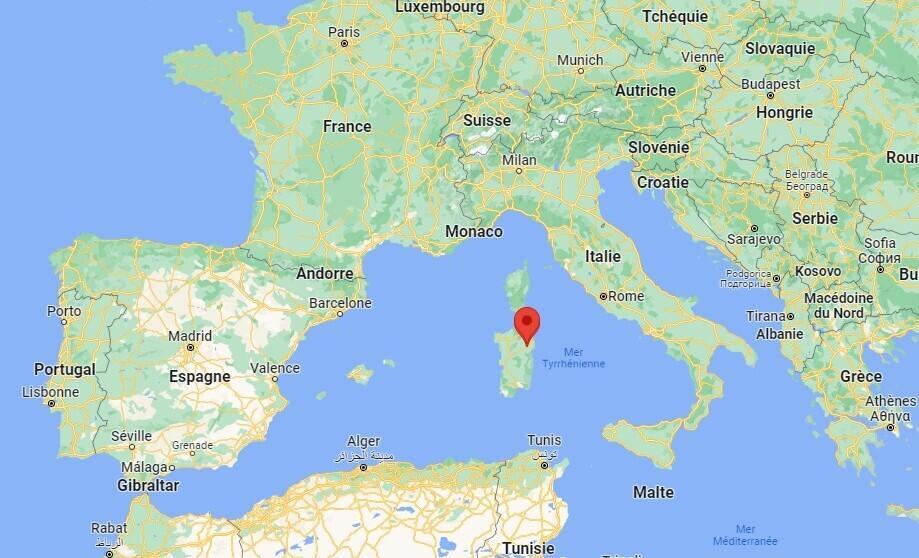
To get to Lula, the ideal way is to take a flight to Olbia airport and from there drive to the town.
The traveler will not see any road signs during the 90 km trip, except when there is 13 km to go to the final destination.
From then on, just turn off the GPS, follow Lula’s directions, and enjoy the trip.
Read More from The Rio Times
This article was produced by The Rio Times’ automated AI newsroom. Editorial responsibility: Matthias Camenzind, Publisher and Editor-in-Chief. The Rio Times also runs Ask Rio Times, which answers from 100,000+ of our own articles, the daily Latin America Power Map, and prediction-market odds on elections and markets.. How we use AI · Report an error
Brazil runoff, Sunday, October 25: Brazil runoff: date, poll closing times and when results start. Latest: Brazil runoff polls, Flávio 51%, Lula 49%.