Nigeria’s Push to Process Its Own Cocoa: Johnvents Says Plants Hit 82%
Nigeria · AGRICULTURE
Key Facts
- —The country Nigeria is Africa’s most populous country, with about 230 million people, and one of the world’s five largest cocoa growers. Ondo State in the south-west is a leading cocoa region.
- —Why it matters Nigeria still earns most of its cocoa income from raw beans. Grinding them at home into butter, cake and powder keeps more value and jobs in the country.
- —Why now Johnvents, one of Nigeria’s largest cocoa processors, gave new output figures at an investor plant tour on 29 September 2026.
- —What happened The company said it processed 19,806 tonnes of cocoa in January–June 2026, using 82% of its plants’ capacity.
- —The numbers By the company’s account, it processed 31,621 tonnes in 2025, up 50%, against combined annual capacity of 48,000 tonnes.
- —What it means for you Cocoa butter buyers gain another West African supplier. Investors in Nigerian company debt get rare operating detail from an issuer.
- —Still open The figures come from the company and could not be independently confirmed. Johnvents gave no date for reaching full capacity.
Nigeria cocoa processing got a rare data point this week. Johnvents told investors its two plants ran at 82% of capacity in the first half of 2026.
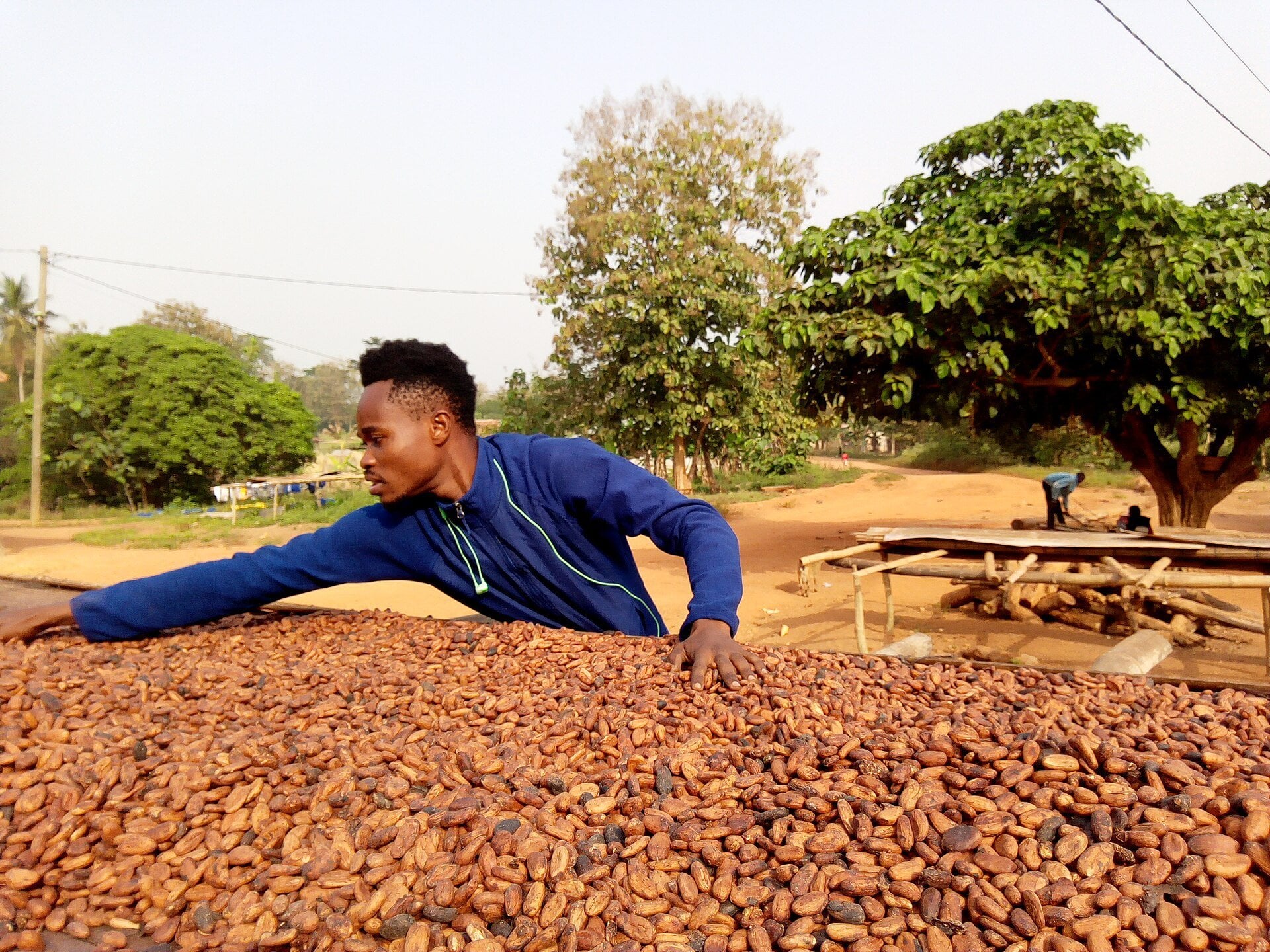
Nigeria is Africa’s most populous country and one of the world’s biggest cocoa growers. Yet it still earns most of its cocoa income from raw beans shipped abroad for grinding.
Johnvents Group, an agribusiness based in Ondo State, is one of the biggest names in Nigeria cocoa processing. On Tuesday it told investors its plants processed 19,806 tonnes of cocoa from January to June 2026.
What the company told investors
The company said its plants in Akure and Ile-Oluji ran at 82% of combined capacity in the first half. That compares with 66% across 2025, according to the same disclosure.
Johnvents said it processed 31,621 tonnes in 2025, a 50% rise on the year before. It puts its combined annual capacity at 48,000 tonnes.
The company’s numbers are consistent with each other: 19,806 tonnes is about 82% of half a year’s stated capacity. ThisDay and Vanguard reported the figures after the tour.
Group managing director John Adedamola Alamu said the firm wants to strengthen the link between farm supply, processing and markets. About 75% of group revenue is linked to export markets, the company said.
Why investors were invited
The tour was aimed at institutional investors and capital-market players who help fund the company’s working capital. Johnvents Industries has sold short-term debt, known as commercial paper, since 2022.
Treasury head Samuel Olaifa said the firm has issued 27 series, of which 21 have matured and been repaid in full. He said the rating agency GCR rates the company BBB+(NG) with a stable outlook.
Cocoa is bought in a short harvest window, so cash is tied up for months. Olaifa said the cash-conversion cycle can reach about 150 days at the seasonal peak.
Nigeria still sells mostly raw beans
Official trade data show why local grinding matters. The National Bureau of Statistics (NBS), Nigeria’s official statistics office, publishes export earnings by product every quarter.
In the first quarter of 2026, superior-quality cocoa beans earned 596.9 billion naira (about US$450 million). That was roughly 51% of all Nigerian farm exports, the NBS data show.
Natural cocoa butter, a processed product, earned only 41.69 billion naira (about US$31 million) in the same quarter. The gap shows how much value still leaves the country with the beans.
Farm exports then slumped in the second quarter. Agricultural exports for January to June fell 33.3% from a year earlier to 1.98 trillion naira (about US$1.49 billion).
Cocoa beans of both grades earned about 213 billion naira (about US$161 million) in the second quarter. Cocoa butter brought in 27.6 billion naira (about US$21 million).
Naira figures are converted at 1,327 naira per US dollar, the open.er-api.com rate on 30 September 2026.
A policy push, not a ban
The government wants more cocoa ground at home. In July, agriculture minister Abubakar Kyari denied reports that Nigeria would ban exports of raw beans.
“Our objective is value addition, not an export ban,” he said in a statement reported by PM News. He said raw exports would continue while local processing capacity grows.
Europe’s anti-deforestation rules add pressure, because exporters must prove their beans were not grown on cleared forest land. Reuters reported in August that West African suppliers were struggling to comply.
Development lenders behind the expansion
British International Investment (BII) is the UK government’s development finance arm. It signed a US$40.5 million long-term loan with Johnvents on 18 February 2025.
BII said the money would refurbish the second plant at Ile-Oluji, lifting its capacity from 13,000 to 30,000 tonnes a year. That 30,000-tonne figure covers one plant, not the group.
The International Finance Corporation (IFC), the World Bank’s private-sector arm, disclosed a separate loan of up to US$23.3 million in 2023. It was for the Akure plant, within a US$46.1 million project.
BII’s 2025 announcement also set a goal of 100% traceable cocoa, with 90% certified, by 2027. Published accounts of the tour did not mention progress on that target.
Prices set the backdrop
World cocoa prices remain volatile after the record highs of 2024. New York futures touched their highest level in almost a year on 31 August, Barchart reported.
They have since fallen back. December cocoa in New York closed 3.2% lower on 29 September, weighed down by a stronger dollar and ample supplies.
What is not independently confirmed
All output, capacity and utilisation figures come from Johnvents and could not be independently confirmed. No plant-level data from a regulator or trade body was available to check them.
The company has not said when it expects to run at full capacity. Its second-half figures will show whether the 82% rate holds into the main harvest, which usually starts around October.
Frequently Asked Questions
How much cocoa did Johnvents process in the first half of 2026?
Johnvents said it processed 19,806 tonnes of cocoa from January to June 2026. That equals 82% of its stated capacity, though the figure has not been independently confirmed.
Why does Nigeria cocoa processing matter?
Nigeria earns far more from exporting raw cocoa beans than from processed products such as cocoa butter. Grinding beans at home keeps more value, jobs and foreign currency in the country.
Is Nigeria banning raw cocoa exports?
No. In July 2026 the agriculture minister said the goal is value addition, not an export ban, and that raw exports would continue.
Who has financed Johnvents?
British International Investment signed a US$40.5 million loan in February 2025 to refurbish the Ile-Oluji plant. The IFC disclosed a loan of up to US$23.3 million in 2023 for the Akure plant.
Connected Coverage
Sources
- thisdaylive.com
- bii.co.uk
- nairametrics.com
- disclosures.ifc.org
- pmnewsnigeria.com
- nairametrics.com (NBS Q1 2026 data)
- nigeria-eco.com
- reuters.com
- finance.yahoo.com (Barchart)
This article was produced by The Rio Times’ automated newsroom system. How we use AI · Report an error
LatAm Markets: Live Signals → — real-time movers, turnover leaders and FX across Latin America.
Read More from The Rio Times